Sitting for eight hours a day takes a severe physical toll on the human body. Prolonged static postures often trigger lower back strain, severe sciatica flares, and intense tailbone pressure. Standard office chairs rarely offer enough targeted support to alleviate these deep tissue pains. While a Seat Cushion Pad cannot miraculously fix a structurally broken or entirely unsupportive chair, it serves as a proven, highly effective intervention. It provides immediate, targeted pressure relief while gently enforcing better spinal posture.
You do not always need a thousand-dollar chair to fix your daily discomfort. Simple ergonomic additions make a massive difference. In this comprehensive guide, we explore the best solutions available on the market today. We filtered dozens of products using strict clinical criteria. We evaluated material density, anatomic contouring, heat retention limits, and long-term shape memory. By the end, you will know exactly which option matches your specific pain points and daily workflow.
Key Takeaways
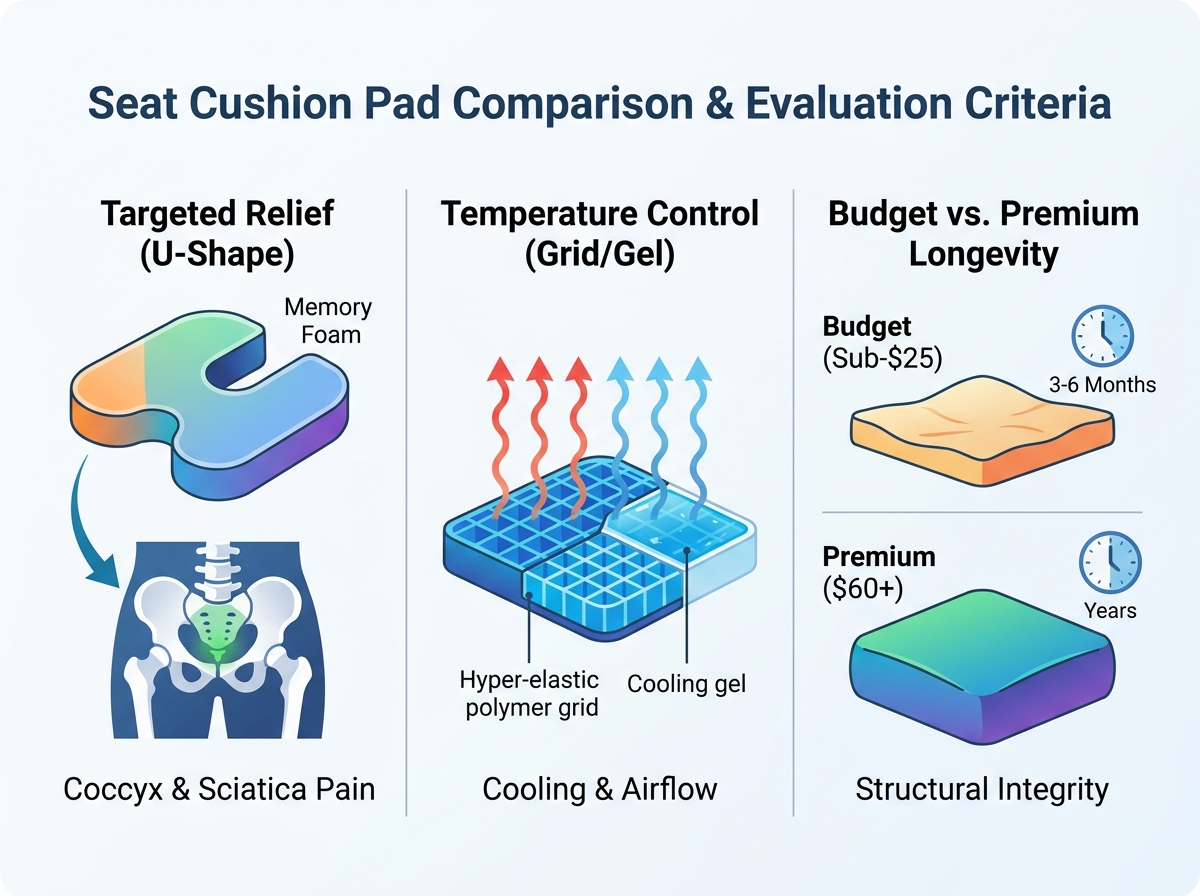
- Best for Targeted Relief: U-shaped memory foam options offer the most reliable relief for coccyx and sciatica pain.
- Best for Temperature Control: Grid-based hyper-elastic polymer or cooling gel hybrids prevent the heat buildup common in standard foam.
- Budget vs. Longevity: Sub-$25 cushions typically "bottom out" after 3–6 months of 40-hour work weeks; premium options ($60+) maintain structural integrity for years.
- Workspace Adjustment: Adding a seat cushion pad requires recalibrating desk height, monitor eye level, and armrests to maintain ergonomic alignment.
Evaluation Criteria: How We Compared the Top Seat Cushion Pads
Choosing the right ergonomic support requires looking past marketing buzzwords. We relied on practical testing methodologies to identify true performers. We analyzed four critical dimensions. Each dimension directly impacts your daily comfort and overall posture alignment.
Material Density & Weight Capacity
Density dictates support. A low-density foam compresses entirely under body weight. This process is called "bottoming out." When a pad bottoms out, you effectively sit on the hard chair underneath. We prioritized high-density memory foams and buckling column gels. These materials resist total compression. They offer enough pushback to support adults during standard eight-hour shifts. High weight capacity ensures the material bounces back overnight.
Ergonomic Geometry
Flat squares do little for spinal health. Clinical ergonomics demand specific contouring. We looked for pronounced coccyx cutouts. A deep U-shape or W-shape suspends the tailbone entirely. Suspension prevents the tailbone from grinding against the seat pan. It directly reduces spinal compression. W-shaped channels also guide the thighs into a neutral parallel position. This prevents unhealthy hip rotation while you work.
Thermal Regulation
Heat buildup ruins focus. Traditional dense foams trap body heat rapidly. We evaluated breathability across all models. We favored perforated foams, cooling gel overlays, and open-grid polymers. Gel pulls heat away from the skin. Polymer grids allow continuous airflow beneath your legs. Active temperature regulation remains vital for anyone sitting through long, demanding projects.
Hygiene & Maintenance
Daily use invites spills, sweat, and dust. We disqualified products lacking removable covers. A quality pad must feature a machine-washable outer shell. We also checked for non-slip rubberized bottoms. Slippery pads force you to constantly readjust your seating position. Readjustment destroys ergonomic alignment. Durable fabrics and strong zippers signify a well-made, long-lasting product.
The following chart breaks down the minimum industry standards we required for our top selections.
| Evaluation Metric | Minimum Standard | Ideal Performance |
| Material Density | Medium-density polyurethane | High-density memory foam or hyper-elastic polymer |
| Tailbone Support | Basic recessed rear dip | Full U-shaped coccyx cutout |
| Base Grip | Textured fabric | Rubberized anti-slip micro-dots |
| Maintenance | Spot-clean only | Removable, machine-washable breathable mesh cover |
![Ergonomic seat cushion pad resting on a modern office chair]()
The Top 5 Seat Cushion Pads Evaluated by Use Case
No single product solves every physical complaint. We categorized the top five options by specific user needs. This approach ensures you find the exact match for your body type and work environment.
Option 1: The Best Overall Ergonomic Memory Foam Pad
This model balances comfort, price, and postural correction perfectly. It serves as an excellent starting point for most professionals.
- Ideal For: General office workers seeking posture support and mild lower back relief.
- Core Features: It utilizes 100% pure high-density memory foam. It features heat-responsive contouring and a highly textured anti-slip base.
- Limitations: The dense foam may retain body heat in warmer environments. Users often experience a short break-in period of a few days.
Option 2: The Best Seat Cushion Pad for Sciatica & Tailbone Pain
Medical-grade pain requires aggressive shaping. This option directly targets nerve pressure and pelvic alignment.
- Ideal For: Users navigating specific clinical pain points like coccydynia, sciatica, or piriformis syndrome.
- Core Features: It boasts a pronounced rear U-shaped cutout. Aggressive side contouring forces proper thigh alignment.
- Limitations: The highly structured shape restricts your movement. Sitting cross-legged or shifting weight to one side feels uncomfortable.
Option 3: The Best Cooling Gel / Polymer Grid Cushion
Heat-trapping foams create miserable summer workdays. A grid design eliminates this problem completely.
- Ideal For: Users who run hot, heavy sweaters, or those requiring prolonged 10+ hour sitting sessions.
- Core Features: It utilizes a hyper-elastic polymer grid design. This allows maximum airflow and immediate rebound without any flattening.
- Limitations: Polymer grids are significantly heavier and bulkier than foam counterparts. They also demand a higher initial purchase price.
Option 4: The Best Heavy-Duty Seat Cushion Pad (High Weight Capacity)
Standard cushions collapse under heavier users. A robust, dual-layered approach prevents bottoming out.
- Ideal For: Big and tall users exceeding 250 lbs who quickly flatten standard cushions.
- Core Features: It offers an extra-thick profile exceeding three inches. The dual-density foam construction provides a firm base beneath a softer top layer.
- Limitations: The extreme thickness raises sitting height significantly. You must adjust your desk and chair settings dramatically.
Option 5: The Best Budget-Friendly / Hybrid Option
Sometimes you need an affordable fix for occasional use. Hybrids offer a great middle ground.
- Ideal For: Hybrid workers needing a lightweight, portable cushion for occasional use, commuting, or travel.
- Core Features: It combines a standard foam base underneath a localized gel top layer. It includes a carrying handle and standard sizing.
- Limitations: It features a shorter lifespan under daily, continuous stress. It provides moderate tailbone relief compared to highly specialized clinical shapes.
Cheap vs. Premium Cushions: Is the Price Upgrade Justified?
Walking down the aisle of a big-box store reveals wildly different pricing. You will see basic squares for twenty bucks next to complex models nearing a hundred. Understanding the cost difference helps you avoid purchasing the same cheap product multiple times.
The Price Anchors
Entry-level models typically retail between $20 and $30. These basic pads often utilize standard polyurethane foam. Clinical-grade and premium models range from $70 to over $100. The premium tier incorporates proprietary memory foams, buckling gel grids, and complex multi-layered construction. You pay for engineering and material science.
Lifespan & ROI
Material degradation separates the cheap from the premium. Budget foam loses its structural integrity very quickly. The internal air pockets collapse. The pad essentially flattens within three to six months of full-time office use. Premium proprietary foams or hyper-elastic gels offer immense durability. They maintain their immediate rebound properties for years. Many high-end brands even offer multi-year warranties. Buying one premium model saves you money over a two-year timeline.
Cover Quality
Cheaper models wrap their foam in standard, scratchy polyester. This fabric pills easily and limits airflow. Premium options utilize breathable, specialized meshes. Many feature cooling fabrics infused directly into the threading. High-end covers also use reinforced zippers. A broken zipper renders a removable cover useless. Investing in premium models guarantees better tactile comfort and superior hygiene over the product's lifespan.
Implementation Risks: Adapting Your Office Setup
Throwing a thick pad onto your office chair solves one problem but creates others. Any addition to your seating surface shifts your entire body upward. You must adapt your workspace to maintain a healthy, neutral posture.
The Height Shift
A proper Seat Cushion Pad adds roughly 1.5 to 3 inches of functional height. This shift disrupts your existing ergonomic harmony. If you leave your desk and monitors exactly where they were, you will hunch forward. Hunching defeats the entire purpose of buying postural support.
Monitor & Armrest Recalibration
Follow these exact steps to recalibrate your workspace safely:
- Adjust the Chair Height: Lower your chair cylinder slightly to compensate for the added cushion thickness.
- Raise Your Monitors: Ensure the top third of your screen sits exactly at your new eye level. This prevents severe neck strain.
- Reposition Armrests: Lower your armrests so your shoulders drop naturally. Your elbows should bend at a comfortable 90-degree angle.
- Check Desk Clearance: Ensure your thighs do not rub against the underside of your desk drawer.
Foot Support
Raising your hips often pulls your feet off the floor. Dangling feet restrict blood circulation in the lower legs. It also places excess pressure on your lower back. If your chair cannot lower enough to keep your feet flat, you must use an under-desk footrest. A proper footrest restores the necessary 90-degree angle behind your knees.
Conclusion
Improving your daily comfort requires matching the right materials to your specific physical needs. Pure memory foam excels at precise contouring and gentle postural guidance. Polymer grids and gel hybrids dominate in thermal regulation and extreme durability. Aggressive U-shapes remain the absolute gold standard for relieving tailbone pressure and sciatica flares.
Before making a final purchase, take a few practical steps. First, measure the internal width of your current office chair seat pan. Ensure your chosen cushion fits between the armrests without bunching up. Second, verify your chair cylinder allows for downward height adjustability. You need room to accommodate the extra foam thickness. Finally, check the retailer's return policy. Ergonomic comfort is a highly subjective experience. Your body may require testing a few different shapes before finding the perfect alignment.
FAQ
Q: Can a seat cushion pad permanently fix sciatica or back pain?
A: No. They are symptom-management tools that reduce pressure and promote better pelvic tilt, but they do not replace medical treatment, physical therapy, or movement. Think of them as a supportive brace rather than a medical cure. You must still stretch and take walking breaks.
Q: How long does a memory foam seat cushion typically last?
A: 1 to 3 years depending on usage hours, user weight, and foam density. Once it no longer rebounds to its original shape, it must be replaced. A permanently flattened pad provides zero ergonomic benefit and can actually worsen pelvic misalignment.
Q: Why does my seat cushion pad slide around on my office chair?
A: Lack of a textured or rubberized non-slip base, or a mismatch between the cushion fabric and a slippery leather chair. Look for options with heavy-duty grip bottoms or securing straps. A sliding pad forces you to twist your spine frequently.
Q: Is gel or memory foam better for long hours?
A: Gel or polymer grids are superior for long shifts (8+ hours) due to temperature regulation and immediate rebound, whereas memory foam is better for customized pressure mapping but can trap heat. Choose gel if your office runs warm or if you rarely stand up.