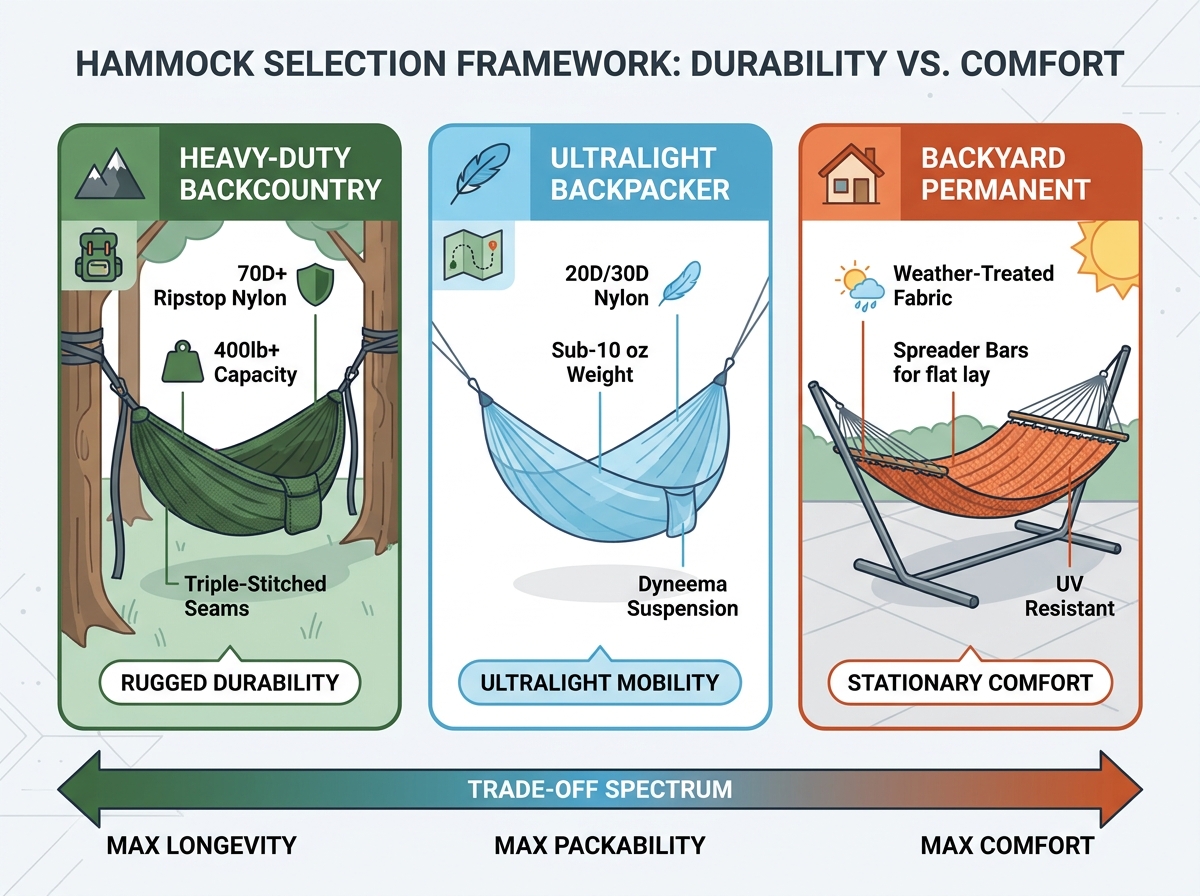
Selecting the right gear requires moving past basic aesthetic preferences. You must actively evaluate structural integrity, fabric denier, and suspension reliability. Shoppers often reach a final decision stage feeling overwhelmed. The difference between a multi-year investment and a single-season failure is crucial. It lies strictly in verifiable specifications. These include actual weight capacity, advanced stitching techniques, and proven weather resistance. A visually appealing product means nothing if its seams tear during your first trip. This guide evaluates the top options of 2023. We base our analysis on strict durability metrics and precise comfort scaling. You will learn how to parse manufacturer marketing claims. We provide a solid framework to match the correct gear to your specific use case. Whether you camp in the rugged backcountry or lounge safely in the backyard, you will find exactly what you need.
Key Takeaways
- Material Trumps Marketing: High-denier parachute nylon and marine-grade hardware are non-negotiable for long-term outdoor exposure.
- Sizing Reality Check: "Double" hammocks are generally preferred for single users seeking a flatter, more comfortable diagonal lay, rather than strictly for two people.
- Suspension is Critical: A durable outdoor hammock is only as safe as its suspension system; tree-safe polyester webbing is the standard for both safety and environmental compliance.
- Top Overall Performer: The ideal choice balances a 400lb+ tested weight limit with triple-stitched seams and a breathable, rot-resistant fabric profile.
Defining the Evaluation Criteria for a Reliable Outdoor Hammock
Before purchasing any hanging shelter, you must understand the underlying materials. Manufacturers often use buzzwords to mask cheap construction. We focus purely on verifiable metrics. These metrics determine whether your gear will survive harsh environments.
Structural Integrity (Features-to-Outcomes)
Fabric denier directly impacts tear resistance and overall weight. A denier rating (D) measures the thickness of individual threads inside the fabric. High denier (such as 70D or 210D nylon) provides exceptional longevity. It resists snags from branches and gear. Low denier (like 20D) serves ultralight mobility. Backpackers prefer low denier to save weight. However, it requires careful site selection to avoid punctures.
Fabric Denier Evaluation Chart
| Denier Rating | Primary Material | Ideal Application | Durability Expectation |
| 20D - 30D | Ripstop Nylon | Ultralight backpacking | Requires careful site selection; highly prone to punctures. |
| 70D | Parachute Nylon | General camping | Excellent balance of weight and abrasion resistance. |
| 210D+ | Oxford/Polyester | Heavy-duty setups | Maximum tear resistance; too heavy for long hikes. |
Weight Capacity vs. Working Load
Buyers often confuse manufacturer "static load limits" and safe, dynamic working loads. A static load test occurs in a controlled laboratory. A machine pulls the fabric slowly until failure. Dynamic working load accounts for real-world use. When you sit down quickly or shift during sleep, you multiply the force exerted on the fabric. A 400-pound static limit safely supports about 200 pounds of dynamic human movement. Always halve the manufacturer limit for true safety.
Seam and Hardware Construction
A shelter is only as strong as its weakest stitch. We evaluate products based on triple-interlocking stitching. Single stitches unravel quickly under tension. Furthermore, hardware matters immensely. Load-bearing wiregate carabiners offer superior safety. They resist rust and snap shut securely. Conversely, heavy steel clips often ship with budget products. They rust quickly and add unnecessary bulk.
Weather Resilience
Different materials handle nature differently. We assess breathability, UV degradation risks, and moisture retention. Parachute nylon breathes exceptionally well. It dries fast after a sudden rainstorm. Quilted cotton feels luxurious on a patio. However, it retains moisture and rots if left outside in wet weather. UV rays also degrade synthetic fibers over time. Storing your gear away from direct sunlight extends its lifespan drastically.
The Top 5 Outdoor Hammocks: 2023 Evaluative Breakdown
We selected these five models based on verifiable performance data. Each profile highlights ideal deployment scenarios. We also detail objective limitations. No single product works perfectly for every situation. You must match the gear to your specific lifestyle.
1. The Heavy-Duty Backcountry Standard
This category defines rugged reliability. Campers who venture deep into the wilderness rely on these models. They withstand heavy use and harsh terrain.
- Target Use Case: Rugged wilderness camping and high-frequency deployment.
- Core Specs: 70D+ ripstop nylon, 400lb+ capacity, integrated bug net compatibility.
- Implementation Reality: They offer excellent durability. However, they require aftermarket underquilts for temperature drops. Nylon provides zero insulation against cold air circulating underneath.
- Why it makes the list: They boast a proven track record. They resist abrasion and seam-stretch perfectly under continuous, night-after-night tension.
2. The Backyard Permanent-Fixture Hammock
Homeowners usually prioritize immediate comfort over packability. These models look great on a porch. They invite lazy afternoon naps.
- Target Use Case: Long-term stationary setup. Think porches, verandas, and heavy garden stands.
- Core Specs: Weather-treated synthetic cotton blend or Sunbrella fabric, solid wooden spreader bars.
- Implementation Reality: Spreader bars create a flatter lay visually. Unfortunately, they significantly increase the risk of tipping. If you sit off-center, you will flip over. Furthermore, they are entirely unsuitable for backpack transport.
- Why it makes the list: They provide superior UV resistance. You experience immediate comfort without mastering complex tension adjustments.
3. The Ultralight Backpacker’s Choice
Thru-hikers count every single ounce. They demand gear offering minimal weight. They gladly sacrifice some durability for a lighter pack.
- Target Use Case: Ounce-counting backpackers and long-distance thru-hikers.
- Core Specs: 20D/30D nylon construction, sub-10 oz total weight, high-tech Dyneema suspension lines.
- Implementation Reality: You face a strict trade-off. Lower denier fabric is highly susceptible to puncture. Pine needles, sharp rocks, or keys in your pocket will destroy it quickly.
- Why it makes the list: It brilliantly solves the weight and packability problem. It achieves this without compromising baseline structural safety for single users.
4. The "True Double" Capacity Hammock
Do not let the name fool you. The word "double" rarely means comfortable sleep for two adults. It usually means expansive luxury for one.
- Target Use Case: Larger users requiring a diagonal lay, or couples lounging together briefly.
- Core Specs: 9+ feet in width, robust 500lb capacity, heavily reinforced anchor points.
- Implementation Reality: "Double" remains primarily a comfort metric for one person. Two adults sleeping overnight will experience a severe "cocoon effect". Gravity forces you to squeeze tightly together in the center regardless of maximum capacity.
- Why it makes the list: It offers a best-in-class footprint. You easily achieve the ergonomically correct Brazilian-style flat lay by sleeping diagonally across the wide fabric.
5. The All-in-One Starter System
New buyers often feel intimidated by suspension mechanics. Starter kits remove the guesswork. They bundle everything needed for immediate use.
- Target Use Case: First-time buyers needing a standardized, out-of-the-box solution.
- Core Specs: Pre-packaged kits. They include tree-saver straps, heavy-duty carabiners, and stuff sacks.
- Implementation Reality: They use jack-of-all-trades fabric. They are often heavier than specialized gear. However, they eliminate the frustrating friction of sourcing compatible aftermarket suspension parts.
- Why it makes the list: It significantly reduces setup risk. It lowers purchasing complexity for new adopters eager to get outside quickly.
![Proper hammock suspension and tree-safe webbing setup]()
Implementation Risks: Suspension Systems and Setup Safety
Your beautiful shelter becomes dangerous if hung incorrectly. Many injuries result from failed suspension setups. Outdoor hammock enthusiasts must prioritize safety above convenience. You must understand the physics of tension and anchor point durability.
The Tree-Saver Mandate
Environmental stewardship requires responsible setup practices. Many cheap kits include thin nylon ropes or paracord. These materials cause immense environmental damage. Under tension, a thin rope slices through tree bark. This process, called girdling, cuts off nutrient flow and kills the tree. Professional parks mandate the use of tree-saver straps. You must use 1-inch minimum polyester webbing. Wider straps distribute the heavy load safely across the bark. Polyester resists stretching, unlike nylon, keeping you safely off the ground all night.
The 30-Degree Angle Rule
Setup geometry dictates your physical safety. Many beginners pull the fabric as tight as possible between two trees. This creates a severe flat line. Improper tensioning drastically multiplies the sheer force on the fabric and anchor points. If you hang a 200-pound load at a tight 5-degree angle, you generate over 1,000 pounds of sheer force on the suspension. This leads to premature failure. You will snap carabiners or rip tree bark. Always aim for a 30-degree hang angle. This angle balances tension safely. It ensures a comfortable sag for diagonal sleeping.
Hardware Vulnerabilities
Hardware failure happens frequently in budget models. Identifying cheap components keeps you safe. Avoid non-climbing-rated carabiners. They often ship with lower-tier products. Look for sharp edges inside the carabiner. Sharp edges slice through suspension loops over time. Upgrade your hardware immediately if you spot hollow steel hooks or plastic tensioners. Replace them with solid, climbing-rated aluminum wiregates. They weigh less and hold vastly more dynamic force.
Shortlisting Logic: How to Finalize Your Decision
Choosing the perfect model requires a methodical approach. Follow this step-by-step logic to filter out unsuitable options. Do not let shiny marketing dictate your final purchase.
- Step 1: Determine the Primary Environment. You must assess where you will spend the most time. If you plan a stationary backyard setup, prioritize UV exposure resistance. Sunbrella or heavy cotton blends excel here. If you plan to hike long distances, prioritize packability. You will need ultralight ripstop nylon for trail use.
- Step 2: Filter by Sizing. Comfort depends largely on fabric length. Apply a basic rule of thumb. Take your user height and add 2 feet minimum. This equals your required fabric length. Default to "double" width for superior sleep comfort. The extra width allows you to lay diagonally, flattening out your spine.
- Step 3: Audit the Included Accessories. Cheap prices often hide hidden costs. Calculate the true cost before checking out. If you must purchase suspension straps, bug nets, or rain flies separately, a budget product quickly becomes expensive. Starter kits offer better financial value for beginners.
Next-Step Actions
Before you click buy, take action on warranty details. Verify the manufacturer terms regarding UV damage. Many companies void warranties if you leave nylon outdoors continuously. Next, confirm your anchor points. Measure the distance between your yard trees or check your metal stand dimensions. Most gathered-end models require a span distance of 12 to 15 feet for optimal suspension angles.
Conclusion
The right shelter aligns material durability directly with your specific daily use case. Over-indexing on weight savings can severely sacrifice longevity. Conversely, ignoring suspension mechanics can compromise your personal safety. You must balance denier ratings, weight limits, and hardware quality. Do not rush the decision process.
Select your final model based on verifiable specifications rather than aesthetics. High denier ratings and reliable wiregate hardware provide peace of mind. Finalize your purchase by ensuring your suspension system is tree-compliant and properly load-tested. Protect the environment while securing your own comfort. Master the 30-degree angle rule. By following these strict guidelines, you ensure years of comfortable, reliable outdoor relaxation.
FAQ
Q: Can I leave my outdoor hammock outside year-round?
A: We strongly advise against this for most materials. UV degradation and moisture rot ruin synthetic fibers. Constant sun exposure makes parachute nylon brittle. Rain causes cotton models to grow mold quickly. We recommend taking down nylon models when not in active use. Only specific UV-treated fabrics, like Sunbrella, survive prolonged year-round exposure.
Q: What is the actual difference between a single and double outdoor hammock?
A: The difference primarily involves width, not passenger count. A double is significantly wider. This extra width dictates your ability to lay flat diagonally across the fabric. Single models force you into a curved, banana-like posture. We highly recommend double models for solo sleepers wanting maximum ergonomic comfort.
Q: How do I prevent "Cold Butt Syndrome" in a nylon hammock?
A: Nylon offers zero insulation. Cold air flows underneath and steals your body heat through convection. You prevent this by blocking convective heat loss. You must suspend an underquilt beneath the fabric. Alternatively, you can place a closed-cell foam sleeping pad inside with you. Blankets inside simply compress under your body weight and lose their insulating value.
Q: Are hammock stands universally compatible?
A: No, stands vary wildly in design. You must match length requirements accurately. Spreader-bar stands are typically shorter. They accommodate flat, tight fabrics. Gathered-end stands require a longer span (usually 12 to 15 feet). They must support the necessary 30-degree sag angle. Always check your overall fabric length before buying a metal stand.