Upgrading a backyard or garden space for relaxation requires more than just picking a design that looks good. You want a personal oasis where you can truly unwind. However, purchasing an Outdoor hammock without considering climate, suspension requirements, and spatial limitations often results in fabric rot, unsafe setups, or unused backyard equipment. A poor choice quickly transforms a planned retreat into a frustrating landscaping eyesore. This guide provides a practical, evidence-based framework to evaluate suspension types, weather-resistant materials, and sizing. We will help you ensure a durable, safe, and comfortable garden setup. You will learn exactly how to match fabrics to your local climate, measure anchor points accurately, and avoid common structural failures.
Key Takeaways
- Measure First: Your garden’s available anchor points (trees, posts) dictate whether you need a freestanding stand or a traditional suspension system.
- Match Material to Climate: Comfort must be balanced against weather resistance; cotton offers breathability, while Sunbrella or synthetic blends prevent mold and UV degradation in exposed gardens.
- Size for Real-World Use: "Double" hammocks are the standard recommendation for overall comfort, even for solo loungers, provided the weight capacity exceeds 400 lbs for safety margins.
- Factor in the Spreader Bar: Hammocks with spreader bars are visually appealing and easier to get into, but traditional gathered-end hammocks offer a lower center of gravity and higher stability.
1. Assessing Your Garden Layout: Suspension Systems vs. Hammock Stands
Every successful relaxation space begins with structural planning. You must evaluate your available environment before selecting any specific product. Your garden layout strictly dictates your suspension options.
Identifying Natural Anchor Points
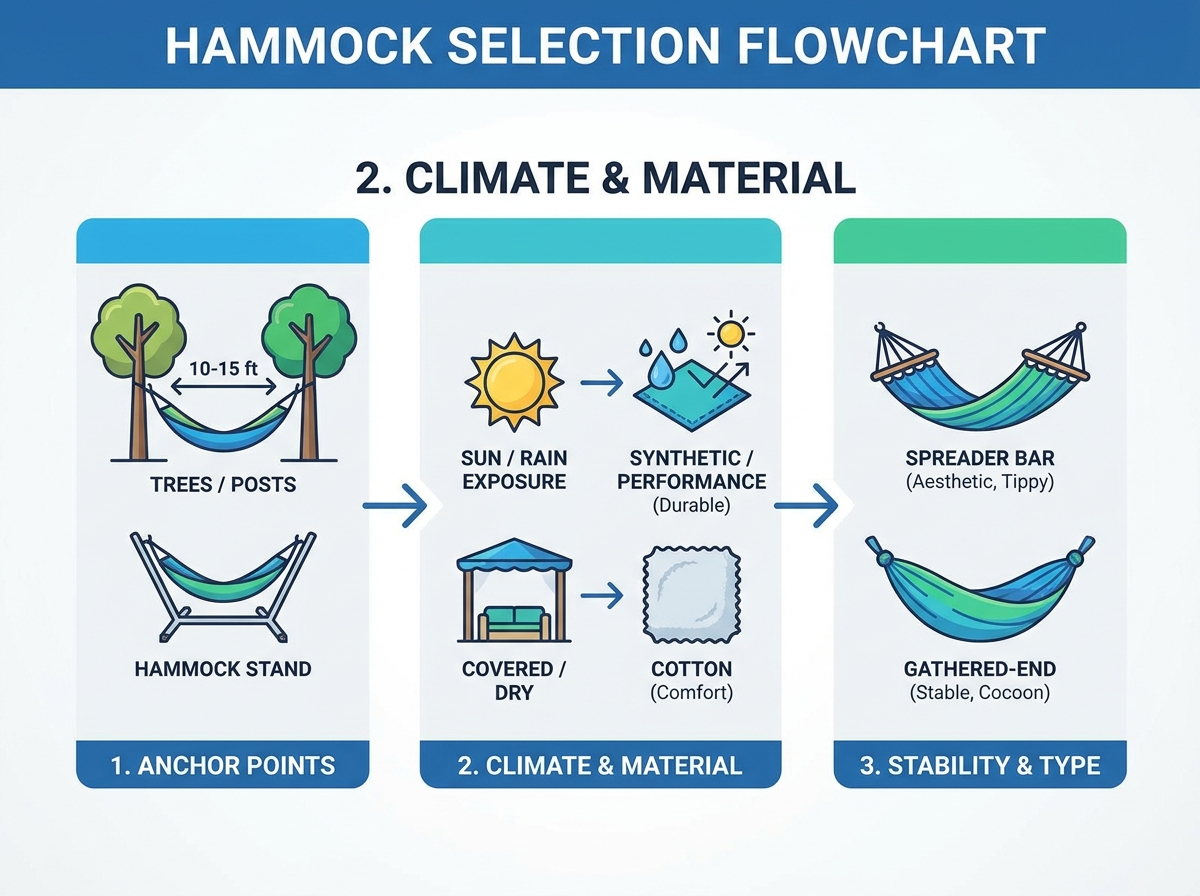
Many homeowners dream of hanging their bed between two majestic trees. You must first evaluate these existing trees or pergolas for structural integrity. Never use young saplings, diseased trunks, or decorative garden posts. We recommend checking trees for deep cracks, dead upper branches, or root rot. A healthy hardwood tree should be at least six inches in diameter to safely support human weight.
Industry standards require specific spacing. You generally need 10 to 15 feet of distance between your anchor points. This spacing allows you to achieve the optimal 30-degree hanging angle. This exact angle ensures proper tension across the fabric. It reduces unsafe stress on the suspension lines and keeps the user comfortably cradled.
Freestanding Hammock Stands
Sometimes mature trees simply aren't an option. In these cases, freestanding stands offer excellent reliability and flexibility. You can choose between two primary materials.
- Steel Stands: These models are highly cost-effective and portable. Manufacturers typically powder-coat them to make them weather-resistant. They assemble quickly using simple snap-button mechanisms. Steel stands work best for seasonal setups where you move the unit around the patio.
- Wooden/Cypress Stands: These provide high aesthetic value for permanent garden setups. They feature beautiful sweeping arcs that elevate landscape design. However, they carry a larger, heavier footprint. You must commit to annual sanding and sealing to prevent rot.
Implementation Risk
We must highlight the severe danger of using unverified posts or dead trees. Fence posts often snap under lateral tension because builders rarely reinforce them for side-pulling loads. Structural failures lead to sudden drops and serious injuries. Standalone stands eliminate this risk entirely. They provide verifiable, compliant weight capacities engineered for specific safety margins.
2. Evaluating Outdoor Hammock Materials for Durability and Climate
Material selection determines how long your gear will survive outside. You must balance physical comfort against severe weather exposure.
Material Performance Comparison
| Material Type | Comfort Level | Weather Resistance | Best Use Case |
| Cotton | Very High | Low (Prone to mold) | Covered patios, indoor use |
| Polyester & Nylon | Moderate | High (Quick-drying) | Humid climates, unshaded areas |
| Quilted Fabrics | High (Cushioned) | Moderate | Cooler climates, shaded spots |
| Performance (Sunbrella) | Very High | Very High (UV resistant) | Premium outdoor permanent setups |
Cotton
Cotton feels highly comfortable and breathable against bare skin. It conforms beautifully to your body shape. However, cotton retains heavy moisture. It takes a long time to dry out after a rainstorm. Recommendation: Cotton is only suitable for covered patios. You should use it only if you plan to bring it indoors daily.
Polyester & Nylon
Synthetic fibers offer a robust alternative to natural cotton. Polyester and nylon feature high durability and remain strictly rot-resistant. They repel water efficiently and dry very quickly. These materials are absolutely ideal for humid climates or open gardens lacking shade. An Outdoor hammock made from sturdy polyester will resist stretching over time.
Quilted Fabrics
Quilted designs utilize two layers of fabric wrapped around a soft internal batting. This construction adds wonderful cushioning for cooler climates. Many models feature reversible patterns. Trade-off: Quilted material takes significantly longer to dry if exposed to heavy rain. The internal batting acts like a sponge.
Rope (Cotton vs. Polyester)
Rope designs provide that classic tropical aesthetic. They allow maximum airflow during hot summer afternoons. Warning: Rope designs can cause uncomfortable pressure points on the skin, often called the "waffle effect". Furthermore, wide gaps make them less safe for small children or pets. Their limbs can easily slip through and tangle. Always opt for polyester rope over cotton for maximum outdoor longevity.
Performance Fabrics (e.g., Sunbrella)
These represent the premium tier of outdoor textiles. Solution-dyed acrylics like Sunbrella offer the best balance of UV-fade resistance, water repellency, and tactile comfort. The color goes all the way through the fiber. It will not bleach out under intense summer sun.
![Outdoor hammock sizing and proper garden setup]()
3. Sizing and Weight Capacity: Designing for the End User
Size directly dictates comfort. A common mistake involves buying a compact model to save patio space. You will quickly regret sacrificing width once you try to sleep in it.
Single vs. Double
We must clarify the physical dimensions. A single size measures about 4 to 5 feet wide. This narrow profile heavily restricts your movement. It forces you to lie directly parallel to the suspension line. A double size measures between 5 and 6 feet wide. This extra width allows users to lie diagonally across the bed. Sleeping diagonally remains the ergonomically correct way to sleep in a gathered-end design. It flattens your spine and prevents an uncomfortable curved posture.
Family and Multi-User Considerations
Backyards often serve as family playgrounds. If children or pets will use the gear, you must adjust your buying criteria. Prioritize tightly woven fabrics over open-net ropes. Dogs can easily snag their claws in rope webbing, causing panic or injury. Solid fabric beds provide a much safer, enclosed environment for active toddlers.
Verifying Load Capacity
Never guess a product's strength based on visual thickness. You must look for explicit weight ratings published by the manufacturer. A high-quality setup should comfortably support a minimum of 350 to 450 lbs. This accounts for dynamic weight when people climb in and out. Skeptical lens: Be extremely wary of cheap imports lacking certified load-bearing tests. Unbranded hardware can fail catastrophically under sudden shock loads.
4. The Spreader Bar Debate: Stability vs. Aesthetics
When shopping, you will immediately notice two distinct visual styles. One lays flat like a mattress, while the other bunches up at the ends. This difference comes down to one specific component.
What is a Spreader Bar?
The spreader bar is a rigid wooden or metal bar located at each end of the bed. It holds the suspension lines apart. This keeps the fabric bed perfectly flat and open at all times.
Pros of Spreader Bars
These models look neat and inviting in a garden setting. Because the fabric remains taut, it catches sunlight easily and dries much faster after rainfall. Furthermore, you will find them much easier to step into. They sit flat like a traditional bed.
Cons of Spreader Bars
However, this design introduces a significantly higher tipping risk. Raising the center of gravity makes the entire unit prone to "flipping" over. If you lean too far over the edge, the whole bed rotates abruptly. We strongly advise against them for energetic children or uncoordinated sleepers. A sudden flip can dump users onto hard patio stones.
Gathered-End (Traditional) Alternative
Traditional models omit the wooden bar entirely. The fabric gathers tightly into rings at both ends. When you climb inside, the excess fabric wraps around you like a cocoon. This creates a deeply dropped center of gravity. These designs are highly stable and nearly impossible to flip by accident. They do require proper diagonal positioning for maximum comfort, but they remain the undisputed champion of safety.
5. Long-Term Maintenance and Backyard Implementation Risks
Your investment requires proper care to survive shifting seasons. Even the most rugged materials face degradation from constant exposure to natural elements.
Winterization and Storage
Leaving gear outside year-round destroys fibers. Even UV-resistant and waterproof materials will degrade if left out in freezing temperatures or standing water. Ice crystals shear synthetic fibers on a microscopic level. We highly recommend using quick-release carabiners for easy takedown. Storing the fabric bed inside a dry garage during harsh winters adds years to its lifespan.
Hardware Corrosion
Rust quickly ruins beautifully colored fabrics. You must ensure all O-rings, hanging chains, and carabiners are properly treated. Seek out marine-grade stainless steel or heavily galvanized metals. Standard untreated steel will inevitably rust after a few rainstorms. This rust drips down the suspension lines and permanently bleeds orange stains onto the fabric.
Tree Health
We must protect the living anchors in our gardens. If you use trees, mandate the use of wide, flat "tree-saver" straps rather than bare ropes. Thin ropes bite deeply into tree bark under heavy loads. This damages the delicate phloem layer underneath. Severe bark girdling restricts nutrient flow and can ultimately lead to tree death. Wide polyester straps distribute the pressure safely across a large surface area.
Conclusion
Creating the perfect backyard relaxation space requires systematic planning. You cannot rush the selection process if you want enduring comfort. By evaluating your environment and understanding material science, you avoid costly replacement cycles.
Summarize your decision tree using this shortlisting logic:
- Define the anchor points: Determine whether your space requires a freestanding stand or features sturdy trees.
- Identify the climate threat: Assess whether intense sun or frequent rain poses the biggest risk to your gear.
- Choose the material accordingly: Select quick-drying synthetics for rain, acrylics for intense sun, or padded quilts for sheltered cool areas.
Your immediate next steps are highly practical. Go outside and physically measure your intended garden space before purchasing a heavy metal stand. Alternatively, measure the exact distance between your trees to calculate the necessary strap lengths. Accurate measurements prevent frustrating installation delays and guarantee a perfect hang on your very first attempt.
FAQ
Q: Can I leave my outdoor hammock in the rain?
A: It depends entirely on the material. Synthetic models like polyester or quick-dry nylon can safely stay out during rainstorms without rotting. However, cotton fabrics and quilted models must be brought indoors. If left soaked, thick cotton develops mold and mildew rapidly.
Q: How far apart should trees be for an outdoor hammock?
A: The standard rule is 10 to 15 feet of distance between trunks. Adjustable tree straps can easily accommodate slightly larger distances by extending your reach. However, distances shorter than 10 feet will cause excessive sagging, making it impossible to achieve the ideal 30-degree hanging angle.
Q: What is the safest type of hammock for kids?
A: Gathered-end, tightly woven fabric designs are the safest choice. They do not have spreader bars, which severely minimizes tipping risks by keeping the center of gravity low. Solid fabrics also prevent small fingers and toes from snagging, unlike open rope nets.
Q: How do I stop my hammock from fading in the sun?
A: UV degradation slowly destroys fiber strength and bleaches colors. To prevent fading, set up your gear in partial shade. You can also invest in solution-dyed performance fabrics like Sunbrella. Alternatively, utilize a weather-resistant protective sleeve to cover it when not in active use.