Outdoor enthusiasts constantly battle between overnight comfort and pack weight. You want restful sleep, but bulky gear slows you down on the trail. Single hammocks often restrict movement and force you into awkward postures. Meanwhile, large ground tents complicate quick campsite deployment. Upgrading to a larger suspended bed solves these spatial constraints beautifully. However, field utility varies wildly depending on your environment and specific use case. Hanging a heavy-duty lounge system on a minimalist backpacking trip simply does not work. We will evaluate the five most viable outdoor applications for this gear, helping you find the perfect Double Hammock for your needs. You will learn specific material requirements, deployment risks, and performance limitations for each scenario. This analysis will guide your final equipment investment confidently.
Key Takeaways
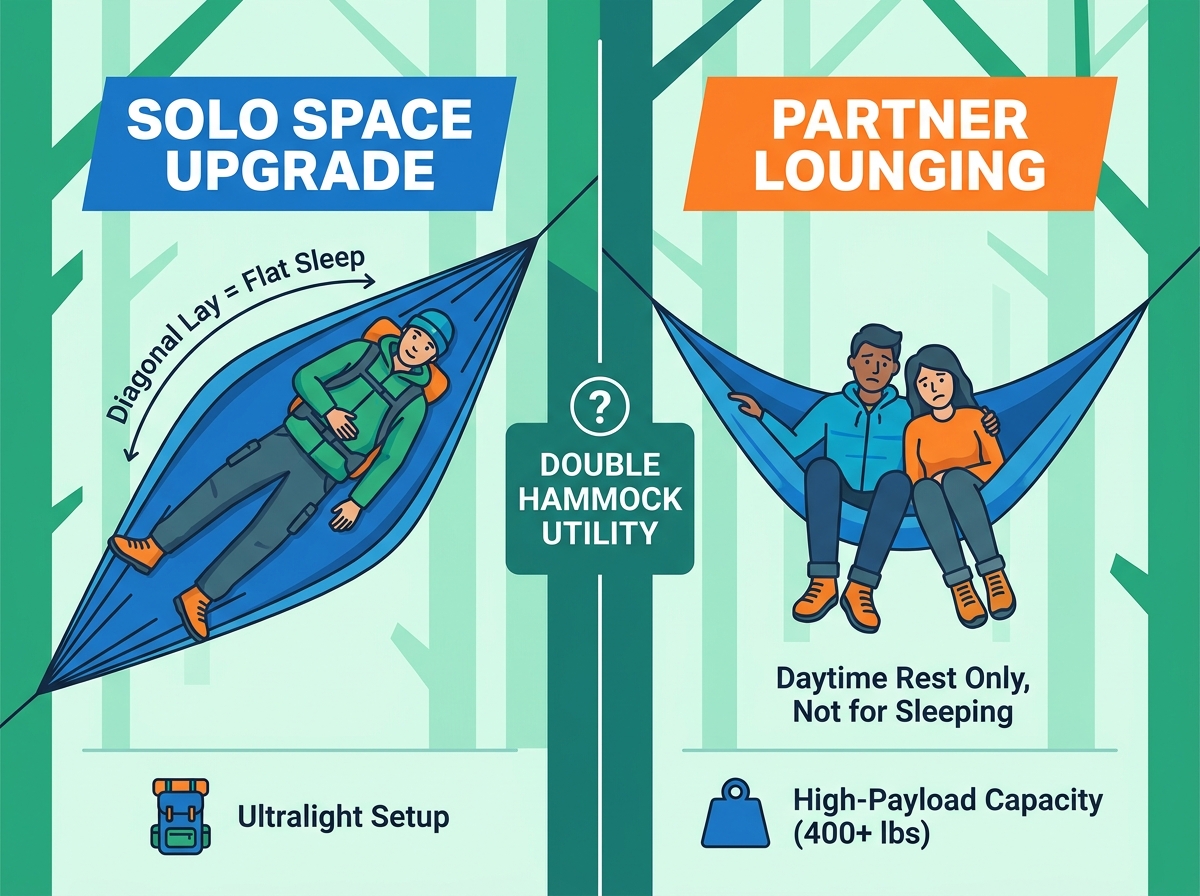
- Solo Sleep Optimization: Double hammocks are primarily used by solo backpackers to achieve a flat, diagonal sleep angle, not necessarily for two-person overnight sleeping.
- Static vs. Dynamic Loads: Partner lounging requires high-denier fabrics and heavy-duty suspension systems rated for at least 400–500 lbs dynamic weight.
- Modularity is Critical: Evaluation should hinge on compatibility with aftermarket accessories (underquilts, bug nets, vehicle mounts).
- The "Two-Person" Reality: While excellent for shared daytime resting, overnight partner camping in a single double hammock often results in thermal compression and discomfort.
1. Solo Diagonal Sleeping for Hammock Camping (The Space Upgrade)
Many hikers eventually transition from ground sleeping to suspended camping for multi-day backpacking trips. This transition requires overcoming a steep learning curve regarding sleep posture. Standard single models often force your body into a restrictive curve. This position creates a notorious "banana shape" back pain. The extra fabric width of a larger model entirely changes your sleep geometry. Solo users can lie completely diagonally across the fabric. This diagonal orientation flattens your bodily curvature and mimics the sensation of a traditional mattress.
You must evaluate materials carefully before hitting the trail. Extra fabric inherently adds bulk. We recommend choosing ultralight ripstop nylon, typically ranging from 20D to 40D in thickness. This material offsets the weight penalty of the wider design. Additionally, your suspension system requires optimization. Swap out bulky carabiners and heavy ropes for Whoopie slings or lightweight dyneema straps. These ultralight modifications maintain a low overall pack weight.
Wider fabrics require very careful tensioning. Improper hang angles pose a significant implementation risk. If you hang the system outside the standard 30-degree angle, the excess fabric pulls inward. This tension causes severe shoulder squeeze. You must practice achieving the perfect sag before embarking on a remote wilderness trip.
2. Basecamp & Car Camping Comfort (The High-Payload Setup)
Stationary outdoor setups offer entirely different gear opportunities. Vehicle proximity negates strict weight restrictions. Heavy-duty suspended beds act as the ultimate central lounge area for group trips. The generous width accommodates shifting, reading, and daytime napping seamlessly. You can relax fully without feeling constrained by tight fabric walls.
Durability becomes your primary evaluation criterion for basecamp environments. We suggest prioritizing 70D parachute nylon or rugged canvas blends. These thicker materials resist punctures from buttons, zippers, or wandering camp dogs. Furthermore, capacity matters immensely. The gear must have a verifiable static weight limit exceeding 400 lbs to safely support multiple lounging adults.
Safety relies entirely on your anchor points. This high-payload application requires robust, mature trees. Relying on thin saplings poses severe safety risks to occupants. It also creates unacceptable environmental damage. Always inspect tree health, avoiding dead branches overhead before establishing your basecamp lounge zone.
![Double Hammock Setup in Outdoor Adventure]()
3. Partner Lounging & Day Hiking (The Short-Duration Rest)
Quick deployment during day hikes offers incredible utility. Reaching a summit feels much better when you can elevate your legs. A wider suspended bed provides immediate off-the-ground seating. It creates an excellent recovery space for couples or hiking partners taking an afternoon break.
You need highly packable gear for day hikes. Despite the larger fabric volume, the system must compress down to the size of a grapefruit. This compact form factor ensures it fits easily into a small daypack. Hardware selection also plays a crucial role. You must use heavy-duty carabiners rated for climbing-level dynamic stress. Wiregate aluminum or solid steel options handle the shifting weight of two adults beautifully.
We must state a transparent assumption here. This specific application is strictly for daytime lounging. Attempting to sleep two adults overnight in this setup typically leads to "Cold Butt Syndrome" (CBS). Gravity pulls both users into the center. This compression flattens your sleeping bag insulation beneath you. Heat escapes rapidly, ruining your night.
4. Overlanding & RV Nomads (The Integrated Setup)
Long-term vehicular travel embraces modular outdoor living. Nomads frequently utilize portable setups anchored directly to roof racks, tow hitches, or custom off-road rigs. This approach extends the liveable footprint of an RV or Overland rig into the immediate outdoor space. It provides comfortable seating without requiring perfect ground clearance or level terrain.
Integration capabilities define success in this category. You should check compatibility between structural vehicle anchors and your suspension straps. Alternatively, a dedicated Double Hammock featuring a custom stand works exceptionally well for flat campsites. Weather resistance also demands attention. Nomadic gear faces prolonged sun exposure outside the vehicle. Prioritize UV-resistant and quick-drying fabrics, such as diamond ripstop, to prevent premature degradation.
Implementation risks involve vehicle mechanics. Vehicle suspension bounce can create dynamic loads far exceeding static weight ratings. Improper anchor points on weaker roof racks can lead to expensive equipment damage. Always attach your straps to structural, load-bearing chassis points to ensure personal safety.
5. Backyard Micro-Adventures & Gear Testing
Your own property provides an excellent environment for simulated field conditions. Creating a permanent outdoor leisure fixture allows for safe, controlled testing. You should always test seasonal gear, such as underquilts and asymmetrical rain flys, at home. Doing so prevents dangerous surprises before committing to remote wilderness deployment.
Form factor often dictates backyard utility. Home users frequently pair their fabric with a freestanding steel or wooden stand. This eliminates the need for perfectly spaced trees. Aesthetics frequently compete against raw function in residential settings. Cotton or woven fabrics may be preferred for superior breathability and skin comfort. However, these natural fibers lack the necessary weatherproofing required for deep-woods applications.
If you primarily plan for home use, prioritize a modular system. You want a setup where the fabric easily detaches from the heavy stand. This modularity allows you to pack the same bed for occasional weekend camping trips.
Decision Matrix: Shortlisting Your Gear
Choosing the right equipment requires balancing multiple variables. The weight versus durability tradeoff dictates most purchasing decisions. If you are backpacking, cap your system weight at 20 ounces. If you are car camping, prioritize 70D+ materials regardless of the final weight penalty.
Suspension system realities cannot be ignored. Discard any models utilizing standard nylon ropes. Nylon stretches unpredictably and damages tree bark. Ensure the system uses flat, tree-friendly polyester webbing straps. These straps must feature a minimum 1-inch width to comply fully with Leave No Trace principles.
Accessory scalability protects your investment over time. Ensure the brand ecosystem supports aftermarket add-ons. Standard dimensions, usually measuring 10 feet by 6 feet, generally accept universal bug nets and weather tarps. Proprietary dimensions often lock you out of essential winterizing upgrades.
Feature Comparison by Application
| Application | Ideal Fabric Thickness | Primary Suspension Type | Key Limitation |
| Solo Backpacking | 20D - 40D Ripstop | Dyneema / Whoopie Slings | Requires precise 30-degree hang angle |
| Basecamp / Car Camping | 70D+ Nylon or Canvas | 1-inch+ Polyester Webbing | Too heavy for trail hiking |
| Partner Day Lounging | 40D - 70D Nylon | Climbing-rated Carabiners | Causes overnight thermal compression |
| Overland Integration | UV-Resistant Diamond Ripstop | Vehicle Structural Anchors | Risk of vehicle suspension bounce |
| Backyard Testing | Cotton or Woven Blends | Freestanding Stand | Lacks deep-woods weatherproofing |
Steps for a Safe Setup
- Site Selection: Identify two living, robust trees spaced approximately 12 to 15 feet apart.
- Anchor Placement: Wrap your 1-inch polyester straps around the tree trunks at head height.
- Angle Adjustment: Adjust your tension to achieve a 30-degree angle between the strap and the ground.
- Weight Testing: Press firmly into the center of the fabric before committing your full body weight.
- Accessory Attachment: Clip on your bug net or underquilt only after confirming structural stability.
Conclusion
A wider suspended bed rarely serves as a true two-person bed in serious outdoor adventures. Instead, it functions as a high-utility spatial upgrade for solo campers. It flattens your sleeping posture and cures morning back pain. For groups, it acts as a highly durable lounging hub for stationary basecamps. Selecting the right setup requires matching your fabric denier and suspension hardware directly to your intended environment.
- Evaluate weight restrictions first: Backpackers must prioritize 20D–40D materials to keep pack weight under 20 ounces.
- Upgrade your suspension immediately: Replace standard ropes with 1-inch polyester webbing to protect trees and prevent overnight sagging.
- Sleep solo, lounge together: Use the extra width to sleep diagonally alone, reserving partner use strictly for daytime rest.
- Prioritize modular ecosystems: Buy standardized 10x6 dimensions to ensure future compatibility with aftermarket bug nets and underquilts.
- Test gear thoroughly at home: Utilize a backyard stand to dial in your insulation and tension preferences before wilderness deployment.
FAQ
Q: Can two adults comfortably sleep overnight in a double hammock?
A: No. While rated for the weight, gravity pulls both occupants to the center. This compression flattens sleeping bags and eliminates crucial thermal insulation. It is highly recommended to use two separate hammocks for overnight sleep to maintain warmth and personal space.
Q: What is the standard weight capacity of a reliable double hammock?
A: Industry standards dictate a safe working load of 400 to 500 lbs. Always verify this rating carefully. Ensure the static limit applies to the fabric, the carabiners, and the suspension straps combined, rather than just one individual component.
Q: Do I need a special suspension system for a double hammock?
A: Yes. Because of the increased payload potential, you must use high-strength, non-stretch polyester "daisy chain" straps or Whoopie slings. Nylon ropes will stretch unpredictably, causing the hammock to sag overnight and potentially damaging delicate tree bark.
Q: How far apart should trees be to hang a double hammock?
A: The ideal distance is between 12 and 15 feet. This spacing allows for the optimal 30-degree suspension angle. This angle ensures the fabric spreads correctly without putting undue sheer force on the trees or your suspension straps.