Relaxing outside sounds perfect. However, flimsy gear ruins the experience quickly. Standard models often lack the structural integrity needed for consistent, heavy-duty use. They can lead to premature fabric wear or sudden safety hazards. Buying the right equipment matters for your safety and comfort. This guide focuses strictly on heavy-duty evaluation criteria. We closely examine essential factors like weight capacities, suspension hardware, and weather-resistant textiles. We aim to provide a transparent, evidence-based framework here. It will help you evaluate manufacturer claims confidently. You will learn how to select an Outdoor hammock tailored exactly to your specific environment. Whether you plan a permanent backyard setup or a rugged backcountry camp, matching the design to your unique load requirements is critical.
Key Takeaways
- System Weak Points: An outdoor hammock's true weight capacity is defined by its weakest component—usually the suspension hardware or stitching, not the fabric itself.
- Material Trade-offs: Parachute nylon offers high tensile strength for camping, while quilted fabrics or Textilene provide better UV resistance and structural support for backyard use.
- Sizing Matters: Heavy-duty doesn't just mean weight capacity; a minimum length of 10 to 11 feet is required for optimal weight distribution and comfort for taller individuals.
- Support Infrastructure: Steel stands offer controlled, rated support but sacrifice portability, whereas tree straps require careful anchor selection and load-angle calculation.
Decoding Weight Capacities: What "Heavy Duty" Actually Means
Manufacturers love to highlight massive weight limits on their packaging. You might see numbers like 500 or even 1,000 pounds. These numbers often reflect static load testing. Static load represents weight placed gently and evenly across the fabric. It does not account for human movement. Real-world usage involves dynamic forces.
Static vs. Dynamic Load Ratings
A dynamic load occurs when you move. If a 250-pound person drops heavily into a seat, they generate momentary force. This sudden force easily exceeds a 500-pound static limit. The sudden drop shocks the suspension system. It stresses the seams and hardware instantly. When you shop for heavy-duty options, you must account for these dynamic spikes. Always aim for a capacity rating roughly double your intended actual weight. This buffer prevents unexpected failures.
Load Type Comparison Chart
| Load Type | Definition | Real-World Example | Impact on System |
| Static Load | Weight applied slowly and evenly without movement. | Sandbags resting quietly in the center. | Measures baseline fabric strength. |
| Dynamic Load | Weight multiplied by momentum and acceleration. | A user tripping and falling into the bed. | Tests shock resistance of seams and hardware. |
The Component Chain
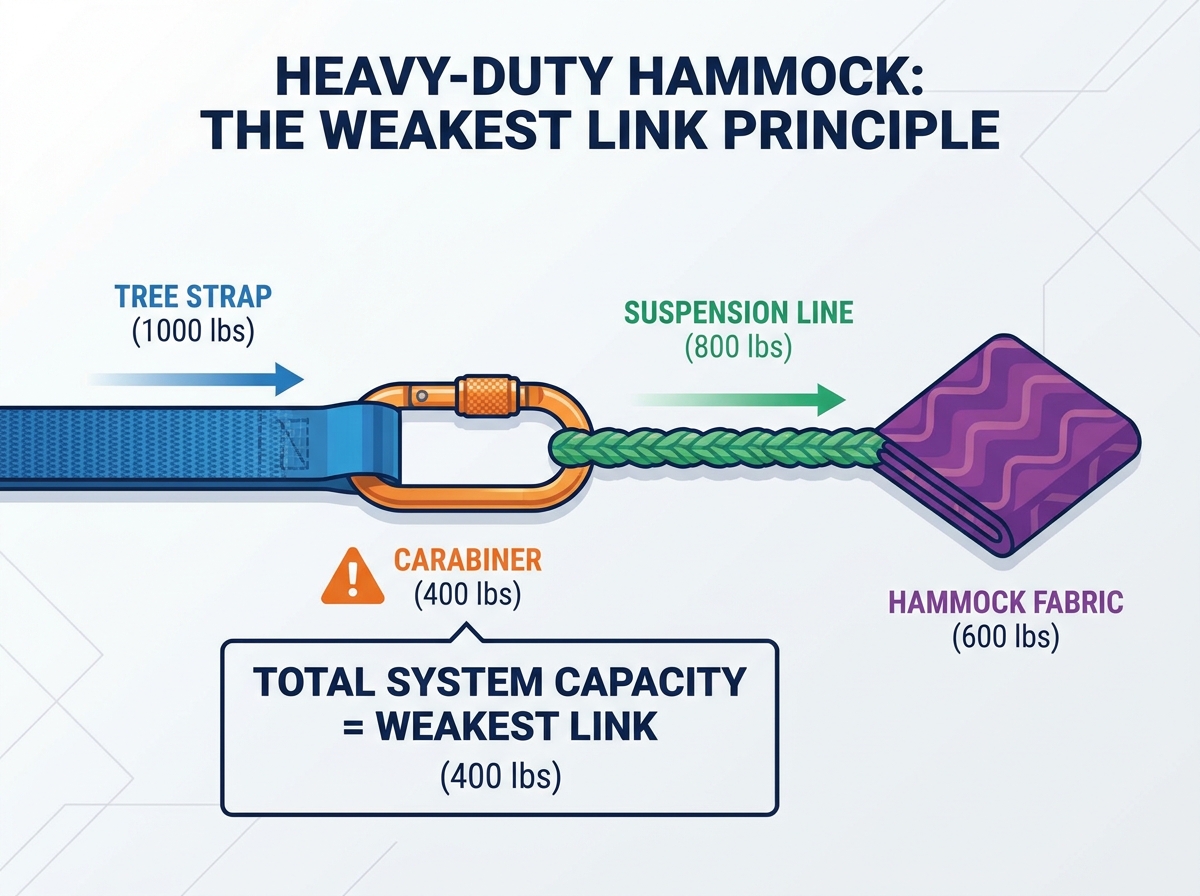
Your setup is only as strong as its weakest link. We call this the component chain. A rugged canvas bed means nothing if you hang it with cheap plastic ropes. You must evaluate every piece of the puzzle.
First, inspect the carabiners. Standard consumer clips bend under pressure. Look for climbing-grade carabiners rated in kilonewtons (kN). One kilonewton equals about 225 pounds of force. A 12kN rating handles roughly 2,700 pounds. This rating ensures your hardware survives dynamic drops. Next, check your suspension straps. High-denier polyester webbing resists stretching. It handles heavy friction against tree bark better than standard nylon.
Assessing Manufacturer Claims
Do not trust marketing copy blindly. Look for verified proof of strength. Reputable brands publish their testing methodologies clearly. They often use third-party testing facilities. You should look for ISO certifications. If a brand offers clear, documented load-testing videos, they usually stand behind their product. If a company hides their testing criteria, you should avoid them. Transparent assumptions build trust.
![Outdoor hammock setup in nature]()
Fabric and Construction: Evaluating Durability and Weather Resistance
The material you choose dictates the lifespan of your setup. Different environments demand different textiles. Heavy-duty construction requires specific manufacturing techniques. Let us examine the most common materials used today.
Nylon vs. Polyester vs. Textilene
Each material offers unique benefits and trade-offs. You must align the fabric with your environment.
- Ripstop Nylon: This material offers an incredible strength-to-weight ratio. Manufacturers weave a reinforcing grid into the fabric. This grid stops small tears from spreading. It is ideal for heavy-duty backcountry camping. It packs down small but holds immense weight.
- Polyester and Canvas: These fabrics feel sturdy and traditional. Polyester stretches less than nylon. It provides firm support for heavier users. Canvas is highly durable but absorbs moisture quickly. These materials work best in dry climates or sheltered patios.
- Textilene and Woven PVC: These synthetic blends offer supreme weather resistance. The woven PVC blocks UV rays efficiently. It resists mold, mildew, and rot completely. Textilene is the perfect choice for a permanent backyard fixture. It stays outside year-round without degrading.
Construction Indicators
Fabric alone cannot carry the load. The sewing techniques matter immensely. When you inspect an Outdoor hammock, look closely at the seams. You want to see triple-stitched nylon thread. Single stitching pops easily under dynamic stress.
Pay attention to the edge binding. The outer edges experience the highest tension. Quality models feature reinforced, rolled edges. This prevents the fabric from fraying over time. Check the end loops where the fabric gathers. These gathered ends should feature heavy-duty bar tacks. Bar tacks are tight zig-zag stitches. They anchor the suspension loops securely to the main bed.
Breathability vs. Strength
You face a trade-off between dense fabrics and airflow. High-denier canvas supports extreme weight effortlessly. However, it blocks air circulation. You will sweat heavily in hot, humid climates. Parachute nylon breathes better but may stretch too much for some users. Textilene offers a great middle ground. Its woven mesh structure allows cross-breezes while maintaining rigid support. Consider your local climate before you choose a fabric density.
Sizing Framework for Big and Tall Users
Many buyers assume "heavy duty" just means strong fabric. They ignore the dimensions. Sizing plays a massive role in structural integrity and user comfort. A small bed forces your body into awkward angles. It concentrates weight in the wrong areas.
Length-to-Height Ratio
Standard models usually measure around 9 feet long. This length fails taller users. If you are over 6 feet tall, a 9-foot bed creates an uncomfortable "banana shape". It forces your shoulders and feet upward. This hyper-extends your knees and squeezes your shoulders.
We highly recommend upgrading to an 11-foot or 12-foot model. Extra length allows you to lie diagonally across the fabric. A diagonal position creates a flat lay. It flattens the curve and supports your spine properly. It distributes your body weight evenly across the entire textile surface. This even distribution reduces stress on the end seams.
Single vs. Double Widths
The outdoor industry uses confusing terminology. "Double hammock" rarely means it comfortably fits two adults for sleeping. Instead, it refers to the fabric width. Single models measure about 4 to 5 feet wide. Double models measure 6 feet wide or more.
Larger individuals need this extra width. It provides necessary shoulder room. It allows the fabric to wrap around you securely without feeling restrictive. Even if you plan to sleep alone, a double-width design is crucial for big and tall users. It prevents the fabric from digging into your sides under heavy tension.
The Ridge Line Variable
Proper setup dictates comfort. You need a consistent sag angle. Experts agree a 30-degree angle from the anchor point is ideal. This angle balances the tension force and the sheer weight force perfectly.
Heavier users often struggle to maintain this angle. The fabric wants to stretch and cocoon tightly around them. A structural ridge line solves this problem. This is a strong cord running above the bed, connecting the two ends. It dictates the maximum distance between the ends. It locks in the sag angle permanently. A ridge line ensures the bed hangs exactly the same way every time, regardless of how tightly you pull the suspension straps.
Suspension Systems: Stand vs. Tree-Mounted Evaluator
Your anchor points do the heavy lifting. You can choose a freestanding structure or natural anchors. Both options require careful safety evaluations.
Heavy Duty Hammock Stands
Stands provide controlled, reliable support. You do not have to guess if a tree is strong enough. You know exactly what the stand can handle.
Material Choices: Manufacturers use powder-coated tubular steel or treated wood. Steel offers massive weight capacities. Powder coating prevents rust in wet environments. Wood looks beautiful but requires annual maintenance. It can rot if left in standing water.
Weight Limits: Always verify the stand rating. If your fabric handles 500 pounds, but your stand only holds 300 pounds, you have a 300-pound limit. Match the ratings exactly.
Portability vs. Stability: Heavy-duty stands use thick, dense metal. They resist tipping over perfectly. However, they weigh a lot. You cannot relocate them easily. They serve best as permanent patio fixtures.
Best Practices for Stands:
- Place stands on flat, level ground to prevent asymmetrical stress.
- Check the connecting bolts monthly to ensure they remain tight.
- Use rubber foot caps to prevent the base from scratching concrete or sinking into soft mud.
Tree-Mounted Systems (Straps and Anchors)
Mobile setups rely on straps and trees. This system offers incredible portability. It also introduces user error. You must select your components carefully.
Strap Width: Never use thin ropes. Ropes damage tree bark heavily. They also snap under intense dynamic loads. You need flat suspension straps. A minimum width of 1.5 to 2 inches is required. Wide straps spread the friction over a larger surface area. This protects the tree and increases the strap's tensile strength.
Hardware Selection: Discard any cheap S-hooks. They can unbend under heavy weight. Avoid standard wire-gate consumer carabiners. They lack the necessary kilonewton ratings. Use continuous loops made of Amsteel rope. Pair them with heavy-duty steel or climbing-grade aluminum carabiners. This combination guarantees maximum safety in the backcountry.
Shortlisting Your Options: A Decision-Stage Checklist
You have the technical knowledge now. You understand fabrics, dimensions, and hardware. It is time to narrow down your choices. Use this framework to make your final decision.
Determine the Primary Use Case
You cannot buy one model for every scenario. Define your primary environment clearly.
- Permanent Backyard Fixture: Prioritize UV resistance and weatherproofing. Choose Textilene or heavy canvas. Invest in a heavy tubular steel stand. Weight does not matter because you will not carry it.
- Mobile Camping Setup: Prioritize strength-to-weight ratios. Choose high-denier Ripstop nylon. Invest in wide polyester tree straps and aluminum climbing carabiners. You need gear that packs down into a backpack but supports your body safely.
Verify the Warranty
A warranty tells you how much the brand trusts its engineering. Flimsy products offer 30-day return windows. Heavy-duty equipment should come with robust guarantees.
Look for companies offering structural warranties. You want a minimum of a 1-year warranty on the fabric seams. For the hardware, seek out lifetime warranties. Carabiners and steel rings should never fail under normal loads. A strong warranty protects your investment against hidden manufacturing defects.
Perform a Complete System Assessment
Do not just look at the fabric price tag. A cheap fabric shell often requires immediate upgrades. You might buy a budget model, only to realize the included ropes are dangerous. You then have to buy upgraded wide straps. You have to purchase climbing carabiners separately.
Calculate your requirements up front. Ensure you acquire a complete, secure system from day one. Sometimes, buying a premium kit that includes high-rated hardware is smarter. It saves you the hassle of replacing inferior parts later. Always review the complete component chain before checking out.
Conclusion
Finding rugged, reliable outdoor gear requires careful attention to detail. You must look past flashy marketing terms. Focus strictly on the underlying engineering.
Here are your final action steps:
- Prioritize total system strength over aesthetics. Ensure your carabiners, straps, and stands match your fabric's weight rating.
- Choose the right dimensions. If you are tall, demand an 11-foot length for a flat, comfortable lay.
- Match your material to your climate. Use Textilene for permanent sun exposure and Ripstop nylon for mobile adventures.
- Measure your available mounting space today. Verify your total dynamic load requirements before finalizing any purchase.
By following these evidence-based guidelines, you will secure a comfortable, safe resting spot. You can relax confidently, knowing your equipment can handle the heavy lifting.
FAQ
Q: Can an outdoor hammock really support two adults safely?
A: Yes, provided the combined dynamic weight does not exceed the lowest-rated component in the suspension chain. This weak link is usually the tree straps or the metal stand. Furthermore, ensure the fabric width is a true "double" size, measuring at least 70 inches wide, to prevent uncomfortable squeezing.
Q: How do I prevent a heavy-duty hammock from flipping?
A: Stability relies heavily on a proper hang angle. Aim for approximately 30 degrees of sag. You must also lie diagonally across the fabric rather than straight down the middle. Note that spreader bar models are inherently more prone to flipping suddenly than gathered-end models.
Q: Can I leave a heavy-duty outdoor hammock outside year-round?
A: Even highly UV-resistant and rot-proof materials like Textilene will degrade faster with continuous exposure to harsh elements. While they survive outside, storing the fabric indoors during off-seasons or severe winter weather will drastically extend its overall lifespan.