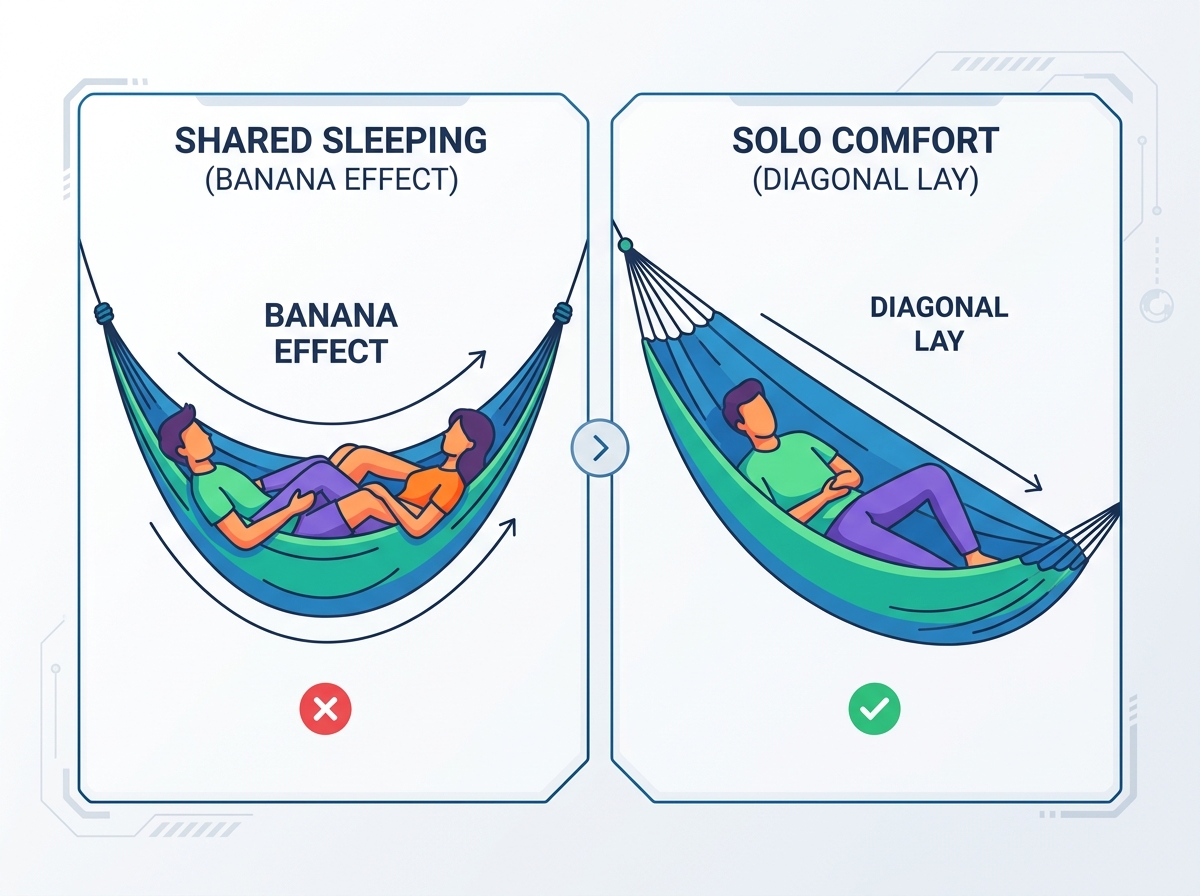
Look at modern outdoor brand marketing. You frequently see couples sleeping peacefully side-by-side in the trees. However, this idyllic imagery rarely matches the physical reality of hammock camping. Buyers face a frustrating dilemma when choosing their gear. They must decide between investing in a larger hammock for shared use or accepting reality. Sharing a single suspension system might completely compromise sleep quality for both users. Nobody wants to spend money only to wake up exhausted and sore.
Ultimately, a Two-Person Hammock is highly comfortable, but only under the right conditions. How you use it makes all the difference. Lounging on a lazy afternoon differs entirely from overnight camping. Furthermore, who is using it dictates its true value. A single camper seeking extra space experiences something vastly different than two people trying to share the exact same bed.
Key Takeaways
- The Physics of Sharing: Two people in a standard gathered-end hammock will inevitably slide toward the middle due to gravity (the "banana effect").
- Best Use Case for Couples: Excellent for backyard lounging, day hikes, and relaxing, but generally not recommended for shared overnight sleeping.
- Best Use Case for Solo Campers: A two-person (or "double") hammock provides the necessary width for a solo user to achieve a flat, ergonomic diagonal lay.
- The Golden Rule of Hammock Camping: If both people need to sleep soundly outdoors, hanging two separate single hammocks is the standard best practice.
The "Banana Effect": The Physics of Two People in One Hammock
The Gravity Problem
Gathered-end designs inevitably create a single low point in the center. Body weight naturally pushes the fabric down toward the earth. When two adults climb inside, gravity pulls them relentlessly together. Unless you deploy a highly specialized design, both users will slide directly into each other. Outdoor experts affectionately call this phenomenon the "banana effect." While it sounds fun for a quick afternoon cuddle, it becomes a literal pain during a long night in the woods. To avoid this, watch out for these common setup mistakes:
- Hanging the suspension straps too tightly, which creates steeper fabric walls.
- Choosing trees spaced too far apart, increasing the downward force.
- Placing the heaviest sleeper in first, forcing the lighter person to roll downhill.
Shoulder Squeeze & Pressure Points
Sharing a standard model introduces harsh physical realities. You will likely experience intense shoulder compression. The fabric wraps tightly around both occupants. This tension pulls your shoulders inward forcefully. You also face severely restricted movement. The combined body weight pulls every inch of fabric taut. This creates unforgiving pressure points along your hips, ribs, and outer thighs. Because you cannot easily shift positions, your spine stays locked in an unnatural curve. Your rotator cuffs bear the brunt of this inward pressure.
Motion Transfer
Motion transfer presents another major implementation risk to your rest. Disrupted sleep becomes almost guaranteed. When one person shifts an arm or leg, the fabric tension changes instantly. This shift immediately affects the other person. If your partner rolls over, you bounce violently. If they exit for a midnight bathroom break, you drop suddenly deeper into the pocket. You cannot separate your sleep environment from their physical movements. This continuous kinetic feedback loop prevents you from entering deep REM sleep.
![Two-person hammock setup in a forested area highlighting width and suspension]()
Clarifying the Terminology: "Double" vs. "Two-Person" Hammocks
Double Hammocks (The Solo Upgrade)
Shopping for outdoor gear involves navigating confusing terminology. Backpacking brands commonly market their wider products as "doubles." This label usually implies a wider fabric bed. It rarely indicates a true multi-user shelter. A standard double typically measures between 6 to 6.5 feet wide. Manufacturers actually design this extra width for one person. The excess fabric allows a solo sleeper to lie diagonally. This asymmetrical positioning flattens the fabric bed completely. You avoid the curved banana shape. It represents a massive upgrade for solo comfort.
True Two-Person Hammocks
True tandem models feature construction built explicitly for two distinct bodies. They prevent the dreaded center slide through physical engineering rather than just extra fabric. You will often see models utilizing rigid spreader bars at both ends. Some premium designs feature internal fabric dividers. These dividers create separate sleeping pockets. Others rely on specialized three-point anchor systems. These sophisticated setups require three trees to create a massive, taut triangle. They keep both sleepers entirely separate while sharing a single unit overhead.
Weight Capacity vs. Usable Space
Buyers frequently confuse weight ratings with actual sleeping space. A high-quality nylon sling might carry a 500-pound static load rating. This safely supports two average adults without snapping the fabric. However, weight capacity does not equal sleeping comfort. A static load rating only guarantees the material will hold. Just because the suspension straps hold the load safely does not mean you have enough room. You might stay suspended off the ground safely, but you will still experience severe shoulder squeeze.
The Pros of a Two-Person Hammock
Superior Solo Comfort
Despite the challenges of sharing, buying a larger size offers incredible benefits. A larger fabric width unlocks the ultimate sleep experience for a single user. You can lie asymmetrically across the material. This specific angle flattens your spine entirely. It prevents the uncomfortable hyperextension of the knees. Solo campers consistently report better rest in wider designs. The extra room allows you to shift positions easily during the night. You never feel claustrophobic.
Durability and Load Bearing
Manufacturers build larger models to withstand higher stress. They utilize higher denier fabrics. You will find robust materials like 70D or 210T parachute nylon. They also feature reinforced triple-stitched seams. This heavy-duty construction offers immense peace of mind. Your gear will enjoy greater longevity. It easily handles heavy gear, hiking boots, or energetic dogs without tearing. You can trust the durability during rugged trips.
The Social Element
They serve as the ultimate social furniture for camps and patios. They are ideal for couples sitting crossways together. You can hang them chair-style for afternoon reading. They excel at backyard lounging during the day. Two adults can relax comfortably for hours. You avoid pushing weight limits or risking a tear. It successfully transforms a solitary sleep system into a shared outdoor sofa.
Extra Fabric for Warmth
Solo users can leverage the excess width for temperature control. A double model provides several extra feet of material on either side. You can fold this excess width directly over your body. It acts as a lightweight top cover. This technique successfully blocks brisk wind. It creates a small microclimate to trap body heat on chilly evenings. This "peapod" method is a favorite among experienced backpackers.
The Cons and Comfort Risks for Shared Use
Overnight Sleep Quality
You must understand the drawbacks before relying on one unit for two sleepers. Ignorance often leads to miserable camping trips. The reality is harsh for most adults attempting to share. Sleeping side-by-side overnight is profoundly uncomfortable. You face unavoidable physical compression from your partner's body weight. Arms fall asleep quickly. Hips ache from the intense pressure. You cannot easily adjust your legs without kicking your companion. Deep sleep rarely happens under these compressed conditions. Most couples abandon the attempt by midnight.
The "Cold Butt Syndrome" (CBS) Complication
Staying warm presents another significant challenge. Outdoor sleepers rely on underquilts to insulate their backs from cold air. However, using underquilts effectively for two people is incredibly difficult. Two distinct bodies create uneven shapes against the fabric. Any air gaps created between the two bodies let cold air rush in. Convection rapidly strips away your body heat. This phenomenon is known as Cold Butt Syndrome. It quickly drains your core temperature, leaving you shivering.
Weight and Packability
Backpackers face notable trade-offs regarding gear weight. Double hammocks require significantly more fabric. They also demand heavier suspension systems to handle the increased load rating. This adds unnecessary ounces to your backpack. If the second person cannot sleep in it comfortably anyway, you are carrying dead weight. A solo hiker aiming for a lightweight kit might prefer a standard single size to save space in their pack.
Decision Framework: Should You Buy a Two-Person Hammock?
Choosing the right gear depends entirely on your specific outdoor goals. Use this framework to match your purchase with your actual needs. Aligning your expectations prevents buyer's remorse and guarantees better outdoor experiences.
Scenario A: Backyard Lounging & Car Camping
Recommendation: Buy a Double/Two-Person.
Prioritize maximum comfort above all else. In this scenario, space and weight are complete non-issues. You park your car mere feet from your campsite. Look for spreader bar designs. Choose heavy-duty cotton or thick canvas. These robust materials feel great against the skin. They handle rigorous daytime use perfectly. A Two-Person Hammock shines brightest in this casual environment.
Scenario B: Solo Backpacking
Recommendation: Buy a Double.
Even though you hike alone, the extra fabric provides critical value. You should prioritize a lightweight double gathered-end model. It guarantees you can achieve the essential diagonal lay. You will sleep flat and wake up refreshed. Just ensure you select lighter denier fabrics to keep your pack weight manageable.
Scenario C: Couples Backpacking
Recommendation: Buy Two Singles.
Emphasize individual sleep quality above all else. Buying two single hammocks is the expert-backed solution for camping couples. You can utilize specialized spreader bar hardware to hang them side-by-side. You suspend both units from the exact same trees. You stay close to your partner but maintain separate sleeping pockets. Neither person compromises their rest.
| Primary Use Case | Recommended Gear Type | Key Benefit | Important Consideration |
| Backyard Lounging | Double or Spreader Bar | Maximum space for socializing | Weight and pack size do not matter |
| Solo Backpacking | Lightweight Double | Ergonomic diagonal sleep position | Monitor fabric denier to save ounces |
| Couples Backpacking | Two Single Hammocks | Undisturbed, isolated sleep | Requires tandem hanging hardware |
Setup Tips to Maximize Shared Comfort (If You Must Share)
Sometimes you have no other choice but to share a single unit. Perhaps you forgot the extra gear. Maybe you just want to experiment for one night. If you must share, follow these best practices to mitigate the discomfort.
The 30-Degree Angle
You must hang your straps correctly. We must reiterate the necessity of a proper hang angle. Aim for exactly 30 degrees from the tree to the gathered end. This specific angle minimizes extreme fabric tension. It provides the optimal sag needed to reduce shoulder squeeze. Hanging the suspension too tightly pulls the walls up sharply. This crushes you together instantly. The 30-degree rule dictates the perfect balance of slack and support.
Head-to-Toe Positioning
You can employ a practical workaround to manage the limited space. Try lying head-to-toe inside the gathered-end fabric. One person places their head at the left end. The other places their head at the right end. This configuration balances the weight distribution across the material. It gives both sets of wide shoulders much more room to breathe. You avoid knocking elbows completely. It requires coordination, but it works.
Use Structural Ridgelines
Advanced campers swear by this modification. We highly recommend adding a structural ridgeline to your setup. A ridgeline is a strong cord connecting both gathered ends. It ensures consistent sag regardless of the tree distance. It helps you manage the deep center pocket perfectly. The ridgeline dictates the exact amount of slack in the fabric. This prevents the sides from swallowing you whole.
Quick Setup Checklist for Couples
- Locate two sturdy trees spaced roughly 13 to 15 feet apart.
- Secure tree straps at head height to establish the initial baseline.
- Adjust the suspension loops until the straps hit the crucial 30-degree mark.
- Attach your structural ridgeline to lock in the optimal fabric sag.
- Carefully enter one at a time, establishing the head-to-toe layout.
Conclusion
A double-width setup remains an excellent investment for any outdoor enthusiast. The buyer simply must align their expectations with the laws of physics. It acts as the ultimate sleep system for a solo camper seeking an ergonomic, flat lay. Conversely, it serves as a fantastic social lounger for couples during the day. The problems only arise when two adults attempt a full night of shared sleep without specialized tandem gear.
Before planning your next trip, review your specific needs carefully. Check the weight capacities and fabric widths of your current gear. Consider purchasing a dedicated double-wide underquilt if you plan to lounge in cold weather. If you and your partner want to sleep side-by-side, look into tandem hanging hardware today. Proper preparation guarantees you will enjoy the outdoors comfortably, no matter how you choose to hang.
FAQ
Q: Can two adults sleep comfortably in a double hammock overnight?
A: Generally no, unless using a specialized multi-point hammock. Standard gathered-end designs force both users toward the center. Expect significant squishing, shoulder compression, and disrupted sleep due to constant motion transfer.
Q: What is the difference between a single and double hammock?
A: The difference is primarily width. Singles are roughly 4-5 feet wide. Doubles are 6-6.5 feet wide. Both usually have the exact same length. The extra width allows solo sleepers to lie diagonally for a flatter back.
Q: How much weight can a two-person hammock hold?
A: Typically they hold between 400 and 500 pounds safely. However, you must always verify the manufacturer's specific rating. Furthermore, check the suspension straps' weight rating as well, since they bear the entire dynamic load.
Q: How do you keep from sliding together in a hammock?
A: You can lie head-to-toe to balance weight. You can use a model designed with rigid spreader bars. Alternatively, opt for hanging two single hammocks side-by-side on the exact same trees using tandem hardware.