Transitioning from casual outdoor interest to actively evaluating gear requires careful consideration. You might want a reliable setup for weekend camping. Perhaps you prefer backcountry hiking. Maybe you simply enjoy relaxing on your backyard patio. Many buyers face a common friction point during this initial discovery process. They assume a Double Hammock strictly serves two people. This assumption creates unnecessary confusion for solo adventurers.
In reality, solo users overwhelmingly prefer these wider models. Extra fabric provides vastly superior sleep ergonomics. We will break down key structural differences across various designs. We will explore material evaluations deeply. We will also examine practical usage realities outdoors. This comprehensive guide will help you make an informed decision. By the end, you will understand exactly which setup matches your specific outdoor goals. You will avoid common beginner mistakes entirely.
Key Takeaways
- Sizing realities: A double hammock is defined primarily by its width (typically 60 to 74+ inches) and weight capacity (400 to 500+ lbs), not necessarily its ability to comfortably sleep two adults overnight.
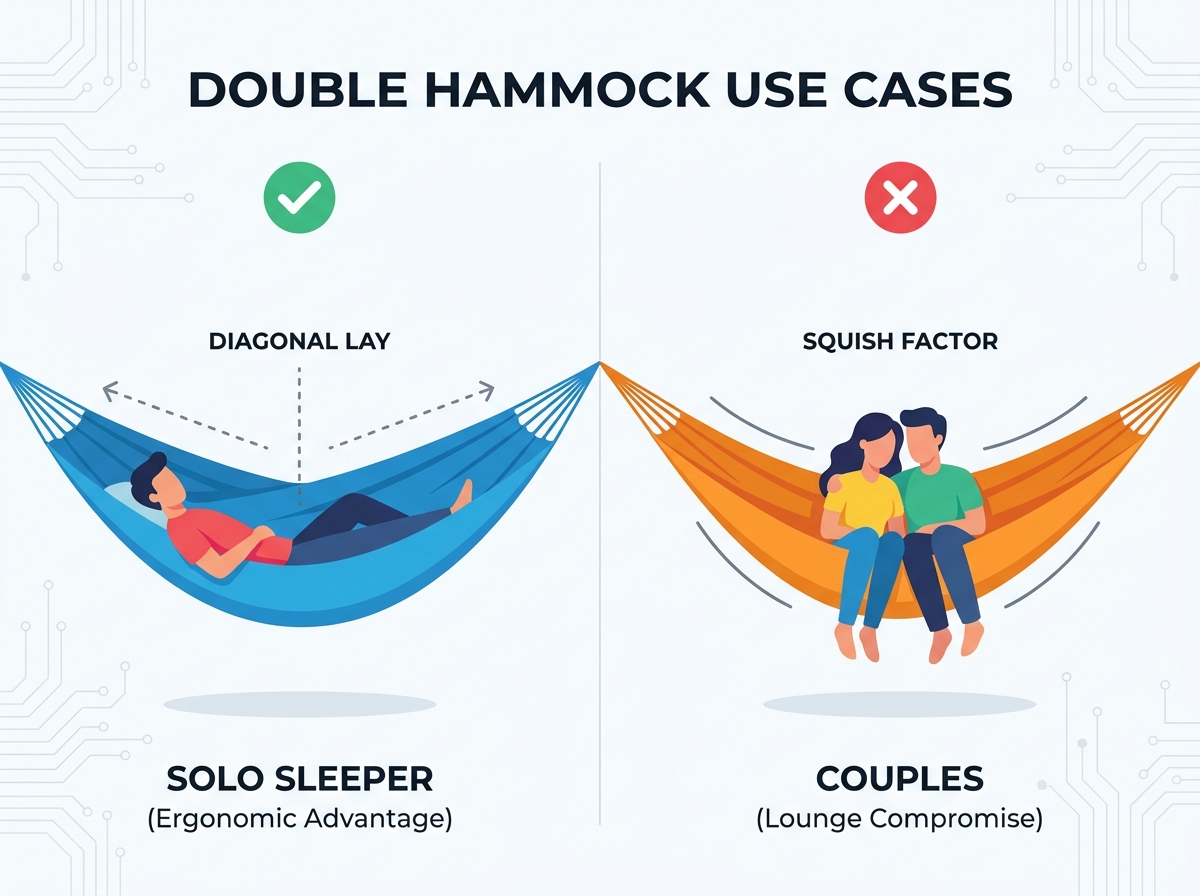
- The solo advantage: For solo campers, the extra width of a double hammock allows for a true "diagonal lay," which flattens the sleeping surface and prevents spinal bowing.
- Material dictates function: Parachute nylon is mandatory for scalable, lightweight outdoor use, while cotton or quilted fabrics are strictly for static backyard setups.
- The two-person compromise: Actually sleeping two people in a gathered-end double hammock requires navigating the "squish factor"—making it better suited for temporary lounging rather than overnight sleeping.
Defining the Double Hammock: Dimensions, Capacity, and Core Purpose
Standard Specifications vs. Marketing Claims
Let us clarify the baseline metrics first. Industry-standard models measure at least six feet wide. They generally span roughly nine to ten feet long. These generous dimensions create a massive usable surface area. Manufacturers design these products using reinforced structural techniques. Triple-stitched seams handle significant physical stress. High-denier fabrics resist tearing under heavy pressure.
These specialized features allow weight limits reaching 400 to 500 pounds. Standard single versions usually peak around 250 pounds. You must read marketing claims very carefully. A high weight capacity does not guarantee spacious comfort for multiple people. It simply confirms structural safety under a specified load. Always prioritize width dimensions over sheer weight capacity limits.
Gathered-End vs. Spreader Bar Designs
You must choose between two primary structural designs. Gathered-end models bunch the fabric tightly at both attachment points. This design remains highly portable. It naturally cocoons the user for secure sleeping. Backpackers and campers prefer gathered ends for reliable outdoor use. They pack down into tiny stuff sacks effortlessly.
Spreader bar designs look very different. They feature wooden or metal bars at each end. These rigid bars keep the fabric taut and perfectly flat. They look fantastic in a static backyard setting. However, they carry a high risk of tipping over. If you shift your weight off-center, you will likely flip. We strictly evaluate spreader bar models for backyard aesthetics rather than trail use.
![Double Hammock set up between two trees in a forest setting]()
Single vs. Double Hammock: Evaluating Your Optimal Use Case
The Solo Sleeper’s Perspective (The Ergonomic Advantage)
Solo campers often wonder why they need extra width. The answer lies in the "diagonal lay" technique. Extra fabric allows a single user to position their body diagonally across the centerline. This specific angle flattens the sleeping surface entirely. It directly solves a major camping pain point.
You will no longer wake up complaining about a sore back. Single models force your body into a deep banana shape. They cause severe spinal bowing over several hours. Wider fabric grants you complete ergonomic control. You can sleep on your side comfortably. You achieve proper spinal alignment effortlessly.
The Couples' Lounging Perspective
Couples frequently buy these for shared use. We must outline the physical realities of two adults sharing this space. The setup succeeds brilliantly for afternoon lounging. You can sit side-by-side easily. You can read a book or enjoy a sunset together.
Overnight sleeping introduces major spatial challenges. Thermal regulation becomes incredibly difficult. Body heat gets trapped unpredictably between two people. Space disappears quickly when both people try stretching out. Every minor movement disturbs your partner. Sharing works best for temporary daytime relaxation.
Weight and Packability Trade-offs
Let us present the data clearly. Upgrading adds minimal weight to your pack. You typically carry only four to eight extra ounces. Backpackers obsess over every ounce of gear. Yet, this minor weight penalty remains highly justifiable.
The exponential increase in comfort makes a massive difference. You sleep better and recover faster on the trail. Compressing the extra fabric requires very little extra space. A wider model still fits neatly into standard compression sacks. The ergonomic benefits far outweigh the tiny weight increase.
Key Evaluation Criteria for Buyers (Materials, Suspension, and Build)
Fabric and Denier Ratings
Material choices dictate performance and longevity completely. The industry standard utilizes 70D to 210T parachute nylon. Denier measures the thickness of individual fabric threads. This nylon offers an excellent durability-to-weight ratio. It breathes incredibly well in hot weather. It also resists light weather exposure effectively.
Cotton and canvas offer a completely different experience. You gain exceptional physical comfort and strong aesthetic appeal. However, we must explicitly flag several risks here. Cotton absorbs moisture rapidly. It dries very slowly outdoors. It carries a severe risk of mold development. It weighs significantly more than nylon.
The following chart illustrates core differences between common materials.
| Material Type | Primary Use Environment | Durability & Weight | Weather Resistance |
| 70D/210T Parachute Nylon | Backpacking, Camping, Trail | High Durability, Ultra-lightweight | Quick-drying, Mildew resistant |
| Cotton / Quilted Canvas | Backyard, Patio, Indoors | Moderate Durability, Heavy | Absorbs water, Prone to mold |
| Ripstop Nylon | Ultralight Backpacking | Extreme Durability, Lightest | Fast-drying, Tear resistant |
Suspension Systems and Safety Compliance
You must prioritize proper suspension hardware. We advise against traditional hanging ropes. Ropes dig deeply into tree bark. They cause permanent damage to nature. You should always look for tree-friendly straps instead. Find wide polyester webbing systems.
Demand a one-inch minimum width for environmental compliance. Carabiner quality also matters greatly. Standard steel carabiners function well but add unnecessary weight. Climbing-grade aluminum wiregate carabiners offer superior performance. They reduce pack weight significantly. They maintain exceptional structural safety under heavy loads.
Modularity and Ecosystem Integration
Your gear rarely exists in a vacuum. You must assess compatibility regarding aftermarket accessories. Can you easily integrate standard bug nets? Mosquitoes will ruin an unprotected trip quickly. Will standard underquilts fit the suspension correctly?
Cold weather demands reliable bottom insulation. Can you rig a standard rain tarp over the central ridgeline? Ecosystem integration extends the usability of your gear across four seasons. Ensure your chosen brand supports modular upgrades.
Implementation Realities: The Risks of Two-Person Hammocking
The "Squish" Factor and Center of Gravity
We must provide an evidence-based warning regarding shared sleeping. Physics dictates how gathered-end models behave. Gravity forces the heaviest parts of both bodies downward. You slide toward the lowest central point inevitably.
This results in users crushing heavily against each other. We call this the "squish factor". Shoulders compress uncomfortably tight. Limbs tangle constantly throughout the night. No amount of adjusting will defeat gravity. You cannot maintain personal space.
Temperature Management
Shared sleeping creates massive insulation failures. You usually rely on a sleeping bag for warmth. When two people share the space, they press against the sides tightly. This pressure compresses the sleeping bag insulation entirely.
Compressed insulation loses all loft. It cannot trap heat effectively anymore. This scenario causes "Cold Butt Syndrome" rapidly. Frigid air moves underneath the nylon fabric. It pulls heat away from your compressed underside continuously.
Alternative Solutions for Couples
Couples need reliable workarounds for overnight trips. We propose using a dual-hanger system instead. You hang two separate single models side-by-side. You attach them using the exact same trees.
You simply place specialized spreader poles between the suspensions. This keeps both users close together. It prevents you from swinging into each other. You avoid forcing two people into one tight space. You both achieve a flat, comfortable diagonal lay independently.
Shortlisting Logic and Next-Step Actions
Define Your Primary Environment
Different environments demand different gear configurations. You must match your purchase to your primary location.
- For the Ultralight Backpacker: You should prioritize ripstop nylon. Look for integrated bug nets. Demand aluminum hardware to shed pack weight.
- For the Car Camper: Prioritize robust 210T nylon. Seek extreme width measuring 70 inches or more. Heavy-duty daisy-chain straps make setup completely effortless.
- For the Patio Lounger: Prioritize quilted fabrics. Wooden spreader bars enhance visual appeal. Ensure compatibility alongside sturdy steel stands. If you want maximum backyard relaxation, consider a premium Double Hammock for ultimate durability and comfort.
Setting a Realistic Budget
Let us break down the standard cost tiers. Understanding these brackets helps you avoid overspending.
- $30 to $50 Tier: This tier fits entry-level buyers perfectly. It suits occasional use and mild weather conditions. Expect basic steel carabiners and heavier nylon.
- $60 to $120 Tier: This represents the prosumer category. These models remain highly durable. They arrive fully camping-ready. They often include premium daisy-chain straps.
- $150+ Tier: Here you find highly specialized gear. Expect ultralight ripstop materials. These often feature fully integrated sleep systems including bug nets.
Final Buyer Checklist
Follow this simple checklist before purchasing. A quick review prevents immediate buyer remorse.
- Verify the exact dimensions closely. Aim for at least 60 inches of width.
- Check the strap inclusion immediately. Some brands sell suspension straps separately.
- Examine the carabiner material. Ensure they provide climbing-grade aluminum for trail use.
- Confirm the warranty policy details. Look for lifetime manufacturer defect coverage.
Conclusion
We can confidently summarize this buying decision. A wider setup is not just for two people. It fundamentally upgrades comfort, space, and sleeping ergonomics for solo users. It also serves as a highly versatile lounging tool for couples. You should prioritize suspension safety above all else. Value material durability over purely aesthetic features.
Evaluate your primary outdoor environment honestly. Apply the correct budget tier to your needs. Invest in tree-friendly straps immediately. Practice the diagonal lay technique before your first trip. This proactive strategy guarantees a successful and comfortable outdoor experience.
FAQ
Q: Can one person comfortably sleep in a double hammock?
A: Yes, experts highly recommend it. A wider surface allows solo sleepers to position themselves diagonally across the fabric. This specific angle flattens the sleeping surface completely. It eliminates the uncomfortable banana curve associated with narrow designs. You will enjoy significantly better spinal support and overall sleep ergonomics.
Q: Will a double hammock fit on a standard hammock stand?
A: You must measure your specific stand first. Usually, a nine to ten-foot model requires at least a ten-foot stand. However, twelve to fifteen feet provides optimal hanging distance. If your stand is too short, the fabric will sag completely to the ground. Always double-check your dimensions before hanging.
Q: Do I need a special underquilt for a double hammock?
A: Standard underquilts generally fit perfectly fine. The insulation only needs to cover the user directly, not the excess fabric. You position the underquilt directly beneath your body. The extra nylon simply drapes around you. You rarely need an oversized quilt unless two people attempt to sleep together overnight.
Q: Is a spreader bar double hammock better than a gathered-end?
A: This depends entirely on your usage. Spreader bars are comfortable and look great on a patio. However, they remain highly prone to flipping if you shift your weight. Gathered-end designs offer vastly superior stability. They securely cocoon the user, making them the superior choice for active camping.