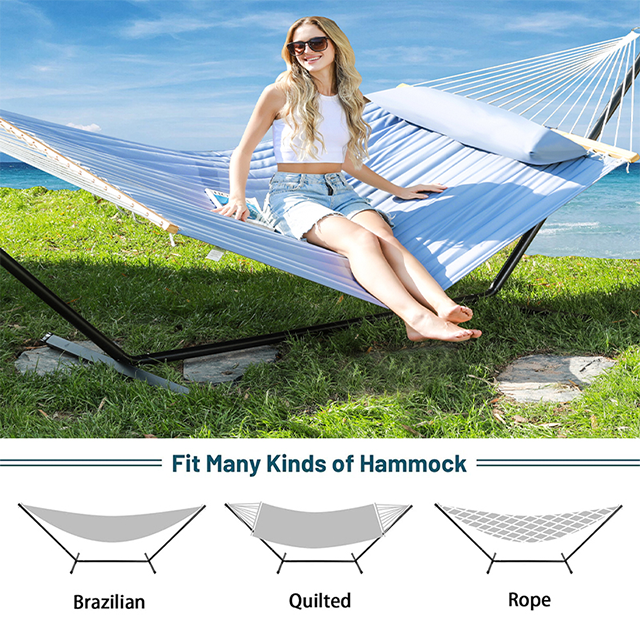
A Steel Hammock Stand offers unmatched convenience and structural security for backyard lounging. Unfortunately, the market is heavily flooded with flimsy, rust-prone options. Buying the wrong stand inevitably leads to sagging hammocks and severely damaged patios. Hardware often deteriorates rapidly after a single rainy season. This ruins your relaxation experience entirely. You need reliable frame geometry. You also need proven metal treatments ensuring long-term outdoor endurance. Trusting your lounging gear requires understanding basic structural engineering principles. This guide breaks down the exact specifications, sizing frameworks, and material realities you need to evaluate before purchasing a heavy-duty frame. We will explore tubular thickness, safe load capacities, and proper weatherization techniques. Soon, you will know exactly how to identify frames built for years of heavy outdoor usage.
Key Takeaways
- Size matters most: Stand length must align strictly with your hammock type (e.g., 15-foot stands for spreader-bar hammocks; 9-foot stands for gathered-end styles).
- Coating over base metal: Powder-coated steel is a non-negotiable baseline for weather resistance, but regular maintenance is still required.
- Look beyond stated capacities: A 300 lb to 450 lb weight rating is standard, but structural stability relies on wide base footprints and reinforced joint connections.
- Assembly impacts durability: Tool-free snap-button assemblies are highly portable but require proper winterizing to prevent internal tube rusting.
Framing Your Decision: Matching the Steel Hammock Stand to Your Needs
Frame your buying decision around the hammock you already own. You might also frame it around the model you plan to buy soon. We call this the compatibility rule. A sturdy frame provides zero value if it stretches your fabric incorrectly. You must align the base geometry directly to your specific lounging gear. Purchasing a mismatched frame creates dangerous tension points. It can easily rip delicate fabrics or snap inferior suspension chains.
Consider the major functional differences between gathered-end styles and spreader-bar types. Traditional gathered-end hammocks naturally curve into a deep banana shape. Brazilian and Mayan designs usually utilize this gathered style. They require a shorter, more compact frame. These stands typically span about 9 feet in length. Alternatively, flat spreader-bar hammocks utilize wooden bars at both ends. They stretch out horizontally and stay completely flat. Resort-style aesthetics usually feature these spreader bars. They require much longer frames, usually spanning 12 to 15 feet. You cannot safely mix these two distinct styles.
Space limitations dictate your final patio layout heavily. We provide a quick mental framework for footprint evaluation. A 15-foot frame requires at least 17 feet of linear clearance. You need this generous buffer zone for safe swinging. It also allows safe pedestrian bypass around the active swinging area. Always measure your outdoor space meticulously before ordering any large structure. Crowding a massive frame onto a tiny balcony creates tripping hazards. You must ensure adequate breathing room for maximum relaxation.
![Durable Steel Hammock Stand Assessment]()
Assessing Construction Quality and Weather Resistance
Heavy-duty tubular steel represents the ultimate standard for durable frames. Thicker steel directly prevents bending under dynamic weight. Dynamic weight occurs during sitting, shifting, or swinging. You generate varying stress points across the entire frame during active use. High-gauge tubular metal absorbs this kinetic energy safely. Lower gauge numbers always indicate thicker steel walls. You should prioritize these thicker walls to resist structural warping over time. Thin, cheap metal eventually buckles under the pressure of daily use.
We must address the true reality of powder coating. Reliable manufacturers apply powder-coated finishes using an electrostatic baking process. You often find these finishes in bronze, black, or textured metallic tones. This baked-on protective layer establishes a non-negotiable baseline for outdoor weather resistance. It defends the core metal against intense UV rays and coastal salt air. However, we must clarify one vital, transparent fact. Powder coating is highly rust-resistant, but it is not entirely rust-proof. If you scratch the finish deeply enough to expose raw metal, oxidation begins immediately. Lawnmower bumps or patio dragging commonly cause these initial abrasions.
Hardware quality and weld integrity dictate overall structural longevity. Instruct buyers to look closely for clean, continuous welds along all major joints. Spotty or bubbling welds often indicate poor, rushed manufacturing processes. Additionally, you must verify the hanging hardware. Always look for galvanized or stainless-steel S-hooks and heavy-duty suspension chains. These vital connection points handle severe, constant friction. They demand maximum rust resistance to prevent sudden mid-air hardware failures.
Decoding Weight Limits and Structural Stability
You should evaluate safe working loads carefully before trusting any brand. We recommend discussing standard weight capacities openly. Most entry-level frames start at 300 lbs for single-person use. For two-person lounging setups, you require a minimum rating of 450 lbs or higher. We strongly caution against trusting exaggerated weight claims blindly. You must inspect the base design visually before believing any high-capacity marketing numbers. Marketing materials often highlight static load tests, ignoring the intense forces of dynamic swinging.
Structural stability relies heavily on base footprint dynamics. A wider base fundamentally prevents dangerous tipping incidents. Look for frames forming a broad "U" or "V" shape at the bottom floor points. Narrow bases might save small amounts of patio space initially. However, they dramatically increase sudden rollover risks. You want a broad foundation gripping the ground securely. A well-proportioned Steel Hammock Stand distributes user weight evenly across its entire footprint. This balanced center of gravity keeps the frame rooted firmly.
Vibration and movement also reveal structural quality instantly. We evaluate how joint design directly impacts overall sway stability. Gusseted joints or tightly engineered connections prevent unwanted lateral wobble. Cheaper frames often sway loosely side-to-side during use. They sway excessively because the connecting tubes fit poorly. This loose tolerance causes uncomfortable vibration and accelerates dangerous metal fatigue. Precise engineering limits unnecessary joint travel, ensuring a smooth, highly predictable motion.
Assembly, Portability, and Implementation Risks
Modern frames frequently utilize tool-free assembly mechanics. We see spring-pin or snap-button locking mechanisms on almost every consumer model. They offer a simple, 5-minute setup process. You rarely need wrenches or heavy mechanical tools. Despite this incredible convenience, we highlight a serious implementation risk. Rainwater can easily enter the hollow tubes through these small pin holes. Trapped internal moisture quickly corrodes the core frame from the inside out. You might not notice this hidden deterioration until a sudden structural collapse occurs.
You must analyze the inherent trade-off between weight and portability. A robust frame usually weighs 40 to 50 lbs minimum. This heavier dense metal ensures superior safety and long-term durability. The extreme density grounds the unit firmly during intense wind gusts. However, this extra weight inherently sacrifices quick, solo portability. You must frame this as a necessary compromise for heavy-duty stability. If you frequently take your gear camping or RVing, lighter materials help immensely. Unfortunately, lighter frames always compromise daily backyard durability.
Surface protection deserves careful, proactive attention. Heavy metal bases easily scratch expensive wooden decks. They also gouge delicate patio tiles deeply. Dragging the frame even slightly causes permanent surface damage. We highly recommend looking for models utilizing rubberized end caps. Plastic foot protectors also perform exceptionally well. They shield your expensive outdoor flooring from abrasive steel edges. You can also purchase thick neoprene pads for added deck protection.
Shortlisting Logic: How to Make Your Final Selection
We recommend utilizing specific shortlisting logic to finalize your selection. Breaking down the complex process prevents costly sizing errors. Proper planning ensures you secure the exact correct frame immediately.
- Step 1: Size check. Filter your options strictly by the required length for your specific hammock. Do not assume adjustable chains will miraculously fix a fundamentally incorrect frame size.
- Step 2: Climate check. Consider your local weather environment carefully. If living in a humid or coastal environment, prioritize heavily coated metal. Plan for seasonal indoor storage to strictly preserve the integrity of all joints.
- Step 3: Budget vs. Lifespan. Balance your upfront investment against actual longevity. An entry-level, budget-tier frame will likely last one single season. Alternatively, a premium heavy-duty frame will last for many years. It only requires minor touch-up maintenance occasionally.
Let us review proper sizing metrics in a comprehensive chart format. This visual guide simplifies the decision process.
Stand Size Compatibility Chart
| Hammock Design Type | Average Stand Length Needed | Typical Clearance Required | Ideal Usage Scenario |
| Traditional Gathered-End | 9 to 10 feet | 11 to 12 feet | Compact patios, solo lounging, camping setups |
| Flat Spreader Bar | 12 to 15 feet | 14 to 17 feet | Large open backyards, tandem use, sunbathing |
Many buyers accidentally skip fundamental measuring steps. We see these sizing failures happen frequently.
Common Sizing Mistakes
- Guessing the hammock length without properly measuring the metal suspension rings.
- Ignoring the extra chain length desperately needed for proper tension adjustment.
- Assuming all stands universally fit every exotic fabric style sold on the market.
We also strongly recommend following these strict maintenance best practices. Taking these proactive steps doubles the lifespan of your frame.
Maintenance Best Practices
- Inspect all welded joints carefully at the beginning of each spring season.
- Apply a clear rust-inhibiting silicone spray generously over all snap-button holes.
- Disassemble the hollow tubes and store them indoors safely during freezing weather.
- Replace galvanized S-hooks immediately upon noticing deep surface pitting.
Conclusion
A durable frame acts as a vital investment in daily safety and outdoor comfort. Rushing this specific purchase often causes frustrating structural failures. It can also ruin your carefully planned outdoor patio aesthetics. We strongly advise prioritizing thick tubular construction and robust finishes. Do not get distracted by purely aesthetic features. A visually stunning frame holds absolutely zero value if it collapses under stress.
Always verify exact dimensions meticulously before assuming full compatibility. Your immediate next action is very straightforward. Measure your hammock completely flat on the ground from one O-ring to the other O-ring. Complete this simple measurement before browsing any product pages online. Once you hold that exact measurement, you can shop confidently. Secure a Steel Hammock Stand exceeding your fabric length by at least one and a half feet. Your perfect backyard oasis awaits proper, careful execution.
FAQ
Q: Can I leave a steel hammock stand outside year-round?
A: Yes, you can leave it outside during mild seasons. However, winterizing or covering the frame is highly recommended. Heavy rain and snow introduce water directly into the snap-button holes. This causes water pooling inside the metal tubes. Eventually, this trapped moisture leads to internal freezing and rust. Storing it in a dry garage greatly extends its total lifespan.
Q: How do I know if my hammock will fit a stand?
A: Follow a standard rule of thumb for proper sizing. The stand should generally be 1.5 to 2 feet longer than the hammock's total flat length. You can easily adjust minor tension differences using suspension chains. Measure your fabric flat on the ground from ring to ring. If the frame is too short, your body will drag on the grass.
Q: How do I fix scratches on a powder-coated steel hammock stand?
A: You can fix scratches using a practical maintenance approach. First, lightly sand the damaged area to remove loose debris and budding rust. Wipe it completely clean and let it dry. Finally, apply a rust-inhibiting exterior spray enamel over the scratch. This prevents rapid oxidation from spreading beneath the surrounding powder coat.
Q: Is a steel hammock stand better than wood?
A: Steel provides a lower maintenance, highly portable, and easily assembled option. Wood definitely offers premium, natural aesthetics for upscale patios. However, wooden frames require frequent sanding and oiling to prevent rot. They are also incredibly heavy and difficult to reposition. Steel serves as a highly functional, weather-ready alternative for most typical outdoor environments.