We often picture couples blissfully swaying together under a summer breeze. Yet, gravity tells a different story. You hop in, expecting relaxation. You instantly roll violently into the center instead. This jarring experience ruins the romantic illusion. We call this "the squish." Buyers frequently purchase double models for shared use. They quickly discover crushed shoulders or dangerous structural failures. Poor suspension setups cause these issues. You need a better approach.
We created this guide to bridge the gap between expectation and physical reality. We provide a clear, use-case-driven framework. You will learn how to evaluate and set up your gear properly. You can avoid dangerous collapses and preserve tree health. Whether you want a static patio oasis or a lightweight backcountry bed, we have you covered. You will find actionable steps here for ultimate comfort.
Key Takeaways
- Intent Matters: A "double hammock" used for solo diagonal sleeping is structurally different from a true two-person hammock designed for shared lounging.
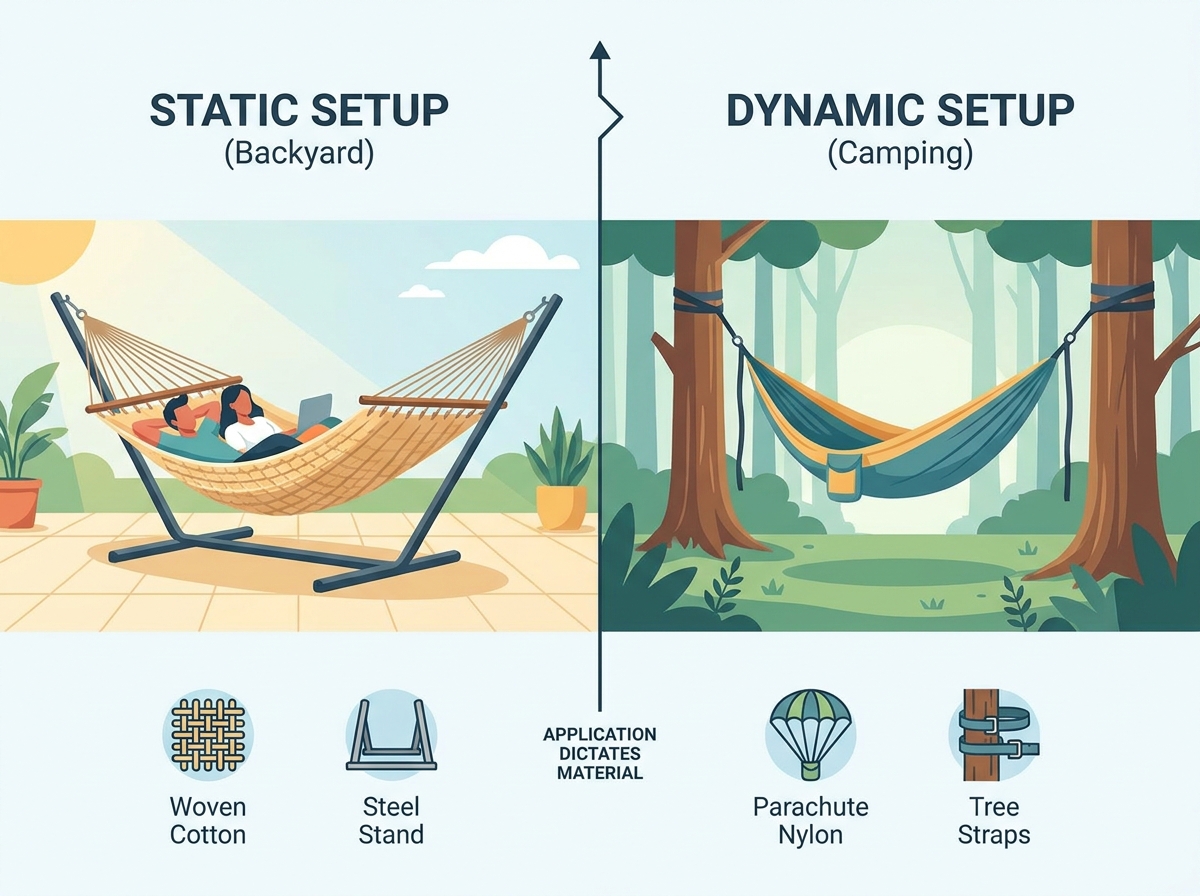
- Material Dictates Application: Parachute nylon is mandatory for packability (camping), while woven cotton or Brazilian fabrics offer superior temperature regulation for static setups (backyards).
- Weight Capacity vs. Dynamic Load: A 400-lb static weight limit often translates to a lower dynamic load; buyers must account for the force of shifting weight.
- Suspension Realities: Successful two-person setups require specialized suspension (spreader bars for shared trees or heavy-duty steel stands for backyards) to prevent hazardous collapses.
Defining the Need: "Double" vs. True "Two-Person" Hammocks
Consumers frequently misunderstand outdoor gear terminology. The industry uses confusing marketing jargon. Manufacturers label many products as "double." However, they do not actually design them for two simultaneous users. You need to understand this distinction before making a purchase.
The Industry Misnomer
Most standard camping models force your body into a curved banana shape. Experienced users avoid this discomfort by lying asymmetrically across the fabric. This diagonal position flattens your body ergonomically. To achieve this flat lay, you need extra fabric width. Brands label these wider single models as "double." They intend them for one person seeking expansive comfort. Two adults attempting to share these specific models will suffer. The excess fabric wraps over them. Gravity forces both bodies into the lowest central point.
Success Criteria for Shared Use
You must look for specific structural traits when buying gear for shared relaxation. A genuinely viable model requires strict baseline specifications. It needs a minimum width of at least six feet. It demands a verified weight capacity exceeding 400 to 500 pounds. The manufacturer must use specific fabric cuts to handle dual center-of-gravity shifts. Flat-felled seams offer better structural integrity here. These specific features prevent catastrophic tearing when two adults shift their weight simultaneously.
Lounging vs. Sleeping Realities
We must assess shared usage transparently. A well-designed Two-Person Hammock excels during daytime relaxation. You can comfortably read, converse, or nap for a few hours. Overnight backcountry sleeping presents a completely different challenge. Ergonomics fail when two people sleep in a single gathered-end bed. Shoulders compress. Knees clash. One person's midnight bathroom trip violently wakes the other. Overnight sharing remains fundamentally flawed unless you employ specialized spreader bar setups to isolate movement.
Solution Categories: Matching the Hammock to the Environment
You cannot use the same gear for a mountain trek and a poolside deck. You must match the material and construction to your specific environment. We categorize solutions into static applications and dynamic applications.
Backyard & Patio Configurations (Static Applications)
Static setups remain in one place for extended periods. Weight and packability do not matter here. Comfort and aesthetics drive your decision.
Brazilian & Woven Cotton: These materials offer ultimate luxury. They provide high comfort and excellent breathability. Cotton features zero "parachute stretch." This means the fabric supports your spine firmly without sagging unevenly. However, cotton poses environmental risks. It absorbs moisture rapidly. It becomes highly susceptible to mold if left in the rain. You must store it indoors during inclement weather.
Hammocks with Spreader Bars: These models feature wooden or metal bars at both ends. The bars hold the fabric open mechanically. This design keeps the bed flat at all times. It completely prevents the dreaded "cocoon effect" for two users. They represent the ideal choice for heavy backyard stands. However, spreader bars raise your center of gravity. This makes the bed significantly more prone to tipping. You must enter and exit with cautious coordination.
Camping & Backcountry Configurations (Dynamic Applications)
Dynamic setups require constant packing, moving, and hanging. Weight, compression, and weather resistance become your primary concerns.
Parachute Nylon (70D to 210T): Hikers rely exclusively on synthetic fabrics. Parachute nylon offers exceptional strength-to-weight ratios. The 70D (denier) variations prioritize ultralight packing. The 210T (thread count) variations offer better durability for heavy loads. Nylon dries rapidly after unexpected rainstorms. It compresses down to the size of a grapefruit. However, it lacks the soft, breathable touch of backyard cotton.
Tandem/Bunk Hanging: Dedicated campers abandon the single-bed concept entirely. Instead, they introduce tandem hanging. You hang two single hammocks from the exact same trees. You use specialized metal spreader poles on your suspension lines. These poles physically separate the two beds side-by-side. You share the same view and proximity. You avoid forcing two people into one claustrophobic space.
![two-person hammock setup]()
Key Evaluation Dimensions for a Two-Person Hammock
You face serious safety risks if you buy substandard gear for dual use. Evaluating the structural integrity of your setup ensures safety. You must scrutinize seams, hardware, and fabric choices critically.
Structural Integrity & Weight Ratings
Manufacturers advertise impressive weight limits. You must read these limits carefully. A label might claim a 400-pound maximum capacity. This number almost always represents a static weight limit. Static weight measures a perfectly still object. Humans move. When two people climb in, shift positions, or accidentally drop their weight, they generate dynamic load.
A 400-pound static limit often fails under a 300-pound dynamic load. You must account for the sudden force of shifting weight. Look for these specific reinforcements:
- Triple-stitched seams: Single stitching unravels under dual tension. Triple stitching locks the fabric panels securely.
- Steel carabiners: Ditch the cheap aluminum wiregates included in budget kits. Replace them with heavy-duty steel carabiners rated for climbing or heavy rigging.
- Reinforced end loops: The gathered ends bear the entire load. Ensure the manufacturer uses thick, multi-wrapped cordage here.
Suspension Hardware and Tree Safety
Your bed relies entirely on its anchor points. Successful two-person setups require specialized suspension hardware. You must protect both yourselves and the environment.
Wide tree straps represent a non-negotiable requirement. Two adults create immense pressure on tree bark. Thin ropes act like wire saws. They cut into the tree's cambium layer. This damage stops nutrient flow and kills the tree. You must use straps measuring a minimum of 1 to 1.5 inches wide. Wide straps distribute the heavy weight safely.
For treeless backyards, you must evaluate heavy-gauge steel stands. Do not buy flimsy tubular aluminum stands for shared use. A proper dual-use stand must measure 12 to 15 feet long. It must feature a verified capacity exceeding 450 pounds. A robust stand prevents hazardous collapses on your patio.
Breathability vs. Weather Resistance
Your climate dictates your material choice. You must balance airflow against elemental protection. Review this structural comparison to guide your decision.
Hammock Material Performance Comparison
| Material Type | Airflow / Breathability | Weather Resistance | Best Use Case |
| Open-Weave Rope | Maximum (High airflow) | High (Dries quickly) | Humid coastal climates |
| Solid Brazilian Cotton | Moderate (Traps some heat) | Low (Prone to mold) | Covered patios, dry days |
| Parachute Nylon | Low to Moderate | High (Resists rot/mildew) | Camping, rugged travel |
Open-weave rope provides incredible airflow. It cools you perfectly in tropical humidity. However, rope digs into your skin, lowering overall comfort. Solid cotton delivers cloud-like comfort. It feels soft against bare skin. Yet, it ruins easily in rain. Nylon sits in the middle. It stops wind effectively and survives harsh weather. It can feel sticky on hot, windless days.
Implementation Risks and Safety Considerations
Hanging heavy loads introduces distinct physical hazards. You must acknowledge the physics of shared suspension. Ignoring these principles leads to bruised bodies or damaged property.
The "Squish Factor" and Thermal Dynamics
Gravity forces the heaviest parts of a suspended curve to the bottom. Two bodies naturally slide toward each other. We call this the squish factor. You cannot entirely defeat it without spreader bars.
You must also manage thermal dynamics. Shared body heat changes the experience drastically. During winter camping, this shared heat acts as a massive survival advantage. Two bodies warm a single enclosed space efficiently. Conversely, shared heat becomes a severe liability in summer backyard lounging. Sweaty bodies pressed together ruin the relaxation. You must plan your setup according to the season.
Anchor Point Calculations
You must understand the 30-degree hang angle rule. The angle of your suspension lines dictates the shear force placed on your anchors. A 30-degree angle provides the optimal balance of comfort and safety.
If you pull the suspension lines tighter to achieve a perfectly flat bed, you court disaster. Tighter angles increase shear force exponentially. For two users totaling 400 pounds, a 30-degree angle places roughly 400 pounds of force on each tree. If you tighten that angle to 5 degrees, the force spikes to over 2,000 pounds per anchor. This excessive tension snaps carabiners. It rips straps. It pulls down trees. Never pull your setup perfectly taut.
Environmental Hazards
Selecting anchor points requires vigilance. You must scan the canopy above your chosen trees. Look for "widowmakers." These are dead, hanging branches trapped in the canopy. Heavy dual-loads shake the tree trunk rhythmically. This shaking dislodges dead branches, dropping them directly onto you.
Stand users face different hazards. Backyard stands place intense pressure on four small contact points. Heavy use causes soil compaction. The stand legs will eventually sink into soft mud or wet grass. This uneven sinking causes the entire frame to tip over. You must place your stand on solid, level ground or stone pavers.
Shortlisting Logic: Which Setup is Right for You?
Decision paralysis hits many buyers. You can simplify your choice by identifying your primary lifestyle persona. We mapped out three distinct profiles to guide your investment.
For the Backyard Aesthete
You want a permanent relaxation oasis. You prioritize reading books and enjoying afternoon naps. Weight limits and packability mean nothing to you.
- Prioritize a Brazilian-style cotton bed.
- Look for decorative fringes and dense, soft weaves.
- Pair it with a powder-coated steel or treated wooden stand.
- Focus entirely on fabric comfort over weight.
- Ensure you have storage space to hide it during rainstorms.
A dedicated Two-Person Hammock on a beautiful wooden arc stand transforms a simple patio into a luxury resort. It removes the hassle of finding perfectly spaced trees.
For the Casual Day-Hiker/Park Lounger
You spend weekends at the local park. You hike short distances to scenic overlooks. You want quick deployment and easy transport.
- Opt for a 210T parachute nylon double model.
- Ensure it includes an attached stuff sack.
- Purchase a daisy-chain tree strap system for instant adjustability.
- Focus on setup speed and overall packability.
- Avoid complex hardware that slows down your relaxation time.
For the Dedicated Backcountry Duo
You hike miles into the wilderness. You sleep outside overnight. You demand reliable, lightweight shelter systems.
- Discard the single-bed idea completely.
- Invest in a tandem suspension system.
- Buy two separate lightweight asymmetrical nylon hammocks.
- Use aluminum spreader poles to connect them on one set of trees.
- Focus on sleep ergonomics and weight reduction.
Conclusion
Buying a two-person hammock requires more than clicking the first "double" label you see. You must match the product's physical limitations to your intended environment. Static backyard lounging demands breathable cotton and sturdy stands. Dynamic backcountry camping requires lightweight nylon and tree-safe straps.
You must respect the physics of suspended weight. Always check your dynamic load limits. Adhere strictly to the 30-degree hang angle rule to prevent equipment failure. Never compromise on wide tree straps.
Before finalizing a purchase, take physical measurements. Measure your available backyard space to ensure a 15-foot stand fits comfortably. Review your current camping suspension hardware. Upgrade flimsy carabiners to steel. Identify your specific use case, apply these safety rules, and you will finally achieve the suspended comfort you expected.
FAQ
Q: Can two adults comfortably sleep overnight in a two-person hammock?
A: It is technically possible but rarely comfortable. Gravity forces both sleepers to the lowest center point, causing shoulder squeezing and knee clashing. One person's movements will constantly wake the other. For overnight camping, we highly recommend tandem hanging—suspending two individual hammocks side-by-side using spreader poles on the same trees.
Q: How far apart should trees or posts be for a two-person hammock?
A: You should look for trees or posts spaced 12 to 15 feet apart. This distance provides enough room to achieve the optimal 30-degree hang angle. We strongly emphasize using adjustable daisy-chain straps. They allow you to easily fine-tune the tension and bridge gaps if trees are slightly too far apart.
Q: Are hammocks with spreader bars better for two people?
A: They offer a specific trade-off. Spreader bars hold the fabric flat, which completely prevents the two users from squishing together in the middle. However, they raise the center of gravity. This makes the bed notably less stable and much easier to flip. They are excellent for lounging but require careful entry.
Q: How do you safely wash a two-person hammock?
A: Washing methods depend strictly on the material. You should hand wash cotton or Brazilian fabrics in a bathtub with mild soap to prevent shrinking and tangling. Parachute nylon models can go in a washing machine on a gentle, cold cycle. Never use a dryer; always hang them outside to air dry completely.