Commercial patio furniture carries incredibly high stakes for any hospitality business today. Guest comfort directly impacts your daily revenue and online reviews. A single uncomfortable seat easily ruins an otherwise perfect dining experience. However, frequent furniture replacements quickly destroy your hard-earned profit margins. You simply cannot approach commercial purchasing the same way you buy for a residential backyard. High-traffic environments, such as luxury hotels, busy restaurants, and corporate patios, face relentless daily abuse. They demand rugged materials built for aggressive maintenance, constant guest turnover, and wildly varying weather conditions. Selecting the perfect outdoor cushion requires a strict, practical evaluation framework. We will explore how to prioritize material durability, structural integrity, and streamlined cleaning protocols. You will learn exactly how to navigate foam densities, fabric performance metrics, and heavy-duty hardware. This comprehensive approach maximizes your exterior patio investment.
Key Takeaways
- Commercial usage requires specific fabric durability metrics (e.g., double rubs, UV hours) that exceed standard residential benchmarks.
- The internal foam structure (such as reticulated/quick-dry foam) is just as critical as the outer fabric for preventing mold and minimizing downtime after rain.
- Total Cost of Ownership (TCO) should dictate the purchase: cheaper upfront costs often lead to mid-season replacements.
- Standardizing sizes and ensuring hardware (zippers, ties) is commercial-grade streamlines long-term maintenance.
The Business Case: Commercial vs. Residential Outdoor Cushions
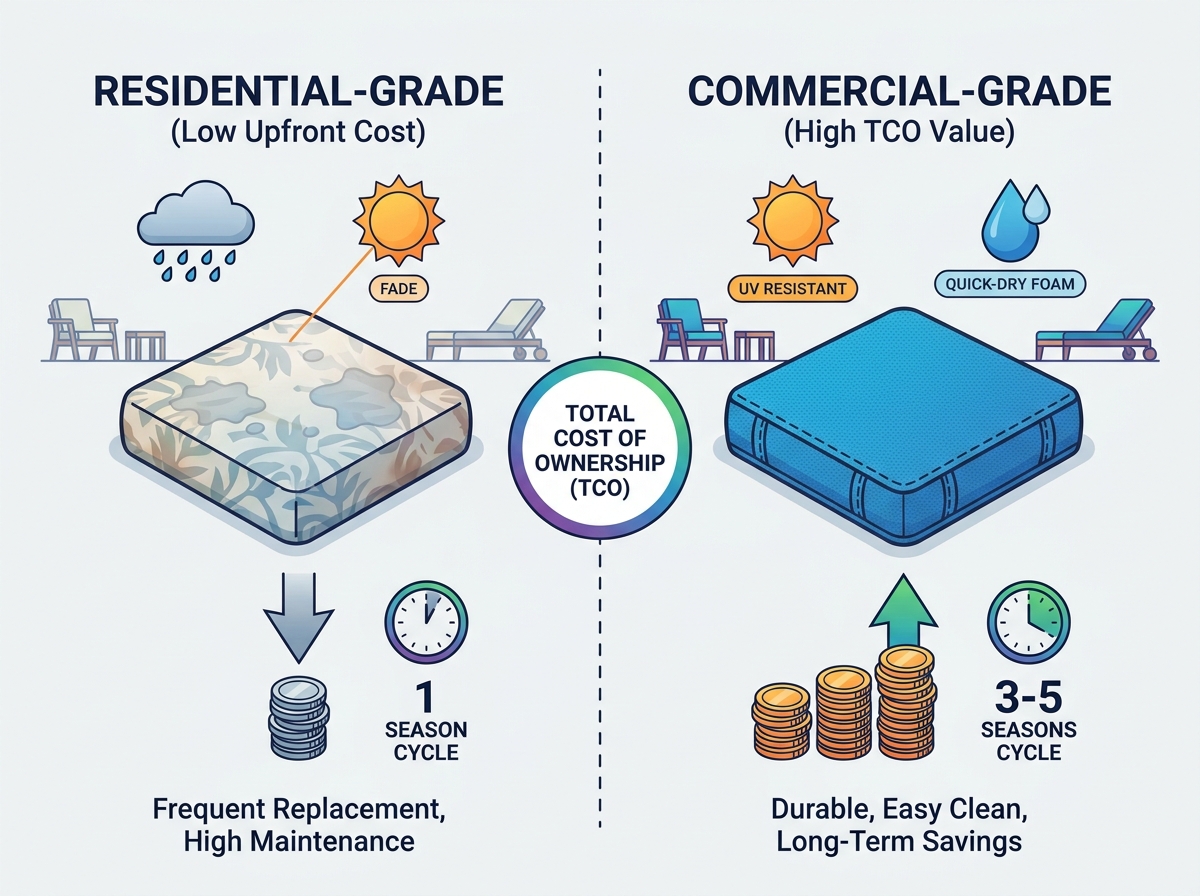
Treating a commercial patio like a residential backyard leads to operational disaster. Standard patio pillows wear out prematurely under heavy daily use. They flatten completely within a few short months. They fade quickly when exposed to direct sunlight all day long. Furthermore, they develop severe hygiene issues, including dangerous mold and mildew buildup.
Commercial spaces demand highly specific success criteria. A true commercial-grade outdoor cushion must withstand daily use for eight or more hours. It must allow for rapid, aggressive cleaning at scale. It must also maintain strict aesthetic consistency across dozens of tables. When a guest sits on a damp or faded seat, they often complain online. These negative reviews directly harm your brand reputation.
We must transparently acknowledge industry realities. No fabric product lasts forever under harsh outdoor exposure. Your goal is never finding an indestructible product. Instead, you want to maximize your natural replacement cycle. Upgrading from standard residential options stretches this cycle significantly. You move from replacing items every single season to replacing them every three to five seasons. This shift protects your capital expenditure budget immensely.
Evaluating Fabric and Weather Resistance for High-Traffic Areas
Fabric selection determines how well your seating survives the elements. You must evaluate industry-standard materials rigorously before buying in bulk. Solution-dyed acrylics consistently lead the hospitality market. Manufacturers inject color directly into the acrylic fibers before spinning them. This process makes the fabric incredibly resistant to fading. Olefin offers a strong mid-tier alternative for tighter budgets. Polyester generally falls short for rigorous commercial needs because it degrades quickly outdoors.
Hospitality settings require strict, quantifiable performance metrics. You should focus heavily on UV resistance ratings. We measure these ratings in fade hours. High-quality acrylics often guarantee over two thousand fade-free hours. You must also check abrasion resistance. We measure physical durability using the Wyzenbeek double rub test. A commercial seating surface needs at least 15,000 double rubs. Heavy-traffic lounge areas often require 30,000 double rubs to survive constant friction.
Let us dispel a persistent industry myth right now. You do not want a entirely waterproof cover. Truly waterproof materials completely trap internal moisture. This trapped condensation rapidly breeds dangerous mold inside the padding. Instead, we strongly advocate for water-resistant covers. Pair these covers with breathable construction techniques to ensure proper internal airflow.
Fabric Performance Comparison Chart
| Fabric Material Type | UV Resistance (Fade Hours) | Abrasion Rating (Double Rubs) | Commercial Suitability |
| Solution-Dyed Acrylic | 2,000+ hours | 15,000 - 30,000+ | Excellent |
| Olefin | 1,500 hours | 10,000 - 15,000 | Good |
| Standard Polyester | 500 hours | Under 10,000 | Poor |
Core Construction: Optimizing Foam Density and Comfort at Scale
The outer fabric only solves half of your seating problem. We must break down the internal engineering of high-quality patio furniture. The padding hidden inside dictates both long-term comfort and daily operational efficiency.
You will typically choose between two main foam categories. Standard high-density polyurethane provides excellent initial support. However, it acts exactly like a sponge during heavy rain. It holds onto water for days. Conversely, reticulated foam features a specialized open-cell structure. We commonly call this quick-dry foam. Water passes directly through its porous structure without stopping.
This structural choice creates a massive business impact. Quick-dry padding dramatically minimizes your seating downtime. After a heavy afternoon storm, your staff can wipe the seats down rapidly. You will not lose valuable dinner service revenue waiting for soaking wet chairs to dry. The water drains through the bottom almost instantly.
You must also establish strict baseline thickness standards for your property.
- Commercial Dining Chairs: Require 2 to 3 inches of firm support. This thickness promotes proper ergonomic eating posture.
- Deep Lounge Seating: Demand 4 to 6 inches of plush loft. This deeper profile encourages extended guest relaxation.
- Bar Stools: Need exactly 2 inches of ultra-high-density foam to prevent bottoming out against the hard frame.
Consistent thickness ensures your guests enjoy sustained support throughout their entire visit. We recommend wrapping the foam core in a layer of Dacron fiber. This wrapping adds visual loft and prevents the cover from wrinkling.
![Commercial patio seating configuration]()
Aesthetics, Sizing, and Brand Alignment
Design choices directly influence your daily operations and maintenance labor. Color strategy impacts perceived cleanliness immensely. It also dictates your ongoing maintenance schedules. Ultra-light colors showcase wine and coffee spills immediately. Dark colors effectively hide stains but quickly highlight environmental dust and yellow pollen. Mid-tone neutrals usually offer the absolute best operational balance. Subtle patterns also hide minor blemishes brilliantly between deep cleanings.
You must carefully weigh standard measurements against custom fits. Standard sizes provide significant operational benefits. They allow for much easier modular replacements. If a guest ruins one specific seat, you simply swap it out from your backroom inventory. Custom fits elevate your brand aesthetic considerably. They tailor exactly to unique architectural benches. However, custom shapes complicate your replacement logistics and drastically increase manufacturing lead times.
Implementation realities always demand your strict attention. You must specify heavy-duty structural hardware. Always look for marine-grade, rust-proof zippers. Standard metal zippers corrode rapidly in humid exterior environments. You also need heavily reinforced attachment ties. High-traffic environments cause constant physical shifting. Flimsy fabric ties will inevitably tear away from the main seam. A securely tied outdoor cushion stays firmly in place, keeping your patio looking pristine and organized.
Common Mistakes to Avoid: Do not order completely sealed covers. Always ensure your design includes a zipper. Staff must be able to remove the covers for deep seasonal sanitation.
Maintenance Scalability and Operational Efficiency
You must carefully map out the daily labor required to maintain your investment. Daily maintenance involves wiping down surfaces and brushing off loose debris. Weekly tasks might include spot-cleaning localized food stains. Seasonal labor requires deep sanitation and proper logistical planning. Your purchasing decisions directly impact all these labor hours.
Staff workflows should always dictate your product specifications. Focus heavily on ease of removal. Wide zipper accessibility is paramount for quick cover changes. You want covers designed for standard machine-washability. Sending heavily soiled covers to a commercial laundry service saves immense staff time. It keeps your internal team focused entirely on guest service.
Risk mitigation extends your physical investment significantly. Address your winter storage logistics early in the season. Do not leave your seating exposed during harsh, freezing off-seasons. Always clean the covers thoroughly before packing them away. Storing dirty fabric bakes in stains and encourages winter mold growth. Proper climate-controlled storage dramatically extends the life of your equipment. By protecting your physical inventory, you preserve your operational budget for other pressing business needs.
Shortlisting Vendors and Procurement Next Steps
Procuring commercial furniture requires rigorous vendor screening. You must demand specific capabilities from your potential commercial suppliers. Evaluate their manufacturing lead times carefully. Ensure they offer true bulk scalability for future expansions. Always demand sample availability for physical testing before committing to large property-wide orders.
You must scrutinize the warranty fine print closely. Do not accept vague marketing guarantees. Differentiate clearly between fabric warranties and structural warranties. Fabric warranties usually only cover UV fading or chemical degradation. Structural warranties specifically cover internal foam compression and shape retention. You need comprehensive protection for both elements.
Take structured next-step actions to secure accurate commercial quotes. Follow this basic procurement checklist when requesting pricing from vendors:
- Specify exact seating quantities for your initial rollout.
- Include a ten percent overage allowance for backup inventory.
- Provide precise frame dimensions to ensure accurate manufacturing.
- Outline your strict fabric specification requirements (e.g., solution-dyed acrylic only).
- Require proof of compliance for local fire retardancy certifications (such as CAL 117).
Thorough procurement protocols ensure your final order meets all your operational demands perfectly. It eliminates costly mid-season surprises.
Conclusion
Investing in commercial patio seating requires careful calculation. You must balance upfront costs against extreme physical durability and optimal guest satisfaction. Treating a hospitality space like a simple residential patio guarantees premature material failure. Your business fundamentally needs professional-grade materials built for rigorous daily abuse.
Prioritizing solution-dyed acrylics and open-cell quick-dry foam yields the best historical returns for commercial spaces. These advanced materials keep your exterior seating functional, attractive, and highly profitable across multiple busy seasons. They drastically reduce the expensive labor hours your staff spends on constant maintenance.
Take immediate action to upgrade your exterior spaces. Audit your current patio dimensions today. Request material swatches from thoroughly vetted commercial suppliers. Contact a dedicated sales representative to begin your formal quoting process. Upgrading your seating seamlessly transforms your guest experience while protecting your bottom line.
FAQ
Q: What is the difference between an indoor and outdoor cushion?
A: Indoor options use standard fabrics and basic polyurethane foam. They lack weather protection entirely. An outdoor cushion features specialized mold and mildew treatments. It utilizes strong UV-resistant fibers to prevent rapid fading. It also includes chemical water-repellent coatings that indoor versions simply do not require.
Q: How long should commercial outdoor cushions last?
A: Longevity depends entirely on material quality and environmental exposure. High-end materials in commercial settings typically last three to five years. Standard residential materials frequently fail within a single season under heavy hospitality conditions. Proper off-season storage dramatically extends this natural lifespan.
Q: How do we accurately measure existing furniture for bulk replacements?
A: You must measure the hard furniture frame itself. Never measure the old, compressed padding. Use a strict width by depth by thickness formula. Measure straight across from the inside edges of the chair arms. This precise method ensures a snug fit.
Q: What is the best way to clean outdoor cushions at scale?
A: We highly recommend using bleach-cleanable materials like solution-dyed acrylics. For daily cleaning, brush off dirt and wipe spills immediately. For property-wide scale, use a diluted bleach solution to sanitize large batches safely without stripping the rich fabric color. Always air dry completely.