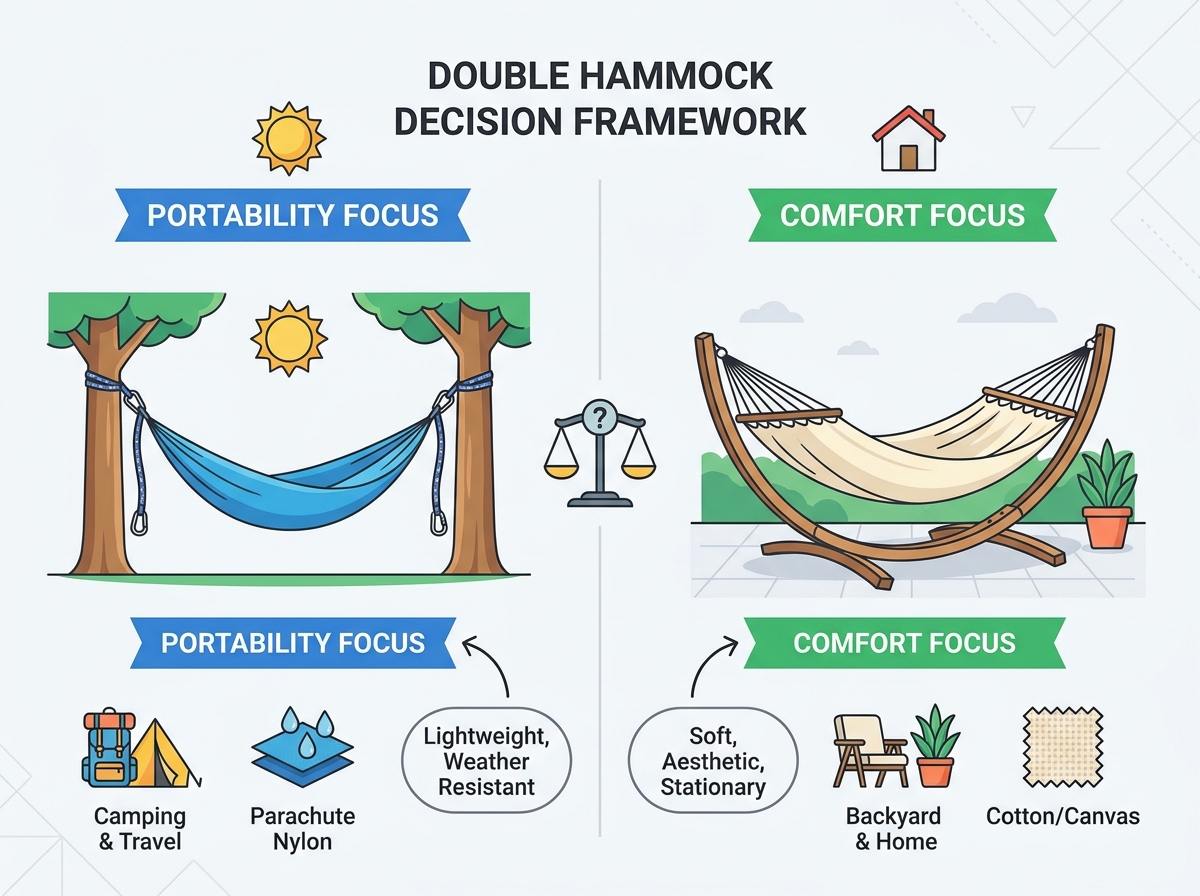
Stepping into the backyard or hiking deep into the woods, nothing beats the relaxation of lounging suspended in the air. The market is flooded with oversized options promising ultimate comfort for two people. However, buyers often realize too late that a "double" size does not automatically guarantee comfort for two occupants. Furthermore, the base price you see online rarely includes the necessary suspension gear to actually hang it safely.
This guide strips away marketing fluff to give you a practical evaluation framework. We will examine material durability, true weight capacities, and total system expenses. Whether you are outfitting a patio or building a backcountry sleep system, you will learn exactly how to choose the right fabric and setup. By matching your primary use case to the correct specifications, you can easily avoid premature wear or frustrating setup failures.
Key Takeaways
- True Dimensions Matter: A reliable double hammock should be at least 6 to 6.5 feet wide and 10 feet long; anything narrower is essentially a roomy single.
- Total System Cost: The advertised price is rarely the final cost. Factor in tree straps, carabiners, or a freestanding stand (adding $20 to $150+ to the baseline).
- Material Dictates Function: Parachute nylon is ideal for portability and weather resistance, while woven cotton or rope offers superior backyard comfort but degrades quickly if left in the elements.
- The Solo Sleeping Secret: Double hammocks provide the best overnight experience for *single* users allowing for a flat, diagonal sleep lay without shoulder squeeze.
Defining the "Double": Success Criteria for a Two-Person Hammock
Manufacturers often use sizing labels loosely as marketing tools rather than strict technical standards. People frequently purchase a product simply because the packaging says "double." They assume the fabric will comfortably support two adults. We must look past the name and evaluate the actual structural specifications.
Core Evaluation Metrics
To ensure your purchase meets real-world demands, evaluate these three specific structural metrics before making a decision.
- Width vs. Length: We recommend a minimum width of 74 inches (approximately 6.2 feet). This specific width allows two adults to sit comfortably side-by-side like a swinging bench. Length is equally important. Look for a minimum length of 10 feet to accommodate taller individuals and provide proper fabric drape.
- Weight Capacity Framework: Always check the tested limits. A genuine two-person model should boast a weight capacity between 400 and 500+ pounds. Remember, dynamic weight (moving, adjusting, or swinging) places more stress on the fabric than static weight.
- Seam Construction: Structural integrity matters immensely. Triple-stitched seams are absolutely non-negotiable for load-bearing safety, especially in nylon models. This stitching method prevents the fabric panels from splitting when two people shift their weight simultaneously.
Expectation Management for Two Users
Honesty is crucial when discussing overnight use. A Double Hammock works wonderfully for an afternoon of shared lounging or reading. However, sleeping two adults overnight in a single bed of suspended fabric rarely ends well. Physics dictates the heaviest parts of your bodies will inevitably slide toward the lowest point in the center. You will end up squished together. If you want a full, comfortable night of sleep, use these wider models as a solo sleeper. The extra fabric allows you to lie diagonally, which flattens your back and eliminates shoulder squeeze.
Material Selection: Features, Outcomes, and Limitations
Your intended environment dictates your material choice. Selecting the wrong fabric for your climate leads to rapid deterioration or uncomfortable experiences. Let us explore the three dominant materials on the market.
Parachute Nylon (70D to 210T)
Nylon dominates the modern outdoor industry for good reason. It is graded by denier (such as 70D) or thread count (such as 210T).
- Features-to-Outcomes: Nylon is exceptionally lightweight, highly breathable, and dries rapidly after a rainstorm. It packs down to the size of a grapefruit, making it ideal for camping, hiking, and travel.
- Risks and Limitations: Because the material is so thin, convective heat loss happens quickly. You will feel cold from the wind underneath you unless you use an insulated underquilt. Furthermore, nylon is highly vulnerable to campfire sparks. A single floating ember will melt a hole through the fabric instantly.
Cotton and Canvas
Traditional fabrics remain popular for residential use. They offer a classic look and feel that synthetic materials cannot replicate.
- Features-to-Outcomes: Cotton provides high aesthetic value. It feels extremely soft on bare skin and breathes well in dry heat. These materials look visually stunning on a porch, sunroom, or dedicated backyard frame.
- Risks and Limitations: Cotton acts like a sponge. It features high moisture retention. If you leave it outside during a rainstorm, it takes hours or even days to dry completely. Trapped moisture leads rapidly to mold and structural rot. Additionally, cotton models are incredibly bulky. They offer zero scalability for backpacking due to their heavy weight.
Hand-Woven Yarn / Mayan Style
Artisan styles use hundreds of individual strings woven together in an intricate diamond pattern.
- Features-to-Outcomes: These deliver unmatched contouring. The strings expand and contract independently, conforming perfectly to your body shape. They also offer maximum ventilation, making them the absolute best choice for sweltering, humid climates.
- Risks and Limitations: The open weave is highly snag-prone. Denim rivets, jacket zippers, and pet claws easily catch and snap the strings. They require delicate handling and careful winter storage to maintain their structural integrity.
Material Comparison Overview
| Material Type | Best Use Case | Primary Advantage | Biggest Weakness |
| Parachute Nylon | Backpacking & Camping | Ultra-light and quick-drying | Cold draft susceptibility |
| Cotton & Canvas | Indoor & Covered Patios | Superior skin comfort | Mold and rot from moisture |
| Woven Yarn (Mayan) | Hot Climates & Lounging | Maximum ventilation | Snags and tears easily |
![Double Hammock]()
The Total System Cost: Pricing Out Your Setup
Many first-time buyers fall into a common retail trap. You see an advertisement for a $30 product online. You purchase it. It arrives in a small bag. You take it to the park, only to realize you have absolutely no way to hang it. The base price rarely reflects the true functional cost of your setup.
Cost Breakdown and Transparent Assumptions
To build a functional suspension setup, you must account for several distinct components. Here is what you should expect to spend on a complete system.
- The Body: The fabric itself ranges wildly. A budget nylon model costs around $30, while luxury woven artisan models easily exceed $200.
- Suspension Systems: You need reliable anchors. Daisy-chain tree straps cost between $15 and $30. They wrap widely around trunks. You must avoid bare ropes. Ropes dig into bark, damage the tree's cambium layer, and directly violate Leave No Trace principles.
- Freestanding Stands: If your backyard lacks mature trees, you must buy a frame. Heavy-duty steel or treated wood frames typically cost between $70 and $250 depending on weight capacity and weather resistance.
- Camping Add-ons: Outdoor sleeping requires protection. Bug nets add $30 to $60. Waterproof rain tarps range from $40 to $100. Dedicated underquilts for cold-weather insulation cost between $50 and $150.
Budget Shortlisting Logic
We can group these expenses into three predictable budget tiers to help you plan your purchase effectively.
- The Casual Lounger ($50-$80 total): You buy a basic nylon body and a reliable set of daisy-chain tree straps. This tier works perfectly for afternoon park visits and college campuses.
- The Backyard Centerpiece ($150-$300 total): You pair a premium cotton or quilted fabric body with a heavy-duty steel stand. This tier focuses on backyard aesthetics, stationary comfort, and high weight limits.
- The Backpacking Setup ($100-$250+ total): You need a specialized nylon body, lightweight straps, a bug net, and a rain tarp. You pay extra for materials that shed weight while maintaining storm-proof durability.
Implementation Realities: Setup Considerations and Risks
Even the most expensive gear performs poorly if you set it up incorrectly. Proper implementation guarantees comfort and protects you from dangerous structural failures.
Space Requirements
You cannot squeeze a two-person model into a tiny space. A standard double size requires roughly 10 to 15 feet of distance between your two anchor points. If your trees are 8 feet apart, the fabric will sag completely to the ground. If they are 20 feet apart, your suspension straps might not reach. Measure your intended hanging space carefully before buying any hardware or stands.
The 30-Degree Rule
Geometry dictates your safety. Experts universally recommend the 30-degree rule. When you hang your setup, the suspension straps should angle downward from the tree at roughly 30 degrees. This specific angle creates the perfect amount of fabric sag.
Many beginners make the mistake of pulling the fabric drum-tight to make it look flat. This is highly dangerous. A tight hang increases sheer force exponentially. It multiplies the tension on your anchors, stresses the tree, warps your carabiners, and risks tearing the seams. Allow the fabric to form a natural smile shape.
Safety and Compliance Checks
You must practice consistent safety habits. Check the weight limits on every single component of your system. Your setup is only as strong as its weakest link. If your fabric holds 500 pounds, but your discount carabiners are only rated for 150 pounds, your actual capacity is only 150 pounds. Inspect your tree straps for fraying before every use. Replace heavily worn nylon immediately.
Shortlisting Logic: How to Choose Your Double Hammock
Choosing the right product requires aligning your budget with your specific environmental needs. Use this decision framework to narrow down your options quickly.
Decision Framework Matrix
- If prioritizing portability and weather resilience: Choose parachute nylon paired with a comprehensive daisy-chain strap system. It packs small, resists mold, and travels anywhere.
- If prioritizing aesthetic and stationary backyard comfort: Choose a woven cotton or quilted fabric. Pair it with a heavy-duty wood or steel stand. Keep it out of heavy rain.
- If prioritizing maximum solo sleep comfort: Choose a longer-than-average (11-foot) nylon model. The extra fabric length allows you to achieve the perfect flat, diagonal lay needed for overnight spinal support.
Next-Step Actions
Stop scrolling through endless brand catalogs. Take three specific actions right now. First, measure your available hanging space outside or in your room. Second, define your strict total budget, explicitly including the cost of straps or a stand. Finally, select your ideal material based on your local weather conditions. Once you lock in these three variables, choosing a specific brand becomes incredibly simple.
Conclusion
Purchasing a large hammock requires more than just picking a colorful fabric. You are ultimately investing in a complete suspension system. The advertised price rarely covers the straps, stands, or hardware needed to get off the ground safely. Always factor these elements into your initial budget.
Remember that evaluating material durability against your intended environment is the strongest predictor of long-term satisfaction. Nylon dominates the trails, while cotton reigns supreme on the porch. Finally, always measure your intended space and check your existing gear compatibility before finalizing your purchase. A well-planned setup guarantees years of elevated relaxation.
FAQ
Q: Can two people actually sleep overnight in a double hammock?
A: While highly comfortable for daytime lounging, physics forces two occupants to slide into the middle. Gravity naturally pulls heavier weights to the lowest point. You will likely bump shoulders all night. For overnight sleeping, two separate hammocks are highly recommended by outdoor experts.
Q: Do I need a stand if I buy a double hammock?
A: No, you do not need a stand if you have two sturdy anchor points located 10 to 15 feet apart. You can simply use tree-safe suspension straps. If you lack properly spaced trees or sturdy posts, a 9-foot to 12-foot freestanding stand becomes absolutely required.
Q: How do you wash a double hammock?
A: Cleaning methods vary by material. Always remove carabiners first. Nylon can usually be machine-washed on a gentle, cold cycle inside a mesh laundry bag. Cotton or woven yarn hammocks generally require gentle spot cleaning or careful hand washing in a bathtub to prevent severe tangling and fabric rot.