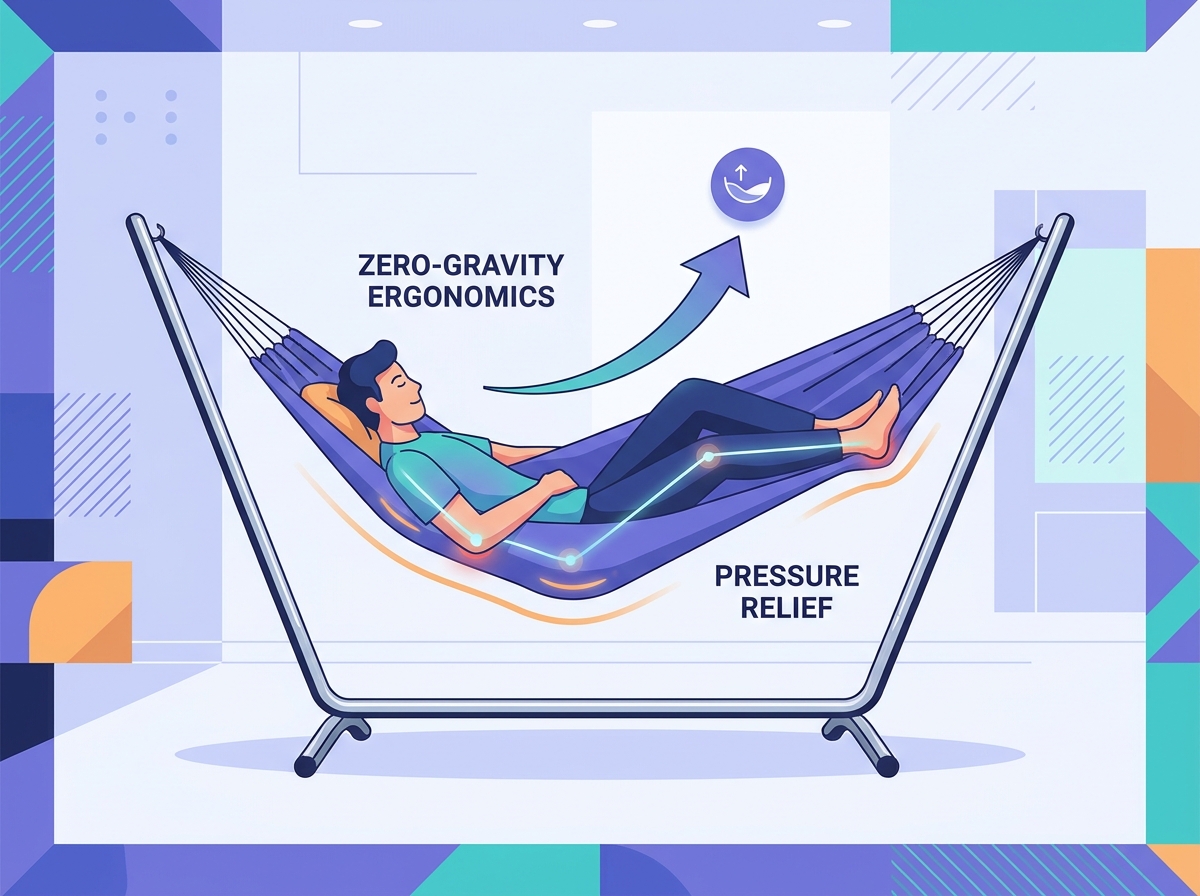
Millions struggle daily with poor sleep quality and severe pressure point pain. Traditional beds often exacerbate these underlying issues. Premium ergonomic mattresses cost a small fortune, yet they frequently fail to provide lasting relief. Finding a reliable, budget-friendly sleep solution remains a persistent challenge for many adults. Full-time suspended sleeping offers a scientifically supported alternative. It completely challenges the rigid assumption of needing a traditional flat bed.
A Hammock with Stand removes the frustrating friction of structural installation. You no longer need to drill into walls or hunt for load-bearing studs. This setup gives you a portable, precise, and renter-friendly way to leverage the vestibular benefits of suspended sleep. We will explore the biology behind rocking motions and zero-gravity ergonomics. You will also learn how to choose the right frame and transition into this restorative new sleep posture smoothly.
Key Takeaways
- Sleep Science: Gentle rocking motions promote faster transition to deep sleep via vestibular stimulation.
- Zero-Gravity Ergonomics: Sleeping diagonally in a gathered-end hammock eliminates traditional pressure points and naturally elevates the head and feet.
- The Stand Advantage: Opting for a hammock with stand eliminates installation risks, ensures perfect hanging tension, and provides spatial flexibility.
- Cost vs. Comfort: A high-quality hammock and frame setup offers a significantly lower barrier to entry compared to ergonomic mattresses, though it requires specific sleep posture adjustments.
The Science of Hammock Sleep: Why the "Swing" Works
Vestibular Stimulation
Our brains associate gentle rocking motions with safety and comfort. Infants fall asleep quickly when rocked in a cradle. Adults retain this deep biological response. Rhythmic swinging activates the vestibular system located inside your inner ear. This specialized sensory stimulation synchronizes your brain waves efficiently. It directly reduces sleep latency, meaning you fall asleep much faster. You will spend far less time tossing and turning in the dark. Research indicates rocking extends the deeper stages of rest. Your body spends more time in N2 and N3 sleep phases. These critical stages repair muscle tissues and consolidate memories. You often wake up feeling remarkably energized and mentally sharp.
Pressure Point Relief
Firm mattresses push back heavily against your body weight. This constant resistance creates painful pressure on your shoulders, back, and hips. Suspended fabric operates on a completely different physical principle. It yields to your exact shape seamlessly. The material creates a true zero-gravity environment for your body. It supports the natural curvature of your spine without resistance. It disperses your body weight across a massive surface area. You no longer wake up feeling stiff or sore. This weightless feeling heavily benefits individuals suffering from chronic lower back pain. Your joints finally experience total relief during the night.
Temperature Regulation
Traditional foam beds trap body heat rapidly. You sweat easily and wake up feeling uncomfortable. Suspended resting offers unparalleled 360-degree airflow around your body. The ambient room air circulates continuously beneath you. Hot sleepers find immediate relief during stifling summer months. They stay cool naturally without blasting heavy air conditioning. However, winter weather brings highly specific challenges. The same cooling effect causes rapid heat loss in December. You must plan accordingly to stay comfortable. You will need proper external insulation when ambient temperatures drop.
![Hammock with stand set up for comfortable indoor sleeping]()
Why Choose a Hammock with Stand Over Wall Mounting?
Structural Safety & Renter Compliance
Wall mounting sounds appealing initially for saving space. However, it introduces significant structural risks to your home. Standard drywall cannot support human weight under dynamic motion. You must drill precisely into solid load-bearing studs. Missing a stud causes immediate, catastrophic failure and wall damage. Even successful installations cause long-term structural fatigue on wooden framing over time. Furthermore, landlords maintain strict rules against heavy wall modifications. A freestanding Hammock with Stand completely eliminates these intense anxieties. You protect your property from accidental damage. You easily maintain compliance with strict lease agreements. The sturdy metal frame absorbs all the stress safely.
Tension & Sag Consistency
Hang angle determines your physical comfort entirely. Sleep enthusiasts strictly follow the famous 30-degree rule. This specific angle guarantees the perfect amount of fabric sag. Calculating this manually between trees or walls frustrates beginners endlessly. You often guess distances and endure uncomfortable nights. A purpose-built frame removes this complex math entirely. Engineers design these structures for exact, repeatable proportions. The attachment points sit exactly where they belong. You achieve consistent tension every single night. The fabric hangs flawlessly every time you set it up. You enjoy a reliably flat and comfortable resting surface.
Portability & Footprint Allocation
Standard beds anchor you firmly to one specific room layout. A freestanding unit provides incredible spatial flexibility instead. You can reposition it quickly and easily. Drag it toward an open window on breezy spring nights. Move it aside effortlessly to vacuum the floor beneath it. Some users even transition their setup to covered patios during pleasant weather. Still, you must respect the physical footprint allocation. Most adult-sized frames span 9 to 12 feet in total length. You need substantial, unobstructed floor space. Always measure your room dimensions carefully before purchasing a frame.
Evaluating the Right Hammock with Stand for Nightly Sleep
Hammock Style
Fabric design dictates your entire sleep experience. Gathered-end models excel immensely at full-time overnight sleeping. Traditional Brazilian and Mayan weaves fall into this category. They cocoon your body securely and adapt to your movements. They intentionally lack rigid wooden components at the ends. Spreader-bar models behave quite differently. They feature heavy wooden bars holding the fabric flat. This design raises your center of gravity dramatically. You will likely flip over if you lean slightly off-center. Reserve spreader-bar designs for short backyard naps. Rely solely on gathered-end models for deep overnight rest.
Frame Material & Stability
Your frame must withstand daily dynamic movement safely. Powder-coated steel remains the most practical and popular choice. It resists scratches and assembles in a matter of minutes. Steel pipes snap together using basic spring pins. This material suits frequent indoor use perfectly. Wooden or bamboo arcs offer striking visual aesthetics. They resemble expensive architectural furniture pieces in your home. However, solid wood weighs significantly more than tubular steel. You cannot disassemble a wooden arc quickly for storage. Steel provides superior modular convenience for daily living.
Comparison of Common Frame Materials
| Material Type | Durability & Maintenance | Weight & Portability | Ideal Use Case |
| Powder-Coated Steel | Highly rust and scratch resistant. Low maintenance. | Moderate weight. Easy to assemble and move. | Indoor sleeping, frequent relocation, renters. |
| Wooden/Bamboo Arcs | Requires occasional oiling or weather sealing. | Heavy and cumbersome. Hard to disassemble. | Permanent outdoor setups, high-end room decor. |
Weight Capacity & Dimensions
Physical size dictates your ultimate comfort level. Always select a double-size fabric for your primary bed. This rule applies firmly even if you sleep entirely alone. Single sizes restrict your necessary diagonal movement too much. A double size provides generous, comfortable width. You need this excess material to flatten out your sleeping posture. Review the structural weight capacity of the frame carefully. Most robust frames safely support at least 400 pounds. A high weight capacity prevents annoying wobbling. It ensures the metal joints remain solid during movement.
Implementation Realities: Transitioning to Hammock Sleep
Mastering the Asymmetrical Lay
Your physical sleep posture requires intentional adjustment. Sleeping straight down the middle causes immediate pain. Your body sags into an unnatural, restrictive banana shape. Your lower back will ache severely by morning. You must master the asymmetrical lay instead. Position your body diagonally right across the fabric. Angle your head toward the top left edge. Swing your feet toward the bottom right edge. The fabric opens up instantly around you. It creates a taut, supportive surface underneath your spine. Your back straightens out beautifully. Your head and feet elevate just enough to promote healthy circulation.
Managing "Cold Butt Syndrome" (CBS)
Heat loss ruins good intentions incredibly quickly. Convection pulls warmth away from your underside all night. The community formally identifies this issue as Cold Butt Syndrome. Laying on top of thick blankets fails entirely. Your body weight heavily compresses the insulating fibers beneath you. Compressed fibers simply cannot trap warm air. You need specialized strategies to stay properly warm.
- Underquilts: Suspend a specialized insulated quilt beneath the fabric to trap escaping body heat effectively.
- Sleeping Pads: Insert a high-density foam or inflatable camping pad directly inside the sleeping area.
- Wool Blankets: Lay a densely woven wool blanket on the fabric before getting in for milder climates.
The Adjustment Period
Your body needs adequate time to adapt fully. Traditional firm beds train your muscles in one specific way. Suspended resting engages entirely different core stabilizing muscles. Establish realistic, patient expectations for your transition. You will likely experience a 3- to 7-day musculoskeletal adjustment phase. Do not rush this delicate process.
- Start with short afternoon naps to test and refine your diagonal posture.
- Try sleeping in it for half the night, returning to your bed if you feel uncomfortable.
- Gradually increase the duration over a week until you complete a full night's sleep.
Expect mild soreness around your ribs or shoulders initially. Your body is slowly learning to relax without rigid support beneath it. Stay patient and tweak your resting angle gradually.
Conclusion
Taking the leap into suspended resting offers remarkable, life-changing benefits. It provides an accessible, affordable solution for chronic back pain. You avoid drilling dangerous holes into your walls entirely. A Hammock with Stand consistently delivers deep, restorative sleep. It removes the nightly stress of traditional mattress pressure points. It supports your spine naturally while engaging your vestibular system.
Measure your available bedroom space carefully today. Confirm you have sufficient floor length for a proper metal frame. Choose a highly breathable, double-sized gathered-end fabric for your first setup. Test the waters gently with short afternoon naps. Gradually extend your time until you confidently sleep through the night. You may quickly discover you never want to return to a standard mattress.
FAQ
Q: Can side sleepers use a hammock with a stand?
A: Yes, side sleeping works wonderfully in a gathered-end design. You must size it large enough to support a diagonal, flat lay. You can pull your knees up comfortably in this specific position. Avoid spreader-bar designs completely for this. They remain highly unstable and are never suitable for side sleeping.
Q: Will sleeping in a hammock hurt my back long-term?
A: Proper diagonal sleeping actually alleviates lower back pain safely. The suspended fabric removes traditional pressure points entirely. It supports the spine's natural curve without pushing back. Many users report long-term relief from chronic stiffness. However, individuals with specific, severe spinal conditions should consult a physical therapist before switching setups.
Q: How much floor space do I actually need for an indoor hammock stand?
A: Most standard sleep-worthy stands require a substantial footprint. You should allocate at least 9 feet in length and 4 feet in width. Some larger, heavy-duty frames require up to 12 feet of clearance. Measure your intended room carefully before purchasing to ensure you have enough unobstructed space.
Q: Can two people comfortably sleep in a hammock every night?
A: While "double" sizes certainly exist, full-time co-sleeping presents severe challenges. Occupants typically roll into each other constantly due to gravity. Movements from one person easily disrupt the other's sleep cycle. For nightly sleep, two separate freestanding setups remain the generally recommended standard for couples.