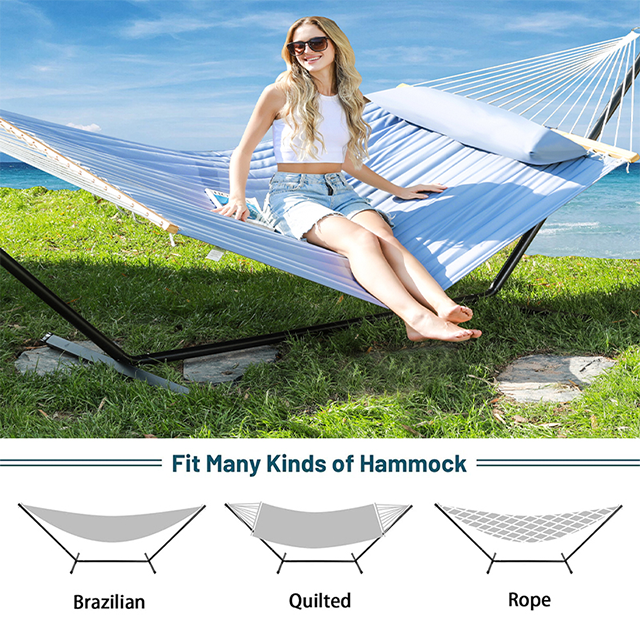
Relaxing in your backyard should feel safe and secure. However, a sudden frame collapse can instantly ruin a peaceful afternoon. Relying solely on the manufacturer’s printed weight limit can lead to hardware failure, safety risks, and wasted investment. Buyers evaluating a Steel Hammock Stand must understand the engineering behind the numbers. Specifically, you need to grasp the difference between laboratory load tests and real-world backyard usage. This article provides a technical, objective framework for evaluating weight limits, structural integrity, and long-term safety. You will learn how to decode static versus dynamic loads and inspect hardware quality. Ultimately, this guide will inform a confident purchasing decision.
Key Takeaways
- Dynamic vs. Static Loads: Manufacturer limits (typically 300–450 lbs) represent static weight; swinging or dropping into the hammock creates dynamic forces that require a 20–30% safety buffer.
- Construction Trumps Material: Not all steel is equal. Tri-beam base designs and heavy-gauge tubular steel offer exponentially higher load stability than standard hollow-tube portable frames.
- Connection Integrity Matters: Welded joints and proprietary hardware (e.g., right-angle interlocking designs) prevent the sheer stress and wobbling that diminish overall weight capacity.
- Corrosion is a Capacity Killer: Without specialized weather-resistant treatments (like advanced powder coating), internal rust will secretly degrade a steel stand’s weight capacity over time.
Decoding Manufacturer Weight Limits: Static vs. Dynamic Loads
Most buyers glance at the box, see a number like "450 lbs," and assume it supports that exact weight under any condition. Industry testing standards tell a different story. Manufacturers evaluate a Steel Hammock Stand in highly controlled environments. Engineers place perfectly balanced, static dead weight dead-center on the assembled frame. This weight never moves. It never shifts. It never drops suddenly into the fabric.
Real-world backyard usage is entirely dynamic. Two adults shifting their weight creates immediate kinetic load. A child swinging or an adult dropping heavily into the fabric generates momentary forces. These dynamic forces easily exceed the resting weight of the occupants. A 300-pound person dropping into a hammock can generate over 400 pounds of momentary kinetic force. This sudden stress targets the weakest points of the metal frame.
We recommend using the "80% Rule" to evaluate safe capacity. You should cap your planned load at roughly 80% of the stated manufacturer limit. If you target a frame rated for 450 lbs, the actual human weight should not exceed 360 lbs. This intentional buffer absorbs dynamic shocks. It protects the structural integrity over years of regular use.
You must also recognize exaggerated marketing claims. The market is full of white-label products boasting unrealistic load capacities. You can identify reliable claims by looking for transparent specifications. Legitimate brands publish exact tube diameters, steel gauges, and testing methodologies.
- Best Practice: Always ask how the brand tested its weight limit. Look for third-party laboratory certifications.
- Common Mistake: Treating a 400-lb limit as an invitation to load exactly 400 lbs of moving human weight.
Structural Engineering: What Gives a Steel Hammock Stand Its Strength?
Steel Gauge and Tubing Diameter
The core strength of any metal frame relies heavily on steel gauge and tubing diameter. Gauge measures metal thickness. A lower gauge number indicates thicker, stronger steel. Heavy-duty structural steel uses thicker walls to prevent bending under pressure. Conversely, thin-wall portable steel reduces shipping costs. It feels lighter but sacrifices ultimate load stability.
Thicker tube diameter directly reduces center-sag under heavy loads. When you apply massive weight, the longest horizontal span naturally wants to bow downward. A wider tube diameter increases the cross-sectional strength. It actively resists this downward bending force. Thin tubes might hold the weight initially, but they will flex, stretch, and eventually warp.
Base Architecture (Tri-Beam vs. Standard U-Shape)
Base design dictates lateral stability. Many basic models use a standard U-shape base. This parallel footprint works fine for perfect, dead-center weight. However, it struggles with lateral motion. If you swing off-center, a standard U-shape frame can easily tip over.
We prefer the "Tri-Beam" construction model for permanent setups. A Tri-Beam design utilizes a wider, three-point architectural base. It distributes weight laterally across a much broader footprint. When weight shifts abruptly, the triangulation anchors the frame to the ground. This geometry prevents dangerous tipping and handles dynamic load shifts flawlessly.
Hardware and Connection Points
You cannot evaluate a metal frame without inspecting its joints. The connections endure the highest sheer stress. Many modern frames use tool-free spring-pin connections. They offer incredibly high convenience for quick assembly. However, they deliver lower structural rigidity. The tiny gap between the pin and the hole causes "tolerance stacking." This leads to visible wobbling.
Bolted joints or proprietary interlocking right-angle connections offer higher structural rigidity. Right-angle sleeves wrap entirely around the adjoining tube. When weight pulls down, the interlocking joint actually compresses tighter. This superior mechanical fit retains maximum weight capacity. It eliminates the sway that slowly degrades spring-pin joints.
![Steel Hammock Stand]()
Portable vs. Heavy-Duty: Aligning Capacity with Your Use Case
You must align the structural capacity of the frame with your specific lifestyle needs. Frames generally fall into two distinct categories. They either prioritize space-saving portability or permanent, heavy-duty resilience. Knowing the difference prevents accidental overloading.
The space-saving portable model usually spans about 10 feet. Brands design these universal stands for solo users, indoor spaces, or frequent breakdown. You can pack them into a carrying bag easily. The capacity reality is restrictive. Most peak safely at 250 to 300 lbs. You will notice minor flexing under maximum load. They prioritize convenience over raw strength.
The permanent backyard model often spans 15 feet. Manufacturers build these for two-person setups and heavy spreader-bar hammocks. They serve as permanent patio fixtures. The capacity reality is robust. They reliably support 400 to 450+ lbs. The heavier frame weight often exceeds 50 lbs. This mass acts as a physical counterweight against aggressive dynamic shifting.
To help you establish a shortlisting logic, we developed a simple decision matrix. It evaluates occupants against setup permanence.
| Model Category | Ideal Occupants | Setup Style | Typical Max Load | Flexibility Under Load |
| 10-ft Portable | Solo User | Temporary / RV / Indoor | 250 - 300 lbs | Moderate flexing expected |
| 15-ft Heavy-Duty | Two Adults | Permanent Backyard / Patio | 400 - 450+ lbs | Highly rigid, minimal flex |
The Hidden Threat to Weight Capacity: Rust and Weathering
Most users assess weight limits on the day they assemble the product. However, environmental factors constantly attack metal frames. Material degradation subtly lowers actual weight capacity over subsequent seasons. External weather exposure is obvious. Internal condensation is the hidden killer.
Hollow steel tubes trap humid air. When temperatures drop at night, this moisture condenses inside the metal frame. Without proper drainage, internal rust forms. It eats away at the steel gauge from the inside out. A frame rated for 400 lbs in year one might secretly drop to a 250-lb capacity by year three due to internal oxidation.
Evaluating protective coatings is a mandatory safety step. Basic spray paint merely colors the metal. It chips easily and offers virtually zero rust protection. Industrial powder coating provides genuine defense. Advanced multi-stage baked finishes bond electrostatically to the metal. We consider a textured, thick powder coat a critical safety feature. It is never just an aesthetic choice. It seals the exterior against moisture penetration.
Implementation Tip: Always look for stands featuring tight-fitting plastic end caps. These caps seal the hollow tubes. They prevent rain and internal water pooling. If your frame arrives with missing caps, replace them immediately before leaving it outdoors.
Setup and Pre-Use Stability Verification
Even the strongest frame requires proper assembly. Before inviting friends to test it, you must perform a rigorous pre-use stability verification. This prevents catastrophic accidents on day one.
Begin with an initial assembly audit. Inspect every single weld carefully. Look for microscopic hairline cracks in the paint around joint seams. Check the drill holes for burrs or stress micro-fractures. If a weld looks incomplete or messy, do not apply full weight.
Next, perform the "Settle" test. We recommend following these precise steps to safely load weight for the first time:
- Press down firmly on the empty fabric using just your hands and arms.
- Listen carefully for loud popping or metallic snapping. This indicates joints seating themselves.
- Sit sideways in the very center, keeping both feet flat on the ground.
- Slowly transfer your full body weight into the fabric while holding the edges.
- Gently lift your feet and allow the frame to bear 100% of the load.
During this settle test, you must identify red flags. A small amount of settling noise is normal. However, persistent creaking is a severe warning sign. Watch the longest horizontal poles closely. Visible tube bowing means the metal is failing to resist the sheer force. If the base lifts off the ground when you gently swing, the stand's safety limit is compromised. You either exceeded the capacity or placed it on uneven ground.
Conclusion
Your safety outdoors depends on understanding the mechanics of weight limits. A reliable Steel Hammock Stand requires evaluating the intersection of steel gauge, base design, and dynamic weight buffers. You should never trust a single box number blindly. Dynamic human movement changes everything. Thicker steel, Tri-Beam architectures, and heavy-duty powder coatings separate premium safety from cheap alternatives.
As your next step, measure your available outdoor space carefully. Decide between a space-saving 10-ft model or a permanent 15-ft setup. Calculate your required dynamic load by multiplying the heaviest expected human weight by 1.25. Finally, shortlist brands that explicitly detail their coating processes and connection hardware. Thorough research guarantees years of secure, relaxing comfort.
FAQ
Q: Why does my steel stand wobble even though I am under the weight limit?
A: Wobbling usually stems from tolerance stacking in tool-free joints. Spring-pin connections naturally leave tiny gaps between the pin and the hole. Over time, these gaps allow the frame to sway. Uneven ground placement also causes significant wobbling. Always place the base on perfectly flat, solid terrain.
Q: Can a 450 lb-rated stand safely hold two people?
A: Yes, it can hold two people safely if their combined weight stays under roughly 360 lbs. This strict limit allows for the necessary dynamic buffer when both people shift or move. Ensure the fabric sling itself is also explicitly rated for that identical dual-capacity limit.
Q: Does the length of the stand affect its weight capacity?
A: Yes, it directly affects capacity through span physics. Longer spans, like 15-foot models, require significantly thicker steel tubing to maintain the same weight capacity as a shorter 10-foot span. Without thicker walls, a longer horizontal pole will bow under heavy center weight.
Q: How often should I inspect my steel hammock stand for structural fatigue?
A: We strongly recommend a visual inspection at the start of every outdoor season. Check all welded joints for hairline paint cracks. Inspect push-pins for rust. Ensure all plastic end caps remain tightly sealed. A mid-season check adds extra safety for heavy daily users.