Creating a reliable and safe relaxation space outdoors often feels like a frustrating puzzle. You might imagine lounging under the sun, only to realize your yard lacks perfectly spaced, mature trees. This common hurdle forces many homeowners to abandon their outdoor comfort goals entirely. Finding a freestanding support system introduces a new set of challenges involving weather resistance and structural safety. Without the right frame, you risk sudden collapses, rapid rust accumulation, or mismatched dimensions ruining your setup. The goal is achieving stable, low-maintenance lounging without altering your landscape.
This guide offers an objective, technical framework for evaluating and purchasing the ideal support structure. We explore material differences, precise measurement rules, and essential safety ratings. You will learn exactly how to match your specific sling, spatial limits, and environmental needs to the perfect Steel Hammock Stand.
Key Takeaways
- Material matters: Look for powder-coated tubular steel; gauge thickness dictates true weight capacity.
- Size compatibility is crucial: A "universal" stand fits most, but spreader-bar and non-spreader-bar hammocks require different tension levels and lengths (typically 9ft to 15ft).
- Footprint & portability: Steel stands average 30–50 lbs. Consider tool-free assembly if you plan to move it for lawn maintenance or winter storage.
- Safety limits: Always buy a stand with a weight capacity exceeding your anticipated maximum load by at least 20% to account for dynamic weight (swinging).
Steel vs. Wood vs. Aluminum: Why Steel Wins for Backyards
Backyards constantly expose furniture to harsh environmental variables. UV rays degrade finishes, morning dew introduces daily moisture, and ground soil creates the perfect breeding ground for organic decay. Selecting the right frame material determines how much time you spend relaxing versus performing tedious maintenance.
Wooden frames offer high visual aesthetics. Many people love the natural, rustic look of cedar or larch. However, the wood reality is highly labor-intensive. These frames require annual sanding, oiling, and varnishing to survive the elements. If left on damp grass, wood acts like a sponge. Ground moisture wicks up into the base legs, leading to inevitable rot and dangerous structural failure.
Aluminum frames present a different set of trade-offs. They are incredibly lightweight and completely rust-proof. This makes them easy to carry. Unfortunately, the aluminum reality includes severe stability issues. High winds easily tip lightweight frames over, potentially damaging nearby property. Aluminum also typically features a lower weight capacity, making it unsuitable for heavy-duty or multi-person use.
Steel offers the highest cost-to-durability ratio for outdoor applications. A quality Steel Hammock Stand remains heavy enough to resist strong wind gusts safely. The dense cellular structure of the metal handles multi-person weight capacities without bending. When properly coated, these frames require minimal ongoing maintenance. You get industrial-level strength disguised as leisure furniture.
| Material | Wind Stability | Maintenance Level | Weight Capacity Potential | Primary Weakness |
| Wood | High | Very High (Annual sanding/sealing) | Medium to High | Susceptible to ground rot |
| Aluminum | Low | Very Low (Wipe clean) | Low | Tips over in strong wind |
| Steel | Very High | Low (Touch-up paint as needed) | Very High | Vulnerable to rust if scratched |
Core Evaluation Criteria: How to Judge Structural Integrity
Steel Gauge and Tube Diameter
Not all metal tubing performs equally under stress. Manufacturers use a gauge system to measure metal thickness. In this system, a lower number indicates a thicker, stronger material. A 12-gauge tube measures roughly 0.104 inches thick. It prevents the frame from bending inward under dynamic tension. Many budget frames use 16-gauge or 18-gauge metal. These thinner tubes often warp or bow after just one season of active use.
You should also inspect the tube diameter. Look for 1.5 to 2-inch tubular construction. This specific diameter provides an optimal balance. It keeps the total frame weight manageable while maximizing the structural resistance against bending forces.
True Weight Capacity
Understanding weight ratings is crucial for your physical safety. A static weight limit refers to a completely still object resting on the bed. However, humans do not lie perfectly still. When you drop into the seat or swing back and forth, you generate dynamic weight. This kinetic energy briefly multiplies the force exerted on the frame joints.
- Light-Duty (Under 300 lbs): Suitable only for a single small adult or a child. Avoid these for primary backyard use due to long-term metal fatigue risks.
- Standard-Duty (300 - 400 lbs): Adequate for one large adult and gentle swaying.
- Heavy-Duty (450+ lbs): The industry standard for a robust Steel Hammock Stand. Easily accommodates two adults safely.
We strongly advise avoiding products with sub-300 lb ratings for daily backyard use. Metal fatigue accumulates over time. A higher capacity rating ensures the frame survives years of dynamic stress without joint failure.
Rust Resistance and Powder Coating
You must set realistic expectations regarding outdoor metals. No ferrous metal is 100% rust-proof indefinitely. Oxygen and moisture will eventually find a way to interact with the raw iron inside the frame.
To combat this, manufacturers apply protective barriers. You must prioritize an electrostatic powder-coated finish over standard liquid paint. During manufacturing, dry powder is electromagnetically charged and sprayed onto the grounded frame. The piece then enters a curing oven. This heat melts the powder into a thick, uniform shell. Powder coating resists minor scratches, UV fading, and heavy rain far better than traditional wet paint.
Include a maintenance reality check in your ownership plan. If you drag the frame across concrete, you will scratch off the protective layer. You must touch up these bare spots immediately. Keep a can of rust-inhibiting spray enamel in your garage. A quick spray on a fresh scratch prevents localized oxidation from spreading beneath the healthy coating.
![Steel Hammock Stand]()
Hammock Compatibility: Matching the Stand to Your Sling
Stand Length vs. Hammock Length
Purchasing a mismatched frame guarantees an uncomfortable experience. If the frame is too short, your back will scrape the grass. If the frame is too long, the fabric stretches too tight, making it impossible to lie down. You need the standard sizing formula. The ideal frame should generally measure 1 to 2 feet longer than your fabric's total flat length.
- Lay your fabric flat on the ground.
- Pull the end loops taut.
- Measure from the very tip of one loop to the tip of the other.
- Add 12 to 24 inches to this measurement to find your ideal frame size.
You must also identify your sling style. Brazilian and Mayan gathered-end styles drape deeply. These pair perfectly with 9-foot space-saving frames. The U-shaped curve of these frames perfectly matches the natural sag of gathered ends. Conversely, American-style spreader-bar designs remain flat and taut. These require significantly wider anchor points. You must use a 12-to-15-foot frame for any sling featuring wooden spreader bars.
Suspension Adjustability
Fabric materials change shape over time. Natural fibers like cotton and hemp stretch considerably during their first few weeks of use. Synthetic nylons stretch less but still deform slightly under heavy loads. If you buy a frame featuring only fixed hooks, this stretching becomes a major problem.
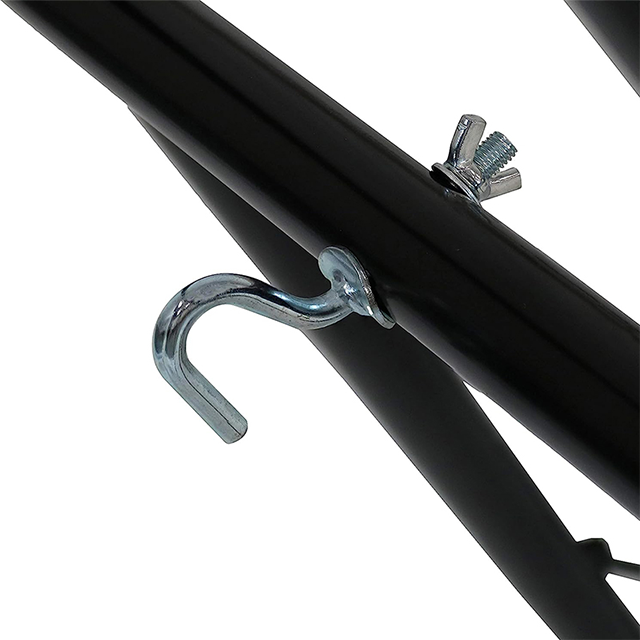
A fixed-hook system offers no flexibility. As the fabric stretches, your resting height drops lower and lower. Eventually, you will hit the ground. Always look for designs featuring multiple hook tiers along the arms. Alternatively, prioritize heavy-duty adjustable suspension chains. Chains allow you to micro-adjust the tension. You simply move the carabiner down a few chain links to instantly restore the perfect 30-degree hang angle.
Backyard Implementation: Spatial and Environmental Constraints
Measuring Your Footprint
Backyards often feature complex layouts. It is easy to underestimate the true footprint required for a safe swinging experience. You cannot simply measure the static length of the metal base. You must account for the dynamic "swing radius."
When you swing laterally, your body and the fabric extend outward. A 15-foot frame requires a minimum 18-foot clearance area. You need at least 1.5 to 2 feet of empty space on all four sides. Without this buffer zone, you risk colliding with wooden fences, brick retaining walls, or hot barbecue grills. Map out the intended space using a tape measure before you finalize a purchase. Ensure walking paths remain clear even when the sling is fully occupied.
Surface Considerations (Lawn vs. Patio)
Where you place the frame directly impacts its lifespan and performance. Grass lawns and hardscape patios present entirely different environmental challenges.
If you place the frame on a lawn, beware of soft soil. The narrow tubular ends can easily sink into soft mud after a rainstorm. This uneven sinking compromises structural stability. Furthermore, acidic soil and friction from grass blades can slowly scrape away the bottom powder coating. We recommend placing small paving stones under the contact points if you keep it on the grass.
Patios and decks require different precautions. Bare metal ends will aggressively scratch composite decking boards or stamped concrete. Sliding a heavy frame across a patio leaves permanent gouges. Look for models featuring heavy-duty rubberized end caps or thick plastic feet. These caps serve a dual purpose. They protect your expensive deck surfaces from deep scratches. They also seal the open tube ends, preventing morning dew and internal moisture from rusting the frame from the inside out.
Assembly, Portability, and Winterization Risks
Tool-Free Assembly Systems
You want to spend your weekend relaxing, not fighting with wrenches and stripped screws. Traditional bolt-together designs offer great rigidity but demand significant time to build. They also complicate moving the structure later. We highly recommend snap-button or spring-pin mechanisms for backyard environments.
A spring-pin design utilizes pre-drilled holes and internal steel buttons. The tubes slide together, and the button pops out to lock the joint securely. This tool-free approach provides a massive benefit. It allows for quick, 5-minute disassembly. When severe thunderstorms approach, you can break the frame down instantly and move it to the garage. No tools required.
The Weight-to-Mobility Tradeoff
You face an inherent conflict between security and mobility. A 50-lb heavy-duty Steel Hammock Stand provides incredible security. It will not tip over when your kids climb into it. However, moving a 50-lb, 15-foot metal structure by yourself proves difficult. Lawn maintenance becomes a chore if you have to drag it out of the mower's path every week.
If frequent movement is required for your landscaping routine, plan accordingly. We recommend purchasing heavy-duty wheel attachments. These aftermarket caster wheels clamp onto one end of the frame. You simply lift the opposite end and roll the entire assembly away like a wheelbarrow. This preserves your back and protects your patio from scrape marks.
Storage Best Practices
Leaving your frame outside 365 days a year guarantees a shortened lifespan. Winter weather introduces severe risks. Rainwater can seep into tiny joint gaps. When freezing temperatures arrive, this trapped water turns to ice. The ice expands forcefully, potentially splitting the metal seams open from the inside.
Establish a strict seasonal rule. Disassemble the frame and store it indoors during winter months or prolonged rainy seasons. Stacking the disconnected tubes in a dry basement or shed takes only minutes. This single habit can easily double the functional lifespan of the product. Always dry the tubes completely with a towel before stacking them to prevent trapped surface moisture during storage.
Conclusion
A quality tubular support system acts as an investment in both safety and daily convenience. You no longer need to depend on unpredictable landscaping to enjoy outdoor relaxation. By prioritizing the correct technical specifications, you ensure your setup remains stable through heavy use and harsh weather.
When reviewing your options, use strict shortlisting logic. Prioritize 1.5 to 2-inch tubular thickness, heavily adjustable suspension chains, and baked-on electrostatic powder finishes. Above all, match the frame length precisely to your preferred sling style to avoid frustrating tension issues.
Your next step is practical action. Walk into your yard today and measure the intended clearance zone, accounting for the dynamic swing radius. Then, stretch your current fabric flat on the floor to find its exact end-to-end length. Armed with these two numbers, you are ready to make a confident, perfectly sized purchase.
FAQ
Q: Can I leave a steel hammock stand outside year-round?
A: Yes, but we advise against it if you experience harsh winters. Constant exposure accelerates wear on the powder coating. Moisture can enter joints, freeze, and crack the metal tubes. Storing it indoors during winter significantly extends its lifespan.
Q: What size steel stand do I need for a spreader bar hammock?
A: You typically need a 12 to 15-foot frame. Spreader bars force the fabric to lay flat and taut. A 9-foot space-saving design cannot provide the required tension and will cause you to touch the ground.
Q: How do I fix rust spots on a steel hammock stand?
A: Address rust immediately. Vigorously scrub the affected area using a wire brush or coarse sandpaper to remove all oxidation. Wipe the dust away with a clean cloth. Finally, apply two coats of rust-stopping exterior spray enamel to seal the metal.
Q: Are "universal" hammock stands actually universal?
A: Not entirely. The term "universal" usually implies the frame features highly adjustable chains to accommodate varying lengths. However, extremely long traditional Mayan designs may still drag on the ground even when attached to the tightest chain setting.