The decision to purchase a freestanding hammock eliminates the need for perfectly spaced trees. You gain the flexibility to lounge anywhere on your property. However, this convenience introduces a new set of hardware and spatial evaluations. Navigating conflicting manufacturer claims requires deep scrutiny. You will often see weight capacities ranging from 250 to 600 lbs. Weather resistance labels and "space-saving" promises can also mislead buyers. Achieving true comfort requires a clear understanding of actual material specifications.
This guide unpacks the technical details behind these popular relaxation products. We examine the structural frameworks and functional accessories necessary to evaluate your options. You will learn how to select the right freestanding setup for indoor, patio, or outdoor use. We skip the marketing fluff and focus strictly on structural integrity, fabric performance, and footprint requirements. Knowing the exact specifications prevents costly mistakes and ensures a safe, relaxing experience.
Key Takeaways
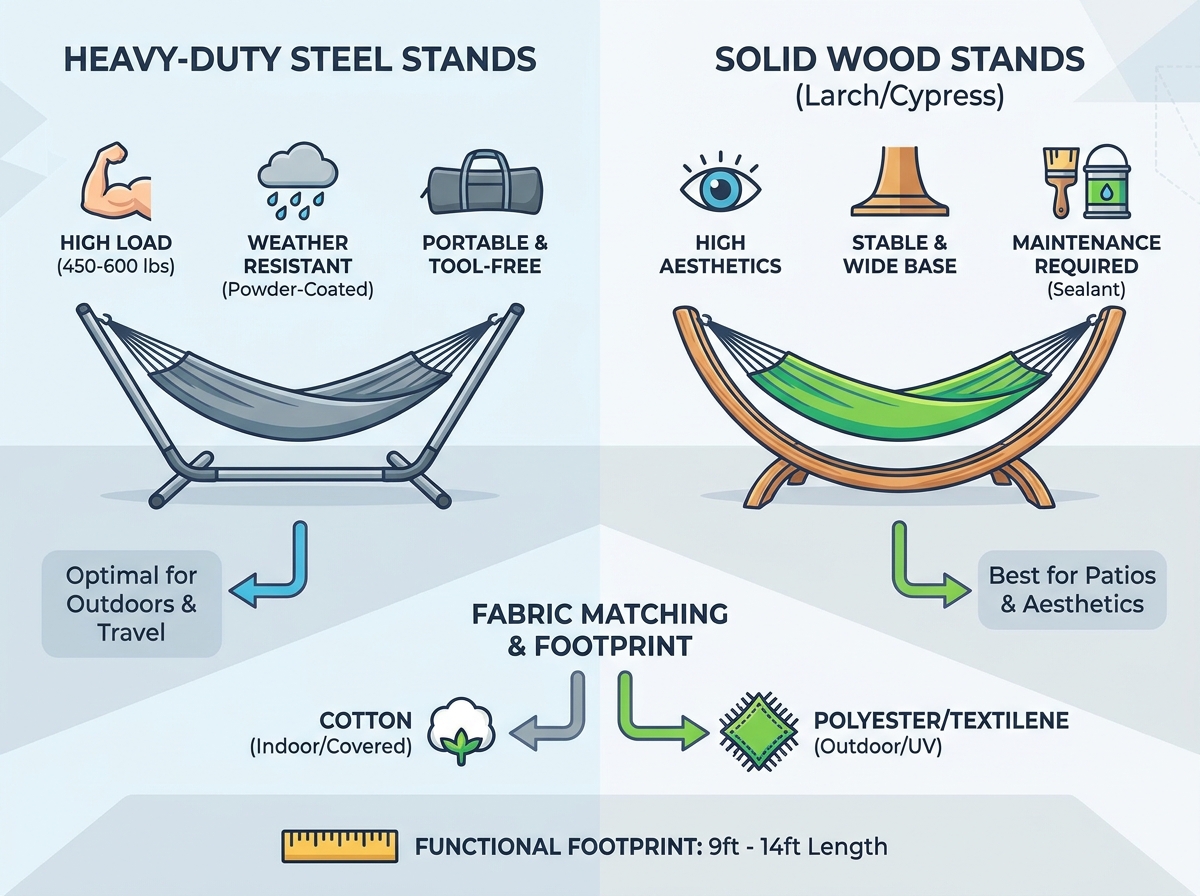
- Stand Material Dictates Lifespan: Powder-coated heavy-duty steel offers optimal portability and weather resistance, while solid wood (like larch or cypress) provides high aesthetics but requires strict maintenance.
- Verify True Weight Capacities: A reliable double hammock should support between 450 and 600 lbs, requiring specific steel gauge thicknesses and reinforced joint hardware to prevent bowing.
- Match Fabric to Environment: Cotton excels in indoor/covered environments for breathability, while polyester or Textilene is mandatory for prolonged UV and moisture exposure.
- Footprint Matters: "Space-saving" models still require a minimum functional footprint (typically 9 to 14 feet in length) to ensure proper suspension tension and safe clearance.
Structural Integrity: Evaluating Stand Materials and Weight Capacity
Heavy-Duty Steel vs. Wood Frameworks
Evaluating the base framework dictates both the lifespan and placement of your product. Manufacturers typically construct bases from either tubular steel or solid wood. Each material serves a specific lifestyle requirement.
- Tubular Steel: Steel remains the industry standard for portability and high load ratings. You must evaluate the gauge of the steel and the quality of the powder-coating. Lower gauge numbers indicate thicker, stronger steel. High-quality powder coating resists chipping and prevents moisture penetration.
- Wood Stands: Solid wood offers wider, more stable bases but sacrifices portability. Assess the type of wood used. FSC-certified Larch and Cypress naturally resist decay. Factory sealants protect the wood grain from UV damage. However, wood frames weigh significantly more, making them a permanent fixture once assembled.
Decoding Weight Limits (450 lbs to 600+ lbs)
Understanding weight limits requires looking beyond the static numbers printed on the box. You must consider dynamic weight. When you sit down, move, or swing, you generate dynamic force. This movement impacts the stand differently than static weight. A 300-pound person swinging gently exerts far more stress on the joints than a 300-pound stationary sandbag.
A 450-pound capacity serves as the baseline for a true "double hammock." Supporting this load requires reinforced U-brackets or heavy-duty snap hooks. Frames rated for 600+ lbs feature thicker steel walls and reinforced corner gussets. They prevent the center pole from bowing under pressure.
Joint Construction and Hardware
Structural failure rarely happens in the middle of a steel tube. It almost always occurs at the joints. Look for tool-free, spring-pin locking mechanisms when evaluating steel stands. These pins snap securely into pre-drilled holes, creating a rigid frame. If you prefer wooden stands, demand galvanized or stainless steel carriage bolts. Stainless hardware resists corrosion and prevents premature structural failure at crucial stress points.
![Freestanding structural hammock setup]()
Spatial Requirements: Sizing the Hammock and Stand Footprint
Single vs. Double Hammock Dimensions
Buyers often miscalculate the required floor space by ignoring the actual bed dimensions. A single bed typically measures around 39 to 48 inches wide. It suits solo lounging perfectly. A double bed measures 59 inches wide or more. This wider bed impacts the required frame width. A wider bed requires a wider base to prevent the fabric from rubbing against the side poles during a swing.
True Footprint of "Space-Saving" Models
The term "space-saving" frequently appears in marketing materials. We need to define the actual floor dimensions needed for these models. A typical space-saving base requires an absolute minimum of 9 feet in length and 3 to 4 feet in width. Buyers must measure balconies or living rooms accurately before purchasing. You also need an extra two feet of clearance on all sides. This clearance ensures you do not bump into walls or furniture while getting in and out.
Spreader Bar vs. Traditional Gathered-End
Your choice of bed style dictates the required frame length and overall stability.
- Spreader Bar: Wooden spreader bars keep the fabric taut and visually open. They look beautiful on a patio. However, they create a higher center of gravity. This design increases the tipping risk if you sit too close to the edge. Spreader bar designs usually require longer frames, often reaching 12 to 15 feet.
- Gathered-End: Traditional Brazilian-style models ditch the wooden bar. They lower your center of gravity and cocoon your body safely inside the fabric. This design fits perfectly into shorter, 9-foot frames. They provide a highly stable, tip-resistant experience.
Fabric Specifications: Matching Material to Your Environment
Fabric Environment Comparison Chart
| Material Type | Primary Benefit | Ideal Environment | Maintenance Need |
| 100% Cotton | Maximum breathability and softness | Indoors, covered patios | High (keep dry, prevent mold) |
| Polyester Blends | Vibrant colors, fade resistance | Moderate outdoor use | Medium (occasional washing) |
| Textilene | Water drainage, UV resistance | Permanent outdoor placement | Low (hose down to clean) |
100% Cotton
Cotton provides high comfort, unmatched breathability, and vibrant colors. It conforms perfectly to your body. However, you should restrict cotton beds to indoors, screened porches, or temporary outdoor use. Cotton features notoriously slow drying times. Leaving it outside in the rain invites mold and mildew degradation.
Polyester and Blends
Polyester delivers higher durability and strong fade resistance. It offers a smart balance between the soft feel of cotton and necessary weather resistance. You can confidently leave polyester beds out during moderate patio use. They repel light moisture and dry much faster than pure cotton weaves.
Textilene / Quilted Synthetics
Textilene represents the gold standard for permanent outdoor placement. Manufacturers weave PVC-coated polyester yarns together to create this material. It offers rapid water drainage, high UV resistance, and minimal maintenance. Quilted synthetic beds often feature internal fiberfill padding. They provide extra comfort while maintaining excellent weather resistance.
Thread Count and Weave Density
Evaluating the structural weave ensures the fabric will not tear under the maximum weight rating. Look for triple-stitched seams along the outer edges. Inspect the heavy macramé clews—the triangular rope sections connecting the bed to the metal rings. Dense, tightly woven clews distribute your body weight evenly across the entire fabric width. Thin or sparse ropes create pressure points, leading to premature fabric tearing.
Portability and Value-Add Accessories
Carrying Bags and Storage
Portability transforms a static patio piece into a versatile travel companion. A high-quality Hammock with Stand often includes a tailored carrying bag. Evaluate the practicality of these included storage bags. A true portable steel frame should break down into 5 or 6 individual pieces. The total packed weight should stay under 35 lbs. This allows for easy transport in a car trunk to campsites, beaches, or local parks. The bag itself should feature reinforced handles and heavy-duty canvas to prevent steel poles from tearing the bottom.
Included Hardware
You must assess the included hardware kit. Look specifically for adjustable chains or heavy-duty S-hooks. These components are critical for raising or lowering the bed height. Fabric naturally stretches over time. Cotton, in particular, elongates after a few weeks of use. Adjustable chains allow you to tighten the suspension, keeping your back safely off the ground.
Pillows and Padding
Analyze value-add features like attachable soft pillows or quilted sleeping pads. Verify if these accessories are completely removable. You want them to be machine washable. A sewn-in pillow cannot be washed easily if it accumulates sweat or pollen. Button-fastened or tie-on pillows offer much better hygiene control.
Implementation, Safety, and Maintenance Realities
Assembly and Teardown Time
Set realistic expectations for setting up your new gear. A well-designed steel frame should take one person under 5 minutes to assemble. You should not need any tools. The spring-pin mechanisms allow you to slide the poles together until they click. If a product requires wrenches or screwdrivers for basic assembly, it loses all practical portability.
Surface Leveling
Safety strictly requires placing bases on flat, stable ground. Uneven ground creates lateral tipping risks. This rule becomes critical for heavy-duty 600-pound capacity models. Placing one leg on a concrete patio and another on soft grass creates a dangerous weight imbalance. Ensure all four base contact points sit flush against the earth.
Rust Prevention and Winterization
You need actionable advice on long-term maintenance. Even powder-coated steel can rust at the joints if the coating gets scratched during assembly. Apply a light coat of silicone spray to the connection joints twice a year. We highly recommend taking the fabric indoors during extreme weather. Check the plastic end-caps on the steel tubes regularly. If an end-cap falls off, rainwater will pool inside the hollow tube, rusting it from the inside out.
Conclusion
Selecting the ideal relaxation setup requires a structured evaluation process. Start by defining your intended location. If you want a permanent backyard fixture, prioritize Textilene fabric and thick steel tubing. Match the fabric strictly to your environmental reality. Next, determine the required capacity. Solo loungers can choose smaller beds, while couples must insist on 450-pound ratings and 59-inch widths. Finally, measure your available floor space carefully, leaving clearance for swinging.
We encourage buyers to prioritize function over purely aesthetic features. Seek out frames with adjustable tension chains, weather-treated materials, and verified load ratings. By ignoring marketing fluff and focusing on structural integrity, you guarantee a safe, highly comfortable, and long-lasting investment for your home.
FAQ
Q: Can I leave a hammock with a stand outside year-round?
A: You must distinguish between the frame and the fabric. Powder-coated steel bases can generally survive outdoors year-round. However, you should always store the fabric inside during harsh winters or continuous rain. Even weather-resistant synthetics suffer UV degradation and mildew if left exposed indefinitely.
Q: Are hammock stands universal?
A: No. Frames are not universal. Nine-foot bases accommodate gathered-end beds, while 12-to-15-foot bases accommodate spreader bar beds. You must measure your bed's total length, from suspension ring to suspension ring, to ensure strict compatibility with any new frame.
Q: Is a spreader bar hammock better than a gathered-end hammock?
A: This choice represents an aesthetic versus stability trade-off. Spreader bars keep the bed flat. They are easier to get into and dry faster. Gathered-end designs lack the wooden bar. They are far more stable, cocoon your body, and are significantly less prone to flipping over.
Q: How do I clean the hammock bed?
A: Cleaning depends entirely on the material. Use mild detergent and cold water to hand-wash cotton, then air-dry it. You can simply hose down Textilene outside. Never machine-wash styles featuring non-removable wooden spreader bars, as the wood will damage your washing machine drum.