Relaxing outside offers incredible mental and physical health benefits. Many people dream of swaying gently between two trees on a lazy Sunday afternoon. However, buying an Outdoor hammock based purely on aesthetics often leads to mismatched use cases. Imagine hanging a heavy cotton sling in a damp, rainy climate. It will likely rot quickly. Or, picture trying to sleep in a tippy spreader-bar setup. You will probably end up dumped onto the ground. We want to help you avoid these frustrating and common mistakes. This article provides an objective, criteria-based framework for evaluating hammocks. We focus entirely on your local climate, intended use, and specific setup limitations. You will learn exactly how to match fabrics, suspension systems, and dimensions to your personal needs. Emphasize one crucial fact before we begin. There is no universal best option on the market today. You only need the right configuration of materials and support for your specific relaxation style. Read on to find your perfect match.
Key Takeaways
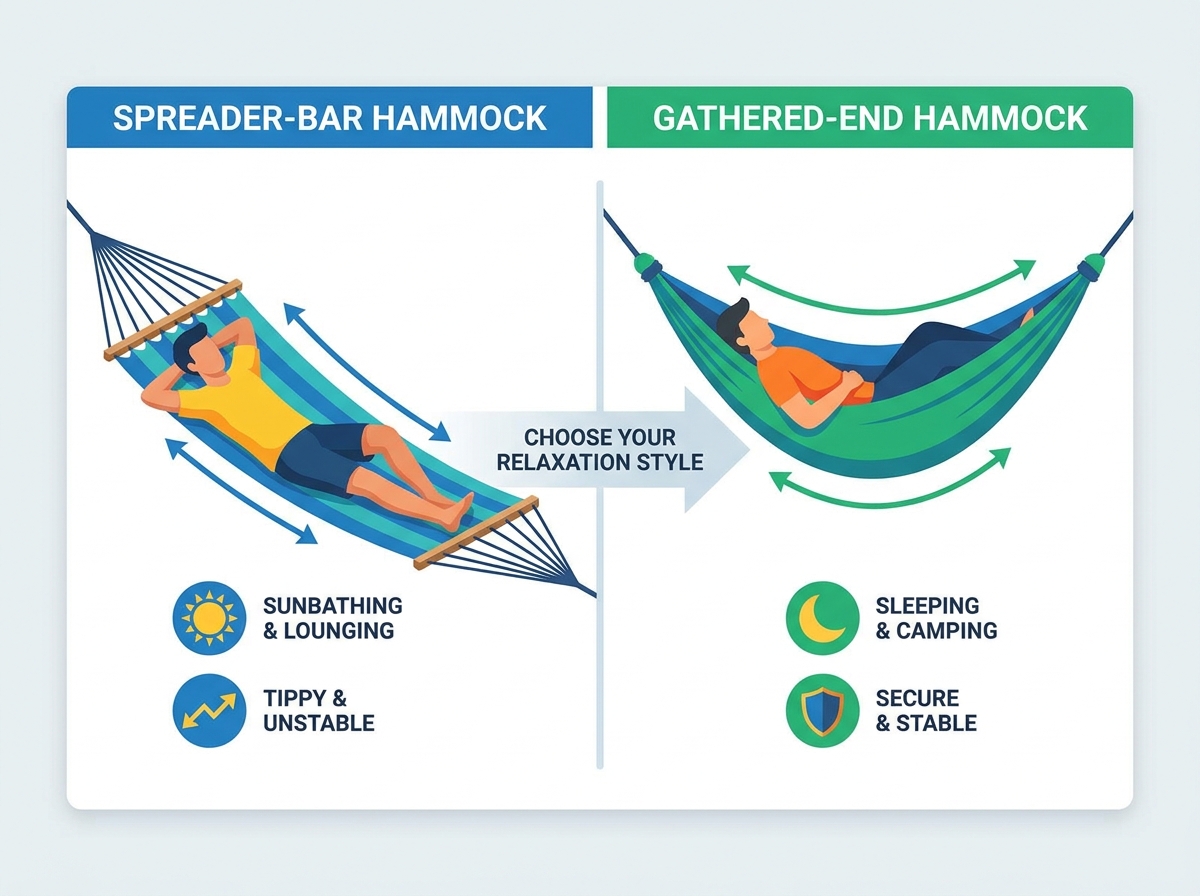
- Design dictates stability: Spreader-bar hammocks offer a flat, open view ideal for sunbathing, but gathered-end hammocks provide superior stability and ergonomic support for sleeping.
- Material determines lifespan: Parachute nylon is best for portability and damp climates; cotton offers maximum comfort but requires strict weather protection.
- Suspension is non-negotiable: An outdoor hammock is only as safe as its anchor points. Factor in tree distance or the cost/footprint of a freestanding stand before purchasing.
- Weight limits require buffers: Always select a hammock with a weight capacity at least 50 lbs higher than the intended dynamic load to account for shifting and movement.
Identifying Your Primary Hammock Use Case
Begin by narrowing down exactly how you plan to relax outdoors. Consumers frequently purchase rugged wilderness gear when they only need patio lounging equipment. Conversely, they might buy a delicate woven design for a harsh wilderness trip. Both scenarios result in frustration. Let us break down the primary use cases to clarify your actual requirements.
The Backyard Aesthetic and Lounging approach focuses heavily on UV resistance and visual appeal. You want ease of getting in and out for short periods. Imagine reading a book or enjoying brief sunbathing sessions on a warm afternoon. Overall weight is not a major factor here. You do not have to carry the fabric for miles across rugged terrain. Because mobility remains irrelevant, you can easily prioritize plush fabrics, decorative fringes, and permanent backyard installations.
Overnight Camping and Backpacking present completely different requirements. Backpackers face strict weight limits and unpredictable weather. This scenario requires low denier-rating nylon for ultimate packability. You will need integrated bug nets and robust weather protection layers. Every single ounce matters on the trail. Heavy cotton materials simply will not work when carrying gear on your back. You must prioritize ultralight functionality over plush luxury.
Family and Multi-Person Use changes the structural equation entirely. Kids and pets introduce unpredictable forces into the system. This specific use case demands extremely high tensile strength. You will want wide dimensions, often labeled as double hammocks by manufacturers. Multi-point suspension systems become necessary to handle dynamic weight shifting. Children move unpredictably, so stability reigns supreme over pure portability. Safety margins must increase significantly.
The Hybrid Approach works best for car camping or RV travel. Sometimes you need a reliable balance between comfort and packability. Hybrid users can handle slightly heavier materials. However, they still require straightforward, non-permanent suspension systems. You want a setup easily packed into a vehicle trunk. This middle ground allows for thicker nylons or lightweight canvas blends. It offers durability without requiring permanent post installations.
![Outdoor hammock hanging in a relaxing nature setting]()
Evaluating Outdoor Hammock Styles by Design
Design choices dictate how your body rests and determine your center of gravity. We must examine the three primary structural styles available today. Understanding these mechanics prevents uncomfortable sleeping arrangements and dangerous flipping hazards.
Hammock Design Comparison Chart
| Design Style | Stability Level | Ideal Posture | Primary Drawback |
| Spreader-Bar | Low (Prone to flipping) | Flat and open | High center of gravity |
| Gathered-End | High (Wraps the body) | Diagonal lay | Can feel claustrophobic |
| Multi-Point / Asymmetrical | Very High | Strict flat lay | Complex setup required |
The Spreader-Bar Hammock
Mechanism: This popular style uses wooden or metal bars at both ends. These rigid bars keep the fabric taut and completely flat across the width.
Pros: They are incredibly easy to get into. Many people find them visually appealing for luxury patios and modern decks. The open design does not cocoon the user. This wide-open structure keeps you exceptionally cool on hot summer days.
Risks and Trade-offs: They remain inherently unstable. The flat bed creates a dangerously high center of gravity. This makes them highly prone to flipping if you move abruptly. We do not recommend them for overnight sleeping or restless users. They serve best as temporary lounging spots.
The Gathered-End Hammock
Mechanism: Manufacturers gather and cinch the fabric at both ends. This cinching creates a natural curve resembling a banana.
Pros: They offer extreme stability. The loose fabric wraps securely around the body. This actively prevents you from falling out during the night. It naturally aligns the spine when you lie diagonally across the center. This specific diagonal posture represents the traditional Brazilian or Mayan sleeping method.
Risks and Trade-offs: The deep sag can feel claustrophobic to some unaccustomed users. We refer to this as the cocoon effect. Furthermore, the wrapped fabric holds body heat effectively. This retained heat can be a major pro or a sweaty con depending on your local climate.
Multi-Point & Asymmetrical Hammocks
Mechanism: These advanced designs use three or more anchor points, similar to suspended tree tents. Alternatively, they use an asymmetrical fabric cut. Both engineering methods force a perfectly flat lay.
Pros: This structure solves the banana-curve issue entirely. It offers a perfect ergonomic solution for strict side or stomach sleepers. They also prove highly durable for larger groups sharing the space simultaneously.
Risks and Trade-offs: Expect a highly complex setup process. You require specific tree geometries to achieve the correct tension across all points. They also usually carry a premium price point compared to simpler traditional designs.
Material Matters: Matching Fabric to Climate and Comfort
Fabric determines the lifespan and maintenance routine of your gear. A beautiful design means nothing if the material degrades within weeks of purchase. You must match the fabric properties to your specific environmental exposure.
Cotton and Canvas
Best For: Covered patios, dry climates, and pure relaxation comfort.
Evaluation: These natural fibers feel extremely breathable. They rest softly against the skin without causing irritation. Cotton conforms beautifully to body contours, providing unparalleled luxury for afternoon naps.
Implementation Risk: They are highly susceptible to mold, mildew, and structural rot. You cannot leave them out in the rain safely. They also suffer from painfully slow drying times. Moisture gets trapped in the thick fibers. If you choose cotton, you must commit to bringing it indoors during bad weather.
Parachute Nylon (Ripstop)
Best For: Camping, rugged travel, and humid or wet environments.
Evaluation: Always look for specific denier counts. The denier rating indicates yarn thickness. Compare a heavy 70D fabric against an ultralight 40D fabric. You must weigh long-term durability against ultimate packability. Nylon dries quickly and naturally resists rot, making it ideal for the wilderness.
Implementation Risk: Nylon can degrade under prolonged, direct UV exposure. It may also feel clammy in hot, stagnant weather. Airflow remains limited compared to woven ropes. You might wake up sweating if you lack proper ventilation.
Polyester and Synthetic Rope
Best For: Permanent backyard installations and humid poolside use.
Evaluation: Synthetic blends offer the classic look of traditional rope or cotton. However, they provide far superior UV and water resistance. Duracord stands as a strong industry standard for these demanding environments. It resists fading and refuses to rot when left outside.
Implementation Risk: Rope variations can leave uncomfortable pressure marks on bare skin. The weave creates friction points. You should use them alongside a quilted pad for extended lounging sessions. This ensures maximum comfort without sacrificing weather resistance.
Suspension Systems and Setup Realities
An outdoor setup is only as safe as its anchor points. Never underestimate the immense dynamic forces generated by a suspended human body. You must evaluate your available anchors critically.
Assessing Your Anchor Points
Tree Straps: We must highlight the critical importance of wide, flat webbing. Use straps at least 1-inch thick to protect delicate tree bark. This follows essential Leave No Trace principles. Avoid bare ropes entirely. Thin ropes will cut into the cambium layer and slowly kill the trees. Proper straps distribute the weight evenly.
Freestanding Stands: Stands offer excellent location flexibility. Evaluate your material choices carefully before buying. Powder-coated steel resists rust efficiently, while treated wood offers a beautiful natural aesthetic. Pay close attention to footprint requirements. Most quality stands require 9 to 15 feet of flat ground clearance. Ensure your deck or patio can accommodate this bulky footprint.
Understanding Load Ratings
Static vs. Dynamic Load: A 400-pound static weight limit does not mean it safely supports 400 pounds of swinging weight. Dropping into the bed creates a severe dynamic force. This sudden drop multiplies your actual body weight significantly. Always select equipment boasting a weight capacity at least 50 pounds higher than your intended maximum load. This crucial buffer accounts for sudden shifting and movement.
Hardware Compliance: Ensure your carabiners and O-rings are rated for heavy-duty use. Look for climbing-rated hardware. Do not rely on cheap accessory carabiners intended for holding water bottles. A hardware failure while suspended can cause severe spinal injuries. Check the weight stamps on all metal components.
How to Make Your Final Outdoor Hammock Selection
Follow this structured process to filter your options logically. Skip the impulse buys and focus on these four critical steps.
- Step 1: Define the Anchor. Do you have mature trees located 10 to 15 feet apart? If not, do you need to purchase a freestanding stand? Answering this question immediately narrows your available options and dictates your budget.
- Step 2: Choose the Posture. Decide exactly how you want to lie. Do you want to rest flat and open in a spreader-bar style? Or do you prefer feeling secure and cocooned in a gathered-end model for overnight sleeping?
- Step 3: Select Material based on Maintenance. Be honest about your daily habits. Are you willing to bring it inside when it rains? If yes, choose luxurious cotton. If it needs to live outside all year, buy weather-resistant polyester or nylon.
- Step 4: Size Up. Always default to a double size for adults. You should do this even for solo use. The extra fabric width allows for the crucial diagonal lay required for proper ergonomic comfort. A single size often forces you into an uncomfortable banana shape.
Conclusion
The ideal Outdoor hammock is a simple calculation of intended posture, environmental exposure, and available setup space. Do not let pretty patterns drive your final purchasing decision. We strongly encourage buyers to prioritize suspension safety and material durability over pure aesthetics. A sturdy, well-anchored system ensures years of reliable relaxation without safety risks. Take action today. Review your backyard space or check your camping gear list. Measure your potential anchor points accurately. Finally, filter your shortlist based on the criteria established in this guide.
FAQ
Q: Can I leave my outdoor hammock in the rain?
A: It depends strictly on the material. Nylon and polyester dry quickly and naturally resist rot. They can handle occasional rain showers. However, cotton will develop mildew rapidly. It will weaken significantly if repeatedly soaked and not thoroughly dried. Always store natural fibers indoors during bad weather.
Q: What is the correct distance between trees for hanging a hammock?
A: Generally, 10 to 15 feet is ideal. You want the suspension straps to hang at roughly a 30-degree angle. This specific angle provides the right amount of sag. It maximizes your comfort without putting excessive shear force on the trees or your suspension hardware.
Q: Is it safe to sleep in a hammock overnight?
A: Yes, provided it is a gathered-end hammock and you lie diagonally. This traditional posture keeps your back relatively flat and properly supported. Conversely, spreader-bar hammocks pose a serious tipping hazard. We strongly advise against using them for overnight sleeping.
Q: How do I clean my outdoor hammock?
A: Most nylon hammocks can be machine washed on a gentle, cold cycle. You must remove all carabiners first. Cotton and rope hammocks require more care. You should hand-wash them using mild soap. Lay them completely flat to dry to prevent shrinking or tangled cords.