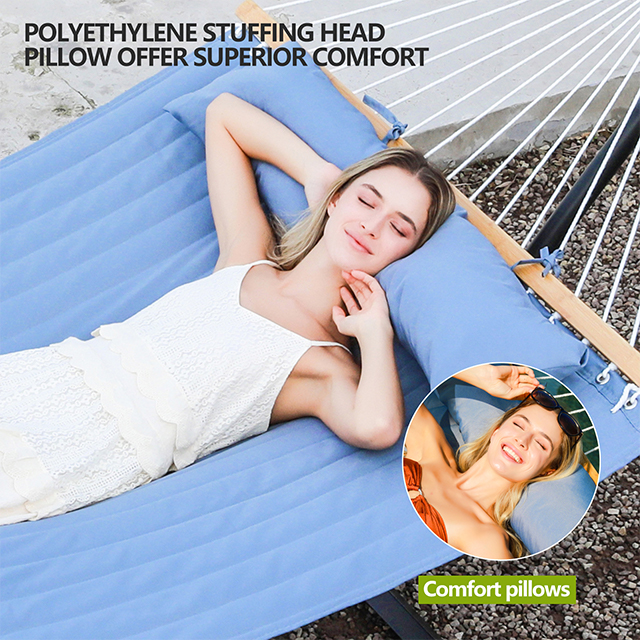
Traditional ground camping relies entirely on finding flat, dry, and clear terrain. You often spend precious daylight hunting for the perfect footprint. Dense forests, rocky elevations, and rain-soaked trails make this search frustrating. Fortunately, a Tree Hammock decouples your sleep system from the cold, hard ground. They offer incredible modularity and adaptability for outdoor enthusiasts facing rugged topography. However, they require specific environmental conditions and suspension knowledge to deploy safely. You cannot just tie a rope to a branch and expect a good night's sleep. This guide defines the complete suspended ecosystem. We establish crucial safety and compliance benchmarks to protect local flora. Finally, we provide a strict evaluation framework. You will learn how to decide between a suspended shelter, a traditional ground tent, or a freestanding stand.
Key Takeaways
- A tree hammock is a suspended shelter system requiring structural anchors (trees), distinct from casual backyard hammocks due to weatherproofing and specialized suspension hardware.
- Adoption requires evaluating three core variables: terrain suitability (tree spacing), insulation requirements (managing convective heat loss), and local park compliance (Leave No Trace strap mandates).
- Compared to ground tents, tree hammocks excel in uneven or saturated environments but introduce a learning curve regarding hang angles and thermal management.
- Selecting the right system requires balancing fabric denier (durability/weight), suspension type (ease of use vs. adjustability), and modularity (integrated vs. separate bug nets).
Defining the Tree Hammock: Architecture and Core Mechanics
A true backcountry suspended shelter is not a simple net. It functions as a lightweight, packable fabric sling engineered for overnight sleep. The system utilizes dynamic tension between two living structural anchors. This design creates a secure, off-the-ground resting platform. It requires precision and high-quality materials to function properly.
Component Breakdown (The System Approach)
Modern suspension shelters operate as integrated ecosystems rather than standalone products. You must assemble various components to achieve a comfortable setup.
- The Body: Manufacturers typically offer gathered-end or bridge styles. Gathered-end models bunch the fabric at both ends. Bridge models use spreader bars to create a flatter surface. Most utilize ripstop nylon or polyester for high tensile strength.
- The Suspension: This hardware bridges the fabric and the tree. It includes robust tree straps, climbing-rated carabiners, whoopie slings, or daisy chains. Each element must support immense static and dynamic loads.
- The Modular Peripherals: Structural ridgelines maintain a consistent fabric sag. Bug nets keep mosquitoes away during summer trips. Waterproof rainflies act as overhead tarps to deflect precipitation and block wind.
Implementation Reality
A fabric sling alone does not constitute a complete shelter. It simply forms the foundation of your modular sleep system. You must carefully calibrate the tension and geometry to stay comfortable. Industry standards dictate a 30-degree hang angle for the suspension lines. This specific angle balances sheer force on the anchors while providing the ideal fabric sag. Proper sag allows you to lie diagonally, flattening your spine.
Best Practice: Always attach a structural ridgeline. It locks in your preferred sag amount. You will achieve the exact same comfort level regardless of the distance between your anchor points.
Use-Case Assessment: Where Tree Hammocks Outperform Ground Systems
Suspended shelters solve specific topographical problems. They shine in environments where traditional ground pitching fails. However, you must match the shelter to the terrain.
Ultralight & Thru-Hiking
Thru-hikers value extreme weight reduction. Suspended systems offer high viability for long-distance trails. They eliminate the need for heavy ground tarps. If you use a properly rated underquilt, you can also leave your sleeping pad at home. This strategy drastically reduces your base weight. It also shrinks your overall pack volume, leaving room for extra food.
Uneven, Saturated, or Sloped Terrain Camping
This represents the primary advantage of off-ground camping. You completely bypass the need for flat ground. Rocky surface clearing becomes a thing of the past. Flood-risk mitigation is no longer a concern. You can comfortably pitch your shelter over a rushing stream, sharp boulders, or steep hillsides. As long as two sturdy anchors exist, you have a prime campsite.
Bikepacking & Kayak Camping
Space comes at a premium on bikes and boats. Suspended systems offer a strong fit due to their cylindrical, highly compressible packability. Tents require long, rigid poles. Suspended shelters consist entirely of fabric and cordage. They easily stuff into tight bicycle panniers or compact kayak dry bags.
Constraint Warning (When NOT to use)
You cannot deploy a suspended shelter everywhere. Alpine zones above the tree line lack suitable anchors. Desert environments rarely feature mature, weight-bearing vegetation. Furthermore, many protected historical sites strictly prohibit attaching anything to the local flora. In these specific cases, a freestanding stand or a traditional ground bivy becomes mandatory.
Common Mistake: Do not force a suspended setup in fragile ecosystems. Hanging from thin saplings damages the environment and risks sudden equipment failure during the night.
![Article image]()
Tree Hammocks vs. Ground Tents vs. Hammock Stands (Decision Matrix)
Choosing the right shelter requires analyzing your travel style and destination. Each system carries distinct advantages and inherent limitations. You must weigh portability against comfort and site flexibility.
Portability & Weight
Suspended systems win on scalability. You only bring what the weather dictates. On clear nights, you can leave the rainfly behind. Ground tents possess a fixed minimum weight. You must always carry the poles, stakes, and inner body. Freestanding hammock stands carry the heaviest weight constraints. Manufacturers build them from thick steel or heavy aluminum. Stands remain strictly reserved for car camping or backyard use.
Site Selection Flexibility
Tents require a flat, debris-free 6x4 ft footprint. Finding this exact geometry often proves difficult in dense woods. Suspended setups require two mature trunks spaced roughly 12 to 15 feet apart. Forests offer infinite combinations of suitable anchor points. However, tents dominate in barren landscapes where vertical anchors do not exist.
Comfort & Ergonomics
Tents offer familiar, flat sleeping mechanics. You sleep exactly as you would at home. Suspended models eliminate all ground pressure points. Hips and shoulders never press against hard earth. However, they require an asymmetrical diagonal lay. You must angle your body across the fabric to achieve a flat spine position. This represents a common adoption hurdle for strict side-sleepers.
Decision Comparison Chart
| Feature | Suspended Shelter | Ground Tent | Freestanding Stand |
| Base Weight | Highly modular, easily ultralight. | Fixed minimum weight (poles). | Very heavy (30+ lbs). |
| Footprint Requirement | Zero ground space needed. | 6x4 feet of flat, dry earth. | Large, flat area for stability. |
| Anchor Dependency | Requires two mature trees. | Requires penetrable ground for stakes. | Self-supporting structure. |
| Thermal Management | Requires underquilt for convective cooling. | Relies on a standard ground sleeping pad. | Requires underquilt or heavy blankets. |
Safety, Park Compliance, and "Leave No Trace" Anchoring
Enjoying the backcountry carries a responsibility to protect it. Suspended shelters interact directly with living organisms. Improper anchoring techniques cause irreversible ecological damage. You must understand the physics of your gear.
The Environmental Risk
Trees feature a fragile inner bark called the cambium layer. This layer transports vital nutrients from the roots to the canopy. Thin ropes or paracord bite deeply into the bark under human body weight. This causes cambium damage known as girdling. Girdling starves the tree and can eventually kill it. These careless practices have led to outright bans in various state parks and university campuses.
Authoritative Compliance Standards
Park rangers and environmental organizations enforce strict guidelines. Following these rules ensures continued access for everyone.
- Strap Width: You must mandate polyester "tree-saver" straps. These straps should measure a minimum of 1 to 1.5 inches wide. Wider straps distribute your body weight safely across a larger surface area of bark.
- Tree Selection: Anchors must be alive and robust. Select trunks with a minimum 6-inch diameter. Inspect the canopy above your chosen spot. The area must remain free of dead canopy branches, commonly known as widow-makers. These branches can fall unexpectedly and cause severe injury.
Load & Tension Realities
Geometry dictates the stress placed on your equipment. A tighter pitch does not equal a flatter lay. In fact, pulling the fabric completely taut increases sheer force exponentially. A suspension line pulled to a 5-degree angle multiplies the weight load on the anchors. A proper sag is critical for hardware safety and fabric longevity. Strive for a 30-degree angle to keep forces manageable.
Common Mistake: Never hang your shelter higher than you are willing to fall. Keep the lowest point roughly 18 inches off the ground to minimize injury risk.
Buyer’s Framework: How to Evaluate and Shortlist a Tree Hammock
Navigating the outdoor gear market feels overwhelming. Countless brands offer seemingly identical products. You can cut through the marketing noise by evaluating three strict dimensions. This framework ensures you purchase a system matching your exact needs.
- Dimension 1: Fabric Denier & Weight Capacity
Denier measures fabric thickness and durability. Evaluate 20D to 40D fabrics for ultralight, long-distance use. These materials save ounces but require careful handling. Choose 70D or higher for maximum durability, car camping, and higher weight ratings. You must also decide between single-layer and double-layer construction. Single layers breathe better in extreme heat. Double layers allow you to insert a sleeping pad between the fabric. The extra layer also completely resists mosquito bites from below.
- Dimension 2: Suspension System Complexity
Suspension hardware dictates your setup speed and adjustability. Choose the system matching your experience level.
- Daisy Chain Straps: These work best for beginners. They feature pre-sewn loops. You simply clip a carabiner into the most appropriate loop. They run heavier and offer less micro-adjustability.
- Whoopie Slings/Buckle Systems: These target advanced users. They utilize ultra-lightweight Dyneema cord spliced to act like a Chinese finger trap. They offer infinite micro-adjustability and weigh practically nothing. However, they introduce a steeper learning curve for field deployment.
- Dimension 3: Thermal Management Readiness
Suspended campers face a unique thermal challenge. You must acknowledge "Cold Butt Syndrome" (CBS). Convective cooling strips heat away from your backside as wind passes underneath the fabric. A standard sleeping bag compresses under your body weight, losing its insulation value. Evaluate if the brand ecosystem supports seamless integration of underquilts (UQ) and top quilts (TQ). A good system will feature built-in quilt hooks to prevent the underquilt from sliding off your shoulder during the night.
Conclusion
Suspended outdoor shelters provide incredible utility for modern adventurers. They act as highly efficient, modular shelters built to conquer specific topographical challenges. By decoupling from the ground, you avoid rocks, mud, and uneven slopes entirely. They offer a transformative sleep experience once you master the setup geometry.
Base your final purchasing decision on logical priorities. First, evaluate your primary camping environment to confirm abundant tree availability. Second, assess your strict weight budget for carrying gear. Third, determine your willingness to learn new suspension mechanics and thermal management techniques.
Actionable Next Steps
- Audit your local state and national park regulations regarding tree strap mandates before booking a trip.
- Begin your journey by testing an affordable gathered-end model equipped with a basic daisy-chain suspension.
- Practice achieving a 30-degree hang angle in a local park before heading deep into the backcountry.
- Invest in a quality underquilt before attempting any overnight trips in temperatures below 65°F.
FAQ
Q: Can you sleep on your side or stomach in a tree hammock?
A: Yes, but it requires specific positioning. In a standard gathered-end model, you must use an asymmetrical diagonal lay to flatten the fabric under your body, which accommodates side sleeping. Alternatively, purchasing a specifically designed "bridge" style model allows you to lay entirely flat, just like a traditional mattress. Stomach sleeping remains difficult in gathered-end models but works well in bridge models.
Q: What is the ideal distance between trees for a standard setup?
A: You should typically look for trunks spaced roughly 12 to 15 feet apart. This spacing easily accommodates standard 10-foot or 11-foot fabrics while allowing the suspension lines to form the ideal 30-degree angle. Adjustable suspension systems, like whoopie slings or extra-long daisy chains, can accommodate slightly wider gaps when necessary.
Q: Do I need a sleeping pad if I use a tree hammock?
A: In temperatures below 65°F (18°C), underside insulation is absolutely required to prevent convective cooling. A standard ground sleeping pad can work, especially if placed inside a double-layer fabric body to prevent shifting. However, a specialized underquilt is the industry standard. Underquilts hang beneath the fabric, insulating your backside without compressing under your body weight, thereby preventing cold spots.