Replacing degraded patio seating is a frustrating and recurring cycle. Faded fabrics and soggy foam quickly ruin your carefully planned backyard oasis. Homeowners and hospitality buyers face a constant, hidden struggle when selecting these products. They must carefully balance aesthetic appeal and soft skin-feel against harsh environmental realities. Relentless UV exposure, deep moisture accumulation, and heavy daily usage easily destroy subpar materials. Assessing only the surface look leads to premature product failure.
We will explore the specialized science behind high-performing exterior seating setups. You will discover exactly how to evaluate resilient outer fabrics and breathable inner foams. This guide provides a clear, evidence-based framework to help you maximize product lifespan. Read on to build a durable, comfortable patio space without facing endless replacement headaches.
Key Takeaways
- The Two-Part System: An outdoor cushion's longevity depends equally on the UV resistance of its cover and the drainage capabilities of its core.
- Fabric Hierarchy: Solution-dyed acrylic leads in fade resistance and durability, while spun polyester offers a budget-friendly but short-term alternative.
- The Core Secret: Open-cell (reticulated) foam is mandatory for uncovered, high-moisture environments to prevent internal mold and rot.
- Total Cost of Ownership: Higher upfront investments in premium materials historically yield a lower cost-per-year due to extended replacement cycles.
1. The Anatomy of a High-Performing Outdoor Cushion
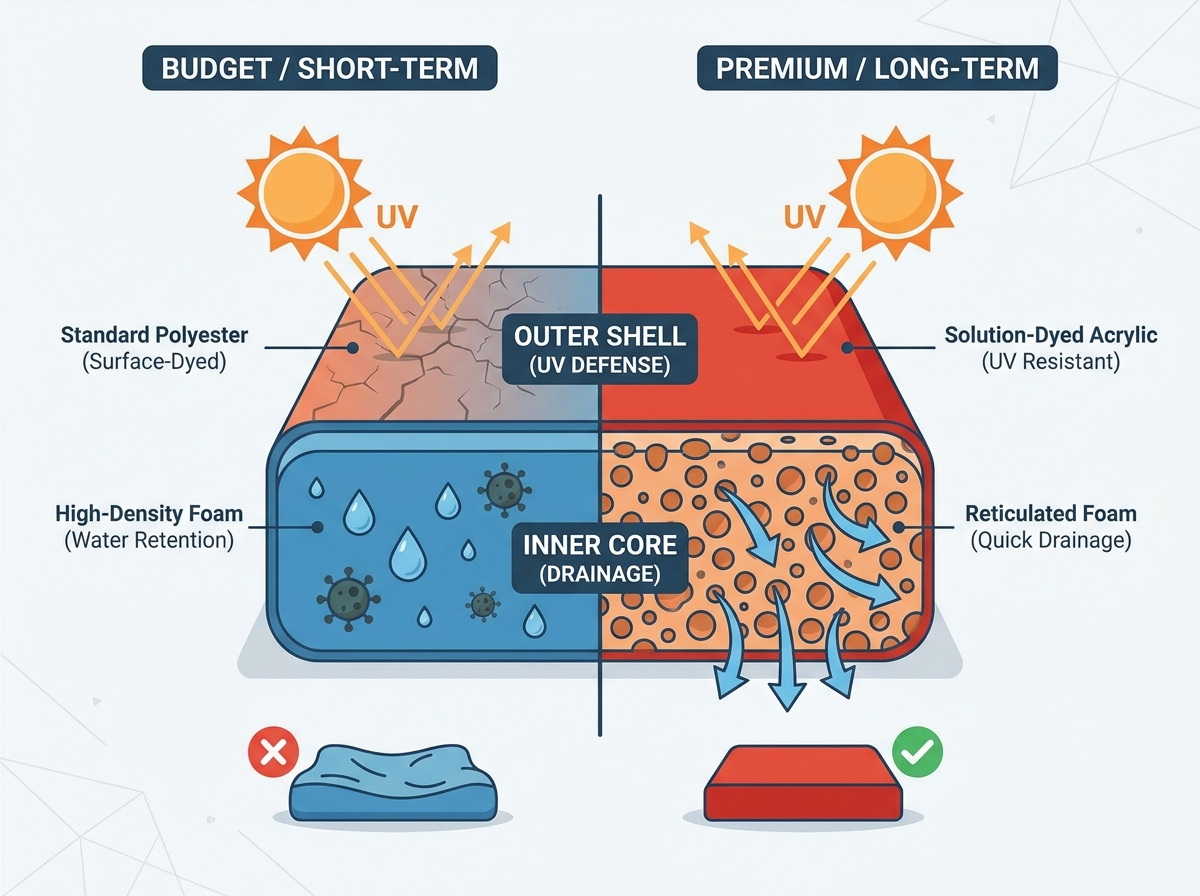
Many consumers mistakenly view exterior seating pads as single, uniform objects. You must instead view them as specialized composite systems. Evaluating an outdoor cushion requires looking past the surface color. Real durability relies on multiple materials working together seamlessly. This layered approach dictates how well the product survives the elements.
The outer shell acts as the first line of defense. We rely on this cover for crucial UV resistance and stain blockage. It also provides tactile comfort against bare skin. High-quality shells retain their aesthetic appeal over many seasons. They resist mildew formation and prevent dirt penetration.
The inner core handles structural integrity and moisture management. Foam density dictates the ergonomic support you feel. A weak core causes the seat to bottom out quickly. The fill material also determines whether the pad drains water or retains it. Assessing outer fabrics while ignoring foam structures guarantees premature product failure. A breathable shell cannot save a sponge-like interior from rotting.
- Outer Shell Function: UV defense, stain resistance, aesthetic retention.
- Inner Core Function: Ergonomic support, rapid drainage, shape retention.
- System Synergy: Both layers must match the specific environmental threat.
2. Evaluating Outer Fabrics: Weather Resistance vs. Comfort
Selecting the right cover material determines visual longevity. Different manufacturing processes yield vastly different performance levels. We evaluate these textiles based on colorfastness, tactile feel, and environmental resistance.
Solution-Dyed Acrylic
Solution-dyed acrylic stands as the premium industry standard for exterior textiles. Manufacturers add color pigments to the liquid polymer phase. They do this before extruding the actual yarn. The color goes completely through every fiber. Think of it like a carrot, where the color remains consistent throughout.
This process delivers exceptional UV resistance and absolute colorfastness. The fabric resists mold inherently. It also provides a remarkably soft, indoor-like feel. You can safely clean acrylics using mild bleach solutions without stripping the color. The primary drawback involves market positioning, as it commands the highest initial tier.
Best Practice: Always verify the "solution-dyed" label. Standard acrylic lacks the same deep color integration.
Olefin (Polypropylene)
Olefin offers a highly durable synthetic fiber alternative. Manufacturers also use the solution-dyed method for this polypropylene material. It repels water naturally and resists intense staining. The production process requires minimal water and leaves a lower carbon footprint. This makes Olefin an excellent eco-friendly option.
Olefin delivers outstanding value for mid-tier seating setups. It dries incredibly fast after heavy rain. However, the fabric feels slightly stiffer than premium acrylic. You must also protect Olefin from excessive friction and high heat. High temperatures can damage the synthetic fibers over time.
Common Mistake: Never place Olefin covers in a hot clothes dryer. Always let them air dry completely.
Spun Polyester and Printed Polyester
Printed polyester utilizes a completely different color application method. Manufacturers print or dye the color directly onto the woven fabric surface. Think of this process like a radish. The color sits purely on the outside layer. The inside remains white.
This textile provides vibrant initial patterns and complex designs. It represents the most accessible entry-level option available. Unfortunately, spun polyester fades rapidly under direct sunlight. You will often see significant degradation within one or two seasons. The material also suffers from lower tear strength over extended periods.
![High-performing outdoor cushion composite layers showing fabric and foam structure]()
3. Core Materials: The Science of Density and Drainage
Inner fill materials dictate long-term comfort and hygiene. You must match the foam type to your specific moisture exposure. Using indoor foam outside creates severe mold risks. We categorize these cores based on cellular structure and water retention.
Reticulated Foam (Open-Cell)
Reticulated foam features a highly porous, open-cell structure. Water flows straight through this material instantly. We often call it dry-fast or marine-grade foam. Antimicrobial agents typically coat the internal structure to prevent mildew.
You need reticulated cores for completely uncovered patios and poolside seating. They survive heavy rain zones effortlessly. The open structure produces a slightly firmer feel than traditional options. This foam absolutely requires a breathable cover fabric to function correctly. Trapping moisture inside defeats the specialized drainage design.
High-Density Polyurethane Foam
Polyurethane foam serves as the standard seating core for interior furniture. It provides excellent resilience and consistent ergonomic support. Manufacturers often wrap this foam in water-resistant ticking for patio use.
You should restrict polyurethane usage to covered patios and enclosed sunrooms. Areas offering strict weather protection suit this material well. If the outer cover breaches, this foam acts like a dense sponge. It absorbs massive amounts of water quickly. Saturated polyurethane poses a high risk for internal rot.
Polyester Fiberfill
Polyester fiberfill consists of loose synthetic fibers blown into a casing. Manufacturers primarily use this plush material for backrests. It provides immediate, sink-in comfort for the user.
Fiberfill lacks the structural density required for seat bottoms. It compresses and flattens rapidly under sustained body weight. If packed too densely, it retains trapped moisture for days. We recommend limiting blown fiber to decorative pillows and upper back supports.
Foam Performance Comparison
| Foam Type | Cell Structure | Water Drainage | Primary Use Case |
| Reticulated | Open-Cell | Excellent / Instant | Uncovered Patios, Pools |
| Polyurethane | Closed / Dense | Poor / Absorbs | Covered Porches, Sunrooms |
| Fiberfill | Loose Fibers | Moderate | Backrests, Throw Pillows |
4. Key Decision Criteria: Matching Material to Your Environment
Selecting materials based purely on appearance leads to rapid deterioration. You must audit your specific micro-climate before making a decision. Regional weather patterns dictate your exact material requirements.
- High Sun and Desert Climates: Focus strictly on verified UV-hour ratings. Look for textiles rated for 1,500 hours or more. Solution-dyed acrylic remains non-negotiable here. It prevents rapid fading and stops fiber brittleness caused by relentless solar radiation.
- High Moisture and Coastal Areas: Prioritize reticulated foam cores. Pair these open-cell interiors with highly breathable, mold-resistant covers. Avoid heavy cotton blends or dense standard polyurethane completely. Saltwater and humidity require maximum airflow to prevent internal rot.
- Covered and Transitional Spaces: Screened porches allow for sensible material compromises. You can safely utilize high-grade Olefin or chemically treated polyester. Roofs mitigate direct UV rays and heavy rain exposure. This environment supports standard high-density polyurethane cores wrapped in protective ticking.
- Health and Compliance Standards: Many modern households prioritize non-toxic setups. Verify OEKO-TEX® certifications when evaluating fabrics. Check for GREENGUARD standards on inner foams. These certifications ensure your materials remain free from harmful chemical off-gassing.
What to watch out for: Retailers often use generic terms like "weather-resistant." Demand specific material compositions. A waterproof spray coating wears off quickly. True resistance comes from the underlying structural design.
5. Lifespan and Replacement Cycles
Understanding material longevity helps you plan your patio upgrades effectively. Entry-level options naturally feature shorter lifespans. Advanced composite materials offer extended functional periods. We evaluate these lifecycles through chronological durability and maintenance realities.
Entry-level setups utilizing spun polyester and standard foam typically last one to two years. Sun exposure breaks down surface dyes quickly. The standard foam compresses under normal seasonal usage. You will notice significant fading and loss of support by the second summer.
Premium configurations utilizing acrylics and reticulated foam easily last five to seven years. The solution-dyed fibers maintain their vibrant appearance. The open-cell cores resist compression while shedding water effortlessly. Proper winter storage can extend this timeline even further.
Maintenance routines dramatically impact these expected lifespans. Evaluate the cleanability of your chosen fabric. Can you remove the covers easily? Solution-dyed acrylics hold a unique advantage here. They safely withstand mild bleach solutions. This allows you to eliminate stubborn bird droppings or tree sap without ruining the color.
Consider upgrading components strategically. If your patio frames remain structurally sound, do not replace the entire set. Upgrading the seating pads alone yields exceptional functional longevity. High-quality inserts and covers transform old frames entirely. This targeted approach prevents unnecessary waste while elevating your outdoor experience.
Conclusion
Building a resilient outdoor seating area requires looking beneath the surface. You must evaluate the composite system as a whole. Balancing outer UV resistance with inner drainage capabilities guarantees long-term success. Carefully matching these materials to your specific climate prevents rapid degradation.
- Audit your environment: Base your purchase strictly on primary exposure levels. Categorize your space as high-sun, high-moisture, or fully covered.
- Prioritize the core: Ensure your inner foam matches the outer fabric's breathability. Use open-cell designs for exposed areas.
- Demand transparency: Require exact specifications from retailers. Ask for the specific fabric dye method and foam cell structure before committing.
Take action by measuring your current furniture frames today. Request material specification sheets from potential suppliers. Do not accept vague marketing terms. Choose verified, solution-dyed textiles and porous foams to build a lasting backyard retreat.
FAQ
Q: What is the most fade-resistant material for an outdoor cushion?
A: Solution-dyed acrylic stands as the most fade-resistant material available. Manufacturers integrate the color pigments directly into the liquid polymer core before extruding the fiber. This process ensures the color goes completely through the yarn, unlike standard surface-printed textiles. It easily withstands thousands of hours of direct UV exposure.
Q: Can I leave my outdoor cushions outside in the rain?
A: You can only leave them outside if they utilize specific materials. They must contain reticulated, open-cell foam cores. They also require breathable, water-resistant outer covers. Standard polyurethane foam acts like a sponge. It absorbs rainwater deeply and will quickly develop internal mold if left saturated.
Q: How long should a quality outdoor cushion last?
A: High-quality options built with premium materials typically last five to seven years. This lifespan requires solution-dyed acrylic covers and specialized marine-grade foam. You must also implement proper seasonal maintenance. Storing them in a dry place during harsh winter months further extends their usable life.
Q: Is Olefin better than Polyester for outdoor use?
A: Yes. Olefin severely outperforms standard surface-dyed polyester. Olefin utilizes a solution-dyed manufacturing process, granting it superior UV resistance and inherent water repellency. Polyester tends to fade rapidly under sunlight. Olefin provides a highly durable, fast-drying mid-tier choice for exposed environments.