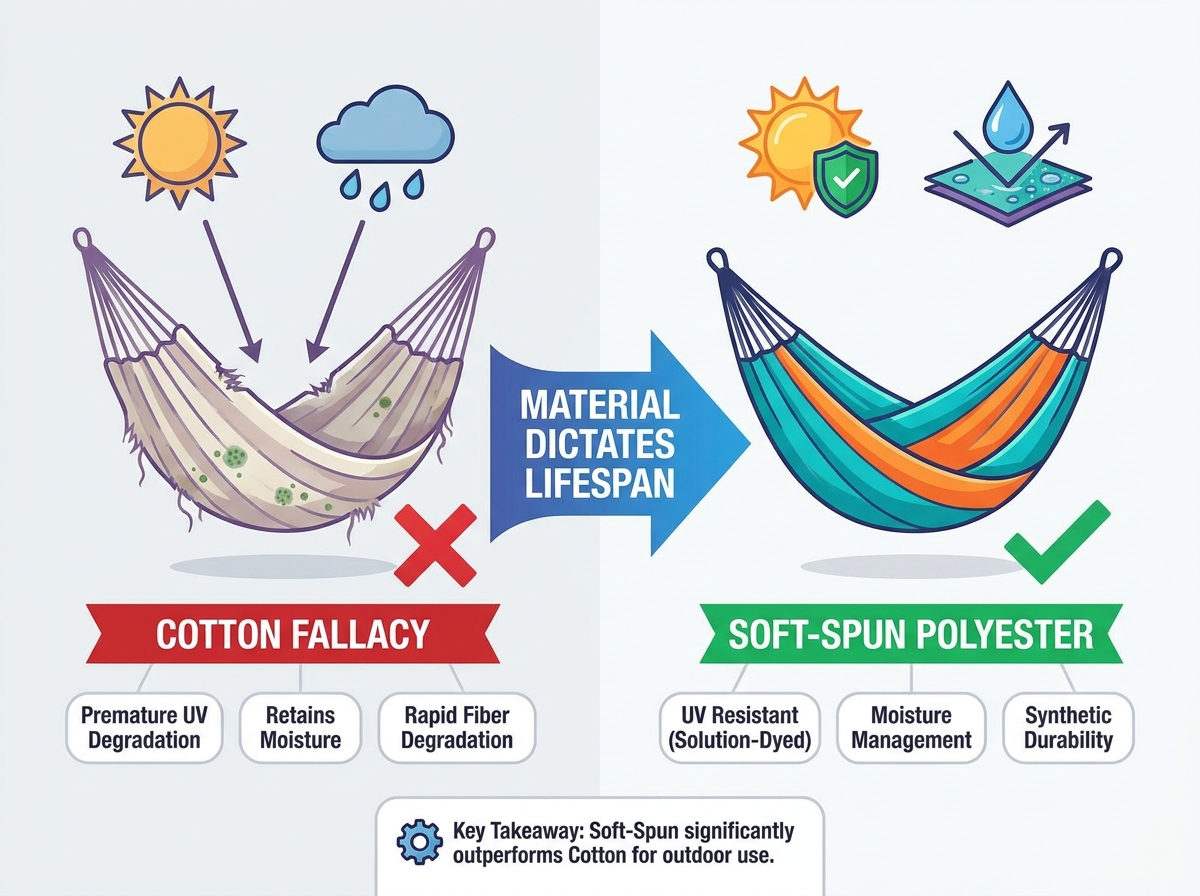
Moving past the aesthetic appeal of a hanging seat requires careful consideration. You must look closely at structural integrity and longevity. A beautiful outdoor seating area quickly loses its charm if the equipment fails. Many market options suffer from premature UV degradation. Others provide inadequate weight support. Some feature cheap spreader bars prone to snapping under dynamic loads. You want a lasting investment, not a single-season novelty. This guide provides a comprehensive, feature-by-feature evaluation framework. You will learn how to inspect materials effectively. We will show you how to verify load ratings and assess mounting hardware. Our objective is to help you separate durable, high-yield options from flimsy alternatives.
Key Takeaways
- Material Dictates Lifespan: Soft-spun polyester significantly outperforms traditional cotton in UV resistance and moisture management for outdoor use.
- Micro-Weave Architecture: A tighter weave (often utilizing thousands of individual cords) provides better ergonomic weight distribution and eliminates pressure points.
- Hardware is Rarely Included: Buyers must factor in the cost and structural requirements of mounting hardware, specifically heavy-duty swivels and lag screws.
- Spreader Bar Width: A minimum of 40 inches is required for adult comfort; anything less risks severe shoulder pinching.
Evaluating Cord Material: Soft-Spun Polyester vs. Cotton
Cotton offers incredible out-of-the-box softness. Many people love how it feels against their skin. However, this natural fiber acts like a sponge outside. It retains moisture constantly after rain or morning dew. This moisture retention leads directly to mold and mildew. Eventually, you will see rapid fiber degradation. Leaving untreated cotton outdoors guarantees a very short product lifespan. The material simply cannot handle the elements.
Manufacturers recognized these limitations. They engineered soft-spun polyester to mimic the exact feel of cotton. This material delivers the same tactile comfort. Yet, it provides vastly superior synthetic durability. You get the best of both worlds. The fibers repel water efficiently. They dry quickly after summer storms. This synthetic engineering prevents rot from taking hold inside the cords.
Direct sunlight destroys cheap fabrics. You must evaluate UV resistance before buying. Look specifically for solution-dyed polyester features. This advanced dyeing process embeds color throughout the fiber. It mitigates the inevitable fading caused by direct sunlight. We must acknowledge an industry reality here. No fabric remains entirely 100% "fade-proof" over multiple years. Even premium materials eventually show some sun wear. However, solution-dyed options outlast surface-dyed fabrics by several seasons.
You should also assess the airflow capabilities of the specific weave. A high-quality Caribbean hammock chair uses a tight weave. This design must still allow convective cooling. Proper airflow keeps you comfortable during humid summer afternoons. Heat needs to escape through the cord gaps. Synthetic fibers do not breathe naturally like cotton. Therefore, the physical weave pattern must compensate to provide adequate ventilation.
![Caribbean Hammock Chair structural design]()
Structural Integrity: Weight Capacity and Suspension Cords
A reliable hanging seat must possess a minimum static weight capacity of 300 lbs. Do not settle for anything less. High-end models will safely support up to 400 lbs. Static load ratings tell you what the chair holds while perfectly still. Dynamic loads occur when you bounce or swing. You multiply your body weight during these movements. A higher baseline capacity protects you during active use. It provides essential peace of mind.
Feature evaluation of the cord count matters immensely. A higher density of thinner cords creates a micro-weave architecture. This dense network distributes your weight evenly. It performs much better than fewer, thicker ropes. Standard thick ropes often dig into your back. They leave a painful "waffle imprint" on your bare skin. Micro-weave designs eliminate these sharp pressure points entirely. They contour smoothly to your body shape.
Always inspect the top hanging loop carefully. This single point bears your entire weight. You want metal-reinforced loops whenever possible. Alternatively, look for aggressively bound nylon thimbles. These reinforcements prevent friction fraying. Constant swinging grinds the cord against the mounting hook. Fraying at this primary suspension point causes sudden, dangerous failures. Unreinforced cotton loops will shred within a few months of daily use.
Key Structural Inspection Points
- Check the manufacturer's official weight rating on the product tag.
- Count the suspension cords running from the bar to the top loop.
- Verify the presence of a metal O-ring or tight nylon binding.
- Inspect the cord knots beneath the spreader bar for uniformity.
The Spreader Bar: Width, Wood Type, and Varnish
The spreader bar acts as the structural backbone of the entire assembly. It dictates how the seat opens. Frame your evaluation around width dimensions. A span of 40 to 47 inches represents the optimal range. Average adults need this specific space. Narrower bars cause the suspension cords to angle inward aggressively. This steep angle pinches your shoulders together. It ruins the ergonomic benefits of the chair entirely.
You must demand real hardwoods for this component. Oak, Cumaru, or FSC-certified tropical woods perform best outdoors. Avoid pine completely. Do not trust unnamed "manufactured" woods either. These cheap materials warp easily in humid environments. They lack internal fiber density. They can snap suddenly under unilateral weight shifts. When you lean heavily to one side, inferior wood fails.
Assess the wood sealant carefully. Bare wood absorbs moisture rapidly from the air. The bar must feature a thick protective coating. Marine-grade polyurethane prevents moisture ingress effectively. It stops the wood from rotting or splitting over time. You should reapply a similar varnish every two years. This simple maintenance extends the structural life of the hardwood significantly.
Spreader Bar Material Comparison Chart
| Wood Type | Density & Strength | Weather Resistance | Recommendation |
| Tropical Hardwood (Cumaru, Teak) | Extremely High | Excellent (Naturally repels water) | Highly Recommended |
| Oak | High | Good (Requires marine varnish) | Recommended |
| Pine / Softwood | Low | Poor (Warps and cracks easily) | Avoid |
| Composite / Pressed Wood | Variable | Poor (Delaminates when wet) | Avoid |
Environmental Viability: Indoor vs. Outdoor Deployment Realities
We need to deconstruct "all-weather" marketing claims immediately. True invincibility does not exist outdoors. Even premium seats require covered storage eventually. Heavy rain or severe winter months destroy exposed materials over time. Freezing temperatures make synthetic fibers brittle. Prolonged moisture causes even treated wood to expand and crack. Bring your equipment inside during extreme weather. This simple habit maximizes lifespan tremendously.
Evaluate the spatial footprint carefully for interior use. Sunrooms and living rooms look great with these seating additions. However, they demand significant visual and physical space. You need room to swing without hitting walls. Choose fabric colorways matching your existing interior decor. Bright, tropical colors might overpower a muted living room. Neutral tones often blend better into indoor environments.
Indoor installations require specific vertical space. You need a minimum ceiling height of 7.5 to 8 feet. This height allows proper clearance from the floor. Once you sit down, the fabric stretches downward. The suspension knots also tighten. Proper ceiling height keeps you from dragging on the ground. Measure your intended space before making any final purchasing decisions.
Best Practices for Placement
- Outdoor: Hang beneath a covered patio or dense tree canopy to reduce direct UV exposure.
- Outdoor: Remove the fabric portion and store it inside during monsoon seasons.
- Indoor: Ensure a minimum of three feet of clearance from surrounding walls.
- Indoor: Keep the chair away from direct heat sources like radiators or fireplaces.
Installation Prerequisites and Required Hardware
Most premium chairs do not ship with mounting kits. You must prepare for this reality. Sellers focus exclusively on manufacturing the chair itself. You are completely responsible for sourcing the suspension hardware. Buying cheap hardware ruins the safety profile of a premium seat. Plan to spend extra money on a proper, rated mounting system.
You absolutely need a heavy-duty swivel hook. This specific component prevents the suspension cords from twisting. Twisting cords snap easily under high tension. You also need a locking steel carabiner for easy removal. Finally, purchase a heavy-duty spring. A spring absorbs initial shock loads when you first sit down. It reduces the mechanical stress on your ceiling joist by up to 40 percent.
Mounting directly into a solid ceiling joist is a strict requirement. The wooden joist must measure at least 2x6 inches. You must use heavy-duty lag screws. Drill proper pilot holes to prevent the wood from splitting. Alternatively, you can use a purpose-built, heavy-duty C-stand. Never use drywall anchors under any circumstances. Drywall anchors are a catastrophic safety hazard. They will rip out immediately under human weight.
Conclusion
Your shortlisting logic should follow a clear path. Prioritize spun polyester cords and hardwood spreader bars for outdoor use. These materials survive harsh environmental conditions. Prioritize micro-weave comfort and complementary colorways for indoor use. Always look for a reliable Caribbean hammock chair matching your specific deployment plans.
Do not compromise on weight capacity ratings. Never ignore the quality of reinforced hanging loops. These specific areas represent the primary failure points of cheap alternatives. Spending slightly more upfront prevents sudden breakage later. Safety and longevity always justify a premium investment.
Take action before you buy. Measure your intended hanging space today. Locate your solid ceiling joists with a stud finder. Verify your floor clearance carefully. Proper preparation ensures your new seating becomes a permanent, relaxing fixture in your home.
FAQ
Q: Can a Caribbean hammock chair be left outside year-round?
A: No. Despite weather-resistant features, continuous exposure to harsh winters or monsoon rains will degrade the materials. Store during off-seasons.
Q: How do I clean my hammock chair?
A: Hand wash with mild detergent and a soft brush while hanging; never machine wash as the cords will fatally tangle.
Q: What is the ideal hanging height?
A: The bottom of the chair should rest approximately 18 to 24 inches off the ground when empty, accommodating standard fabric stretch once occupied.
Q: Do I need a special stand if I can't drill into the ceiling?
A: Yes, a C-style hammock chair stand rated for at least 300 lbs is the standard alternative to ceiling joist installation.