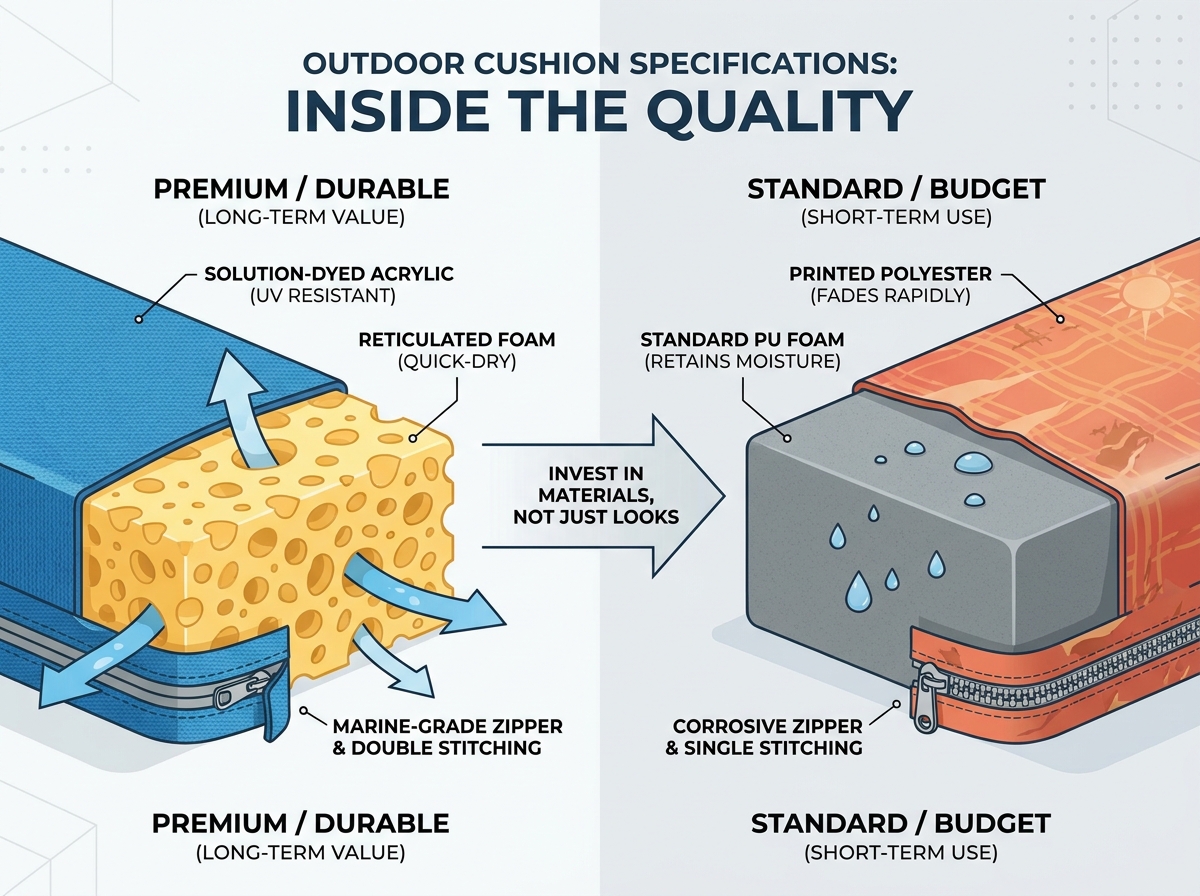
Upgrading your patio furniture represents a high-cost, high-impact investment. You want your seating area to look inviting while enduring harsh weather conditions. Unfortunately, aesthetic appeal often masks subpar internal materials. This structural weakness leads to rapid fading, severe flattening, and hidden mold within a single season. Many buyers realize this reality too late. We want to solve this issue before you spend your hard-earned money.
This guide provides a purely spec-driven evaluation framework. You will learn how to assess fabric durability, foam density, and construction quality accurately. We strip away the marketing fluff. Instead, we focus on technical details predicting long-term performance. Choosing the right materials ensures lasting comfort. You can transform your patio into a durable outdoor oasis. Equip yourself using this knowledge before committing to your next seating upgrade.
Key Takeaways
- Fabric longevity requires solution-dyed materials: Look for solution-dyed acrylic or olefin over printed polyester for maximum UV resistance.
- Foam dictates function: Reticulated (quick-dry) foam is essential for uncovered environments, while high-density polyurethane is suitable for covered patios.
- Hardware matters: Hidden, marine-grade zippers and double-stitched seams separate single-season cushions from multi-year investments.
- Measurement precision is non-negotiable: Base measurements on the furniture frame itself, not the old, compressed cushion.
Evaluating Outer Cover Fabrics: UV Ratings and Fiber Types
When selecting a new outdoor cushion, the outer shell serves as your first line of defense. It battles daily sun exposure, rain, and environmental debris. Understanding fiber types helps you avoid premature degradation.
Solution-Dyed Acrylic (e.g., Sunbrella, Outdura)
Manufacturers integrate color pigment directly into the liquid polymer before spinning it into yarn. This process creates solution-dyed acrylic. The color permeates the entire fiber, similar to a carrot. Surface scratching or intense sunlight cannot remove the hue.
You should verify a UV rating exceeding 1,500 hours when reviewing specifications. Solution-dyed acrylic requires a higher upfront investment. However, it remains optimal for environments facing intense, direct sun exposure. It resists rot and mildew exceptionally well.
Solution-Dyed Olefin (Polypropylene)
Olefin offers a highly water-resistant and durable alternative. It feels slightly less soft to the touch compared to premium acrylic. Despite this, it excels in demanding outdoor applications.
Industry experts consider olefin the best mid-tier option. It boasts excellent chemical resistance. This trait makes it perfect for poolside seating exposed to chlorine splashes. It dries quickly and resists most organic stains.
Spun/Printed Polyester
Manufacturers print color only onto the exterior surface of spun polyester. You can compare this process to coloring a radish. The interior remains white, leaving the exterior vulnerable.
These fabrics degrade and fade rapidly under direct ultraviolet rays. They lose tensile strength after prolonged exposure. You should only use printed polyester in heavily shaded areas or fully enclosed seasonal sunrooms.
Waterproof vs. Water-Resistant Coatings
Many brands apply a topical Durable Water Repellent (DWR) coating to their fabrics. You must assess whether the textile relies entirely on this chemical layer. Topical treatments inevitably wash away. They require frequent reapplication using aftermarket sprays.
Inherent synthetic resistance provides better longevity. Solution-dyed acrylics and olefins repel moisture naturally based on their molecular structure. They do not rely solely on temporary surface chemicals.
| Material Type | UV Resistance | Water Resistance | Best Use Case |
| Solution-Dyed Acrylic | Excellent (1,500+ hours) | High (Inherent) | High sun, premium setups |
| Solution-Dyed Olefin | Very Good | High (Chemical resistant) | Poolside, humid areas |
| Printed Polyester | Poor (Fades quickly) | Moderate (Relies on DWR) | Covered patios, sunrooms |
![Outdoor cushion material specifications and evaluation]()
Inner Fill Specifications: Density, Drainage, and Loft
The core material defines comfort and structural survival. A beautiful outer cover cannot compensate for inadequate internal foam. The wrong insert will trap water and collapse under typical body weight.
Reticulated Foam (Quick-Dry Foam)
Reticulated foam acts as the gold standard for uncovered environments. Manufacturers use a specialized chemical process. This blasts away the cell walls inside the polyurethane.
The resulting open-cell structure allows water to pass straight through. It drastically reduces drying time to mere hours instead of days. This rapid drainage prevents internal mold growth. It is an absolute necessity if you leave your furniture exposed to heavy rain.
High-Density Polyurethane (PU) Foam
Covered patios or indoor-outdoor transition spaces benefit greatly from high-density PU foam. It offers superior seating support and maintains its structural loft for years.
However, standard PU foam acts exactly like a kitchen sponge. It absorbs and holds immense amounts of water if heavily soaked. You must pair it with a waterproof inner liner if using it outdoors. Without a liner, internal rot becomes inevitable after heavy storms.
Polyester Fiberfill (Batting)
Designers typically reserve polyester fiberfill for back pillows. It creates a plush, highly comfortable visual aesthetic. It feels soft against the back and shoulders.
Fiberfill compresses rapidly under direct body weight. It provides zero long-term support for seat bases. For the best results, look for high-density foam cores wrapped in Dacron. This polyester batting layer balances rigid structural support and surface softness.
Evaluating Thickness
Thickness directly correlates to ergonomic comfort. You cannot guess these measurements. Follow established industry minimums for optimal performance.
- Dining Chairs: Require a minimum of 3 to 4 inches of dense foam.
- Deep-Seating Lounge Chairs: Demand 5 to 6 inches of thickness for adequate support.
- Chaise Lounges: Need segmented foam cores measuring at least 4 inches thick.
Construction and Hardware Validation
Even the finest textiles and foams will fail if joined by weak hardware. Construction techniques dictate whether your investment lasts one summer or a decade. Pay close attention to these structural details.
Seam Integrity
Standard single stitching often rips under the stress of daily use. You should inspect the interior seams closely. Look for double-stitched or serged interior edges. These reinforced techniques prevent synthetic fabrics from fraying.
Many designs feature piping or welting along the edges. Piping adds excellent structural rigidity to the shape. However, raised welting can act like a dam. It traps standing water on the seat surface. You must shake the seats off after a downpour to prevent pooling.
Zipper Quality
Removable covers require robust zippers for easy washing. A broken zipper renders the entire product useless. You must verify the presence of high-quality hardware.
Look specifically for marine-grade or YKK nylon zippers. Metal zippers will corrode rapidly in humid or coastal environments. Rust will permanently stain your expensive fabric. Furthermore, hidden zippers utilizing fabric flaps provide crucial protection. They shield the plastic teeth from direct moisture and degrading UV exposure.
Attachment Mechanisms
Wind can easily displace lightweight seating materials. Assess the tie-downs carefully. Ensure the manufacturer anchors the fabric ties directly into structural seams. Surface-stitched ties tear away easily.
Some brands use Velcro straps for easier usability. Velcro offers quick removal for winter storage. Be aware that standard hook-and-loop fasteners often degrade under intense heat and UV rays. Fabric ties generally offer superior long-term reliability.
How to Measure Accurately for Replacements
Ordering the wrong size ranks as the most common consumer mistake. Incorrect dimensions ruin the visual proportions of your patio set. They also cause severe ergonomic discomfort.
Avoid the "Old Cushion" Trap
Never measure a heavily used insert. Years of body weight compress the internal foam. This compression causes the sides to bulge outward. Your old unit has permanently lost its original loft and expanded in width. Using these skewed dimensions guarantees your replacements will not fit properly.
Measuring the Furniture Frame
You must base all new dimensions on the rigid furniture frame itself. Use a firm metal tape measure for accuracy. Follow these exact steps:
- Width: Measure the inside of the rigid seat frame from the left interior edge to the right interior edge.
- Depth: Measure from the absolute front edge of the seat frame back to the rear support bar. Subtract exactly 1 inch if you plan to add a thick, separate back pillow.
- Back Height: Measure from the bare seat base up to the highest point of the top frame.
Factoring in Loft
Foam thickness drastically alters your seating posture. Ensure the chosen thickness does not raise your seated height to an uncomfortable angle. You want your legs to rest naturally at a 90-degree angle relative to your patio table. A six-inch base on a standard dining chair will wedge your legs against the table apron.
Making the Final Decision: Balancing Cost, Climate, and Lifespan
Your local environment should dictate your material choices. Ignoring your specific climate leads to rapid product failure. Use environmental data to guide your final selection.
The Climate Matrix
Every backyard presents a unique microclimate. You must tailor your specifications accordingly.
- High Sun / Arid Environments: Prioritize solution-dyed acrylic above all else. UV resistance stands as your primary defense against dry rot and severe fading.
- High Rain / Humid Environments: Prioritize reticulated foam paired with olefin fabric. Mold resistance and rapid water drainage outrank pure sun protection in wet coastal zones.
- Shaded / Enclosed Environments: You can safely utilize high-density polyurethane foam and standard polyester covers. Weather elements pose little threat here.
Warranty Analysis
Marketing claims mean nothing without a written guarantee. You must read the manufacturer's fine print. Fabric warranties often cover chemical fading and biological rot. However, they frequently exclude physical tearing, seam failure, or natural foam compression.
Understand exactly what the brand promises to replace. A five-year fade warranty provides peace of mind for acrylics. Do not assume the internal foam carries the same long-term coverage.
Conclusion
Upgrading your patio setup requires careful attention to technical details. You must prioritize solution-dyed fabrics to combat aggressive UV fading. Selecting the appropriate foam structure ensures vital drainage and lasting structural support. Finally, precise frame measurements guarantee a flawless, ergonomic fit.
Your next steps are clear. Audit your current furniture dimensions using a metal tape measure. Define your specific backyard weather exposure to identify your needed materials. Begin shortlisting potential options based entirely on verified material specifications rather than surface aesthetics. Smart material choices will secure your outdoor comfort for years to come.
FAQ
Q: What is the difference between waterproof and water-resistant outdoor cushions?
A: Water-resistant fabrics repel light rain but will eventually allow water to permeate. Truly waterproof cushions utilize internal plastic liners. These liners effectively block water. However, they can restrict airflow and trap existing moisture inside if not properly vented.
Q: Can I leave my outdoor cushion outside in the rain?
A: Yes, if it utilizes reticulated foam and a breathable synthetic cover. If it uses standard polyurethane foam without a waterproof inner liner, it must be stored during heavy rain to prevent severe internal rot.
Q: How long should a high-quality outdoor cushion last?
A: With solution-dyed acrylic covers and high-density or reticulated foam, expect 5 to 7 years of structural and visual integrity. Cheaper polyester alternatives typically degrade completely within 1 to 2 years.
Q: Is Sunbrella the only good fabric for outdoors?
A: No. While Sunbrella is a premium, highly reliable brand of solution-dyed acrylic, other solution-dyed acrylics (like Outdura) and solution-dyed olefins offer comparable durability and excellent fade resistance.