You know the daily patio drill. You scramble outside to store cushions before a sudden summer storm hits. We all dread the alternative outcome. Nobody wants to sit down on a soggy, mildew-covered seat the next morning. It instantly ruins the relaxation you expect from your backyard oasis.
The outdoor furniture industry often creates ambiguity around the term "outdoor fabric." Many buyers discover too late their expensive gear lacks real rain protection. Standard options usually prioritize UV resistance rather than heavy moisture defense. This misunderstanding leads to ruined foam cores and constant, frustrating replacements.
We will provide a transparent, evidence-based framework for your patio needs. You will learn how to evaluate these fabric materials effectively. Determine if the premium cost of true waterproof designs fits your specific climate, storage capacity, and comfort preferences. You can finally make the right choice and save yourself seasonal headaches.
Key Takeaways
- Standard outdoor cushions are usually only water-*resistant*; they rely on surface coatings that handle light dew but absorb water during sustained rain.
- True waterproof cushions utilize structural barriers (like TPU backing and sealed seams) to keep the inner foam 100% dry, but may trade off some breathability.
- The decision hinges on exposure: Uncovered patios in high-precipitation zones require waterproof (or quick-dry) setups, while covered or highly managed patios are fine with standard options.
- Foam matters as much as fabric: Evaluating quick-dry (reticulated) foam versus standard polyurethane is critical for long-term mold prevention.
The Technical Baseline: Water-Resistant vs. Waterproof
Understanding the fundamental difference between water-resistant and waterproof materials saves you money. Manufacturers often use these terms interchangeably in marketing materials. However, they describe completely different structural realities. You must look beyond the basic label to understand how the fabric behaves under stress.
Standard "Outdoor" Cushions (Water-Resistant)
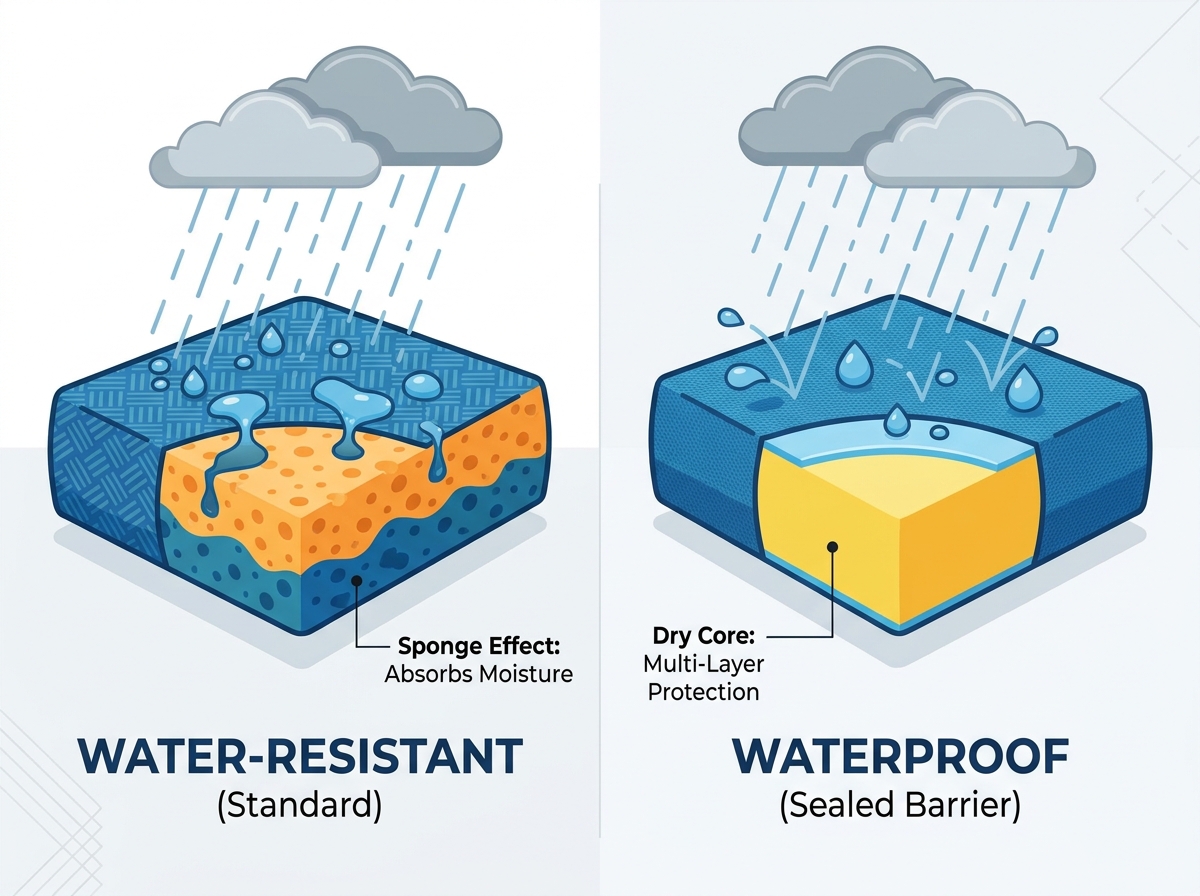
Most products on the market fall into the water-resistant category. They use tightly woven synthetic fabrics like spun polyester. Manufacturers then apply a chemical DWR (Durable Water Repellent) coating to the exterior. This coating creates surface tension. When light rain hits the fabric, moisture forms small beads and rolls off.
The performance reality often falls short during extreme weather. The DWR coating handles light morning dew perfectly. However, sustained heavy rain breaks down this surface tension. Hydrostatic pressure becomes the main enemy here. When you sit on a wet seat, your body weight acts as hydrostatic pressure. It literally forces the trapped moisture through the fabric weave and directly into the foam core. Once water penetrates the interior, the foam acts like a giant sponge.
These standard products work best in highly controlled environments. We recommend them for covered patios, screened-in porches, or shaded pergolas. They also suit highly disciplined homeowners. If you actively manage your furniture and store pieces in a deck box daily, water-resistant fabrics perform beautifully. They offer excellent cost efficiency for sheltered spaces.
True Waterproof Cushions
True waterproof options rely on structural engineering rather than mere chemical sprays. They utilize a multi-layer architecture to block moisture entirely. First, manufacturers wrap the core foam in a waterproof inner ticking. This protective membrane acts as a primary defense line. Next, they apply a polyurethane (PU) or TPU backing to the underside of the outer fabric. Finally, quality manufacturers use tape-sealed seams to block water from entering through the stitching.
The performance reality here is completely different. The multi-layer system prevents water from reaching the core foam entirely. It completely eliminates the dreaded sponge effect. You can leave these seats out during a heavy downpour. When the storm passes, you simply wipe the surface dry. You never have to worry about sitting on a damp sponge.
Uncovered decks and poolside furniture demand this level of protection. Finding a reliable outdoor cushion built this way is essential for exposed areas. Climates experiencing frequent, unpredictable rain showers require true waterproofing. You gain the ultimate "set it and forget it" convenience. You stop worrying about weather forecasts and start enjoying your outdoor space.
Evaluating the Trade-Offs: Real-World Implementation
You must balance protection against physical comfort. No fabric offers perfect performance across every metric. Adding heavy protective layers inherently changes how the material feels and breathes.
Highly waterproofed fabrics carry comfort and breathability limitations. Acknowledge these physical realities before purchasing. The thick polyurethane backing traps air inside the seat. When you sit down, the trapped air struggles to escape. This makes the seat feel stiffer and less plush. Additionally, the lack of breathability creates warmth. In high humidity, a heavy waterproof canvas feels sticky against bare skin compared to soft, untreated olefin.
We must also address the common "seam and zipper" vulnerability. This remains a massive buyer pitfall. You might purchase a product boasting 100% waterproof fabric. However, if it uses standard zippers and unsealed stitched seams, it will still flood. Rain easily seeps through tiny needle holes along the edges. Water pools inside the cover and has no way to drain out. Always evaluate structural integrity over simple fabric claims.
Finally, consider how these materials fail over time. UV degradation versus moisture damage dictates the lifespan of your furniture. Standard options typically fail from internal mold. Moisture gets trapped inside the foam, breeding mildew and causing rot. Waterproof designs prevent mold completely. However, they often fail externally. Intense UV rays bake the protective PU backing over time. The backing eventually cracks, peeling away and destroying the moisture barrier.
Performance Breakdown Chart
| Feature | Water-Resistant (Standard) | Waterproof (Premium) |
| Moisture Barrier | Chemical DWR coating | PU backing & inner ticking |
| Breathability | High (allows air flow) | Low (can trap heat/air) |
| Seam Construction | Standard stitching | Tape-sealed seams |
| Failure Mode | Internal mold and mildew | External UV cracking |
![Outdoor cushion placement on an exposed patio deck]()
Decision Framework: Which Outdoor Cushion Fits Your Setup?
Choosing the right setup requires analyzing your specific lifestyle. Do not simply buy the most expensive option. Follow this framework to match the product to your daily routine.
- Assess Climate and Micro-Environment: Factor in local rainfall volume first. Look at your regional humidity levels. High humidity accelerates mold growth in wet standard foam. Next, evaluate direct sun exposure. A heavily shaded, damp patio breeds mildew rapidly. A sunny, dry patio evaporates dew quickly.
- Assess Maintenance Capacity: Ask yourself an honest question about your daily discipline. Do you have the time and proximity to bring seats inside daily? If yes, standard options maximize your budget beautifully. If you want convenience and refuse to constantly shuttle furniture, waterproof designs remain mandatory.
- Financial ROI Analysis: Look at the long-term math. Compare the higher upfront cost of premium options against replacement frequency. Standard designs left in the rain succumb to mildew rot after just one or two seasons. Replacing cheap foam every year quickly exceeds the initial investment of a premium waterproof design. Buy for longevity based on your true storage habits.
The Core Alternative: Quick-Dry Foam Systems
The industry offers a brilliant third option for buyers who hate stiff fabrics. Quick-dry systems change the entire paradigm of moisture management. They represent a massive technological leap for patio furniture.
The mechanism relies on reticulated foam. Instead of trying to keep water out, this foam lets water pass completely through it. The foam features a wide, open-cell structure. It looks similar to a highly porous honeycomb. When rain hits the seat, gravity pulls the moisture straight down and out the bottom. It holds virtually zero water weight.
Manufacturers pair this open-cell foam with highly porous standard fabrics. The application eliminates the need for stiff, uncomfortable coatings. You enjoy the soft, luxurious feel of standard spun polyester or acrylic. Because the core drains instantly, the entire seat dries in hours rather than days. Air circulates freely through the honeycomb structure, preventing stagnant dampness.
We consider this a highly effective middle-ground verdict. Uncovered patios benefit immensely from this technology. Users who prioritize soft fabric textures no longer have to compromise. You avoid internal mold entirely while maintaining a premium lounging experience.
Can You Waterproof Standard Outdoor Cushions? (DIY Risks)
Many homeowners attempt to upgrade their existing patio sets using aftermarket treatments. While DIY solutions offer temporary relief, you must understand the inherent risks and limitations involved.
The most common approach involves aftermarket sprays. You can buy fluoropolymer-based fabric guards at most hardware stores. You spray these chemicals evenly over the fabric surface. They successfully restore basic surface repellency. Water will bead up beautifully during the first few weeks after application.
However, you must clarify the severe limitations of this approach. Sprays restore water resistance, not actual waterproofing. A spray cannot seal physical seams. It cannot add an inner ticking membrane over the foam. Heavy rain will still find its way through the stitching and zippers. You simply cannot replicate factory-level structural barriers with a spray can.
The maintenance burden also becomes exhausting. Sprays wear off quickly due to friction, UV exposure, and dirt accumulation. You face a strict requirement for seasonal reapplication. Furthermore, you must apply the spray only to perfectly clean, bone-dry fabric. Spraying a damp or slightly dirty seat creates a disaster. You will accidentally seal in existing mold spores and dirt, accelerating the rot you tried to prevent.
Buyer’s Checklist: Specs to Look For Before Purchasing
Arm yourself with exact specifications before browsing catalogs. Marketing terms like "weather-ready" mean absolutely nothing. Look for concrete manufacturing details to guarantee you get what you pay for.
- Fabric Composition: Prioritize solution-dyed acrylics. Brands like Sunbrella infuse color directly into the fiber core. They resist fading significantly better than basic printed polyester. High-grade Olefin serves as a fantastic, budget-friendly alternative with excellent durability.
- Construction Details: Scan the product description for explicit structural terms. Look for phrases like "waterproof inner ticking." Check if they mention "sealed seams" or "heat-taped stitching." Ensure the design includes "covered zipper flaps" to block rain from entering the closure.
- Warranty Exclusions: Always check the fine print of the warranty. Many standard warranties explicitly void coverage for mold or mildew damage. They only cover seam tearing or extreme UV fading. A warranty that covers internal moisture damage indicates true confidence in the waterproofing system.
Conclusion
The term "outdoor" is never a synonym for "waterproof." Understanding this distinction transforms how you manage your patio space. Standard water-resistant designs offer excellent cost-efficiency and superior comfort for sheltered environments. However, true waterproof or quick-dry options remain absolutely essential for exposed, high-precipitation areas.
Take immediate action before making a purchase. Audit your patio cover situation and observe where rain naturally falls. Measure your furniture frames carefully to ensure a snug fit. Then, browse specific product categories based strictly on your chosen maintenance strategy. Matching the right technical material to your lifestyle guarantees a comfortable, stress-free backyard experience.
FAQ
Q: Can you leave standard outdoor cushions out in the rain?
A: Occasional light rain is manageable if dried properly. However, sustained soaking will lead to interior mold and the structural breakdown of the foam. If they get soaked, you must stand them vertically on their zippers to drain. We strongly recommend moving standard options under cover during heavy storms.
Q: What is the difference between indoor and outdoor cushion foam?
A: Indoor foam utilizes standard polyurethane. It acts exactly like a dense sponge, retaining moisture for days and breeding mold. High-quality outdoor foam addresses this flaw entirely. It is either completely sealed in a waterproof membrane casing or made of reticulated open-cell material designed to drain water rapidly.
Q: Do waterproof outdoor cushions get moldy?
A: The interior foam will remain completely mold-free because it stays dry. However, environmental dirt, pollen, and tree sap settle on the surface of the waterproof fabric. These organic materials can easily grow exterior mildew if not periodically washed off with mild soap and water.