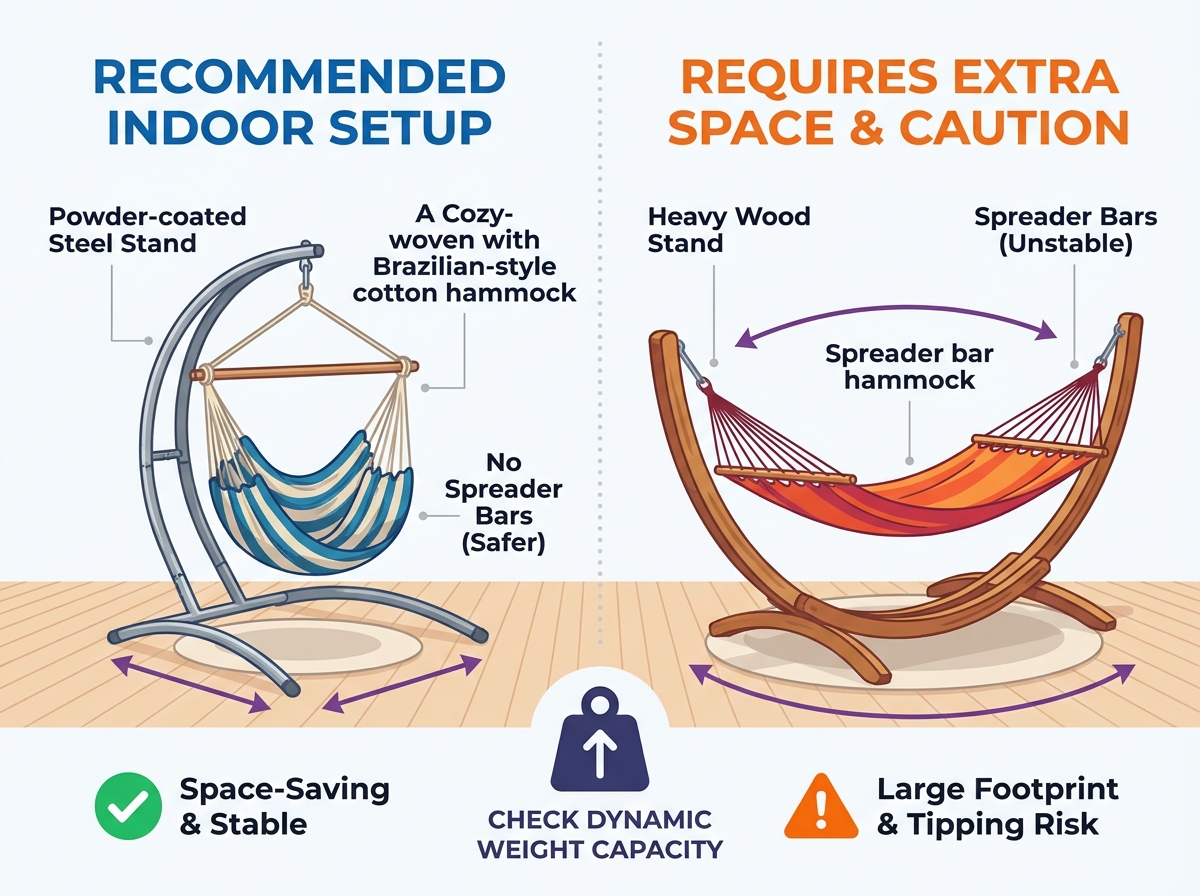
Installing a hammock indoors traditionally meant locating hidden structural studs and risking expensive drywall damage. A freestanding model eliminates this risk completely. However, it introduces new variables regarding floor space and interior aesthetics. Shifting your relaxation zone from the backyard to the living room or bedroom changes your evaluation criteria entirely. Weatherproofing quickly becomes a secondary concern. Meanwhile, the physical footprint, floor protection, and design integration become paramount for daily comfort.
This guide provides an objective framework for selecting the perfect indoor Hammock with Stand. We focus deeply on structural stability, strict spatial requirements, and material compatibility. You will learn how to ensure a safe, long-term addition to your living space. We also outline common indoor installation pitfalls. Following these steps ensures your new relaxation spot remains secure, stylish, and perfectly integrated into your home.
Key Takeaways
- Space is the primary constraint: An average indoor hammock with stand requires a minimum footprint of 9 to 10 feet in length and 4 feet in width.
- Material dictates mobility: Powder-coated steel stands offer portability and tool-free assembly, while solid wood stands provide a premium aesthetic but are significantly heavier and stationary.
- Compatibility matters: Not all hammocks fit all stands. Matching the hammock's total length (including suspension cords) to the stand's capacity is non-negotiable for safety.
- Spreader bars are a risk indoors: Hammocks without spreader bars (like Brazilian or Mayan styles) are more stable and less prone to tipping in confined indoor spaces.
The Case for a Freestanding Indoor Hammock
Suspending a hanging bed from interior walls demands precise alignment. You must find load-bearing studs behind your drywall. A slight miscalculation often leads to disastrous results. Pulling lag bolts out of drywall causes severe property damage. It can also result in serious personal injury. The physics of suspension multiply human weight. A 200-pound adult creates massive lateral pull forces on standard wall studs. Most modern residential walls simply cannot handle this horizontal stress safely.
A self-supporting frame bypasses these structural modifications completely. It provides immediate stability. You never need to drill into your walls. The frame absorbs all the lateral force internally.
What makes an indoor setup successful? First, it must safely support your dynamic weight. Second, it needs to fit comfortably within the room's traffic flow. You should never have to squeeze past it daily. Finally, it must not damage your interior flooring. A well-chosen frame meets all three criteria easily.
Renters face strict rules against wall modifications. Apartment dwellers often lose their security deposits over large drill holes. A freestanding frame offers a zero-drilling solution. This makes it the only viable option for many urban residents. You can set it up in minutes. You can pack it away just as quickly when moving out. It offers ultimate flexibility for transitional living spaces.
Stand Material Categories: Steel vs. Wood
Choosing between steel and wood defines your indoor experience. Each material offers distinct advantages. They also carry specific limitations. Understanding these differences helps you match the frame to your lifestyle.
Stand Material Comparison Chart
| Feature | Powder-Coated Steel | Solid Wood (Pine, Cypress, Larch) |
| Portability | High. Lightweight and easy to move. | Low. Very heavy and difficult to relocate. |
| Assembly | Tool-free, often uses push-button locks. | Requires tools, hardware, and two people. |
| Stability | Good, but can slide on smooth floors. | Excellent. Heavy base prevents tipping. |
| Aesthetic | Utilitarian, industrial appearance. | Premium, architectural, furniture-like look. |
| Price Point | Generally more affordable. | Significantly higher initial investment. |
Powder-Coated Steel Stands
Steel offers a very high durability-to-weight ratio. These frames are generally more affordable. They often feature simple push-button assembly mechanisms. You can disassemble them quickly for seasonal storage. One person can easily slide a steel frame across the room to vacuum.
However, they do have distinct drawbacks. The industrial aesthetic may not blend well with cozy or traditional interiors. Their lighter overall weight means they can slightly shift on hard floors. You must anchor them properly. Without rubber grips, they might slide when you sit down.
- Pros: High durability-to-weight ratio, affordable, easy push-button assembly.
- Cons: Industrial look, potential shifting on hard floors without rubber feet.
Solid Wood Stands (Pine, Cypress, Larch)
Wood brings an architectural, furniture-like appearance to your room. This natural look complements elegant indoor decor beautifully. The heavy base provides superior anti-tipping stability. Wood frames feel substantial and permanent. They transform a simple sling into a true centerpiece.
Conversely, wood frames create a large, immovable footprint. The hardware requires periodic tightening. Wood naturally expands and contracts based on indoor humidity changes. They also carry a noticeably higher price point. Moving a wooden frame to another room usually requires disassembling it.
- Pros: Architectural appearance, complements indoor decor, heavy base adds superior stability.
- Cons: Large immovable footprint, hardware needs periodic tightening, higher price point.
![Indoor hammock with stand setup]()
Selecting the Right Hammock Style for Indoor Use
Your choice of fabric drastically impacts safety and comfort indoors. Some styles work beautifully in living rooms. Others pose hidden dangers. You must match the fabric style to an indoor environment carefully.
Brazilian Hammocks (Woven Cotton)
This remains the top recommendation for indoor use. The dense cotton weave feels incredibly warm. It visually resembles standard upholstery fabric. It blends naturally into a living room or bedroom. Most importantly, the fabric wraps securely around the user. This cocoon effect prevents accidental falls. It provides a highly stable, enclosed resting experience. You can comfortably sleep in this style every single night.
Mayan/Nicaraguan Hammocks (Woven Netting)
These traditional designs feature woven netting. They are highly breathable. They contour perfectly to the body's natural shape. They offer a very supportive, weightless feeling. However, we must issue a cautionary note. The thin strings catch easily on clothing hardware. Zippers, buttons, and belt loops frequently snag the threads. Pet claws also easily snag and tear the delicate netting. This remains a common and frustrating indoor risk. If you have cats or dogs, avoid this style.
Spreader Bar Hammocks
We advise extreme caution regarding this style for indoor use. Spreader bars hold the fabric flat and open. They look incredibly photogenic. They resemble standard beds in magazines. However, they create a very high center of gravity. This makes them notoriously easy to flip over. They are dangerously unstable. We do not recommend them for spaces containing hard floors. You must keep them far away from sharp furniture corners. A sudden flip indoors can cause serious injuries.
Crucial Evaluation Criteria for Indoor Setups
Selecting the right frame requires precise measurements. You cannot guess dimensions. You must evaluate space, load capacity, and floor protection rigorously. Failing to do so leads to frustrating returns.
Measuring Your Footprint (The Reality Check)
Do not rely solely on the fabric bed length. You must factor in the physical curve of the metal or wood frame. A frame always occupies more space than the fabric alone. Establish a strict baseline rule for your room. You need at least 2 feet of empty clearance on all sides.
Follow these numbered steps to measure your indoor footprint accurately:
- Measure the absolute total length of the assembled frame.
- Identify the widest point of the base legs.
- Add a 2-foot safety perimeter to all four sides.
- Verify this total area against your room's traffic flow.
This critical buffer prevents wall scuffing while swinging. It also ensures you do not bump into bookshelves or televisions.
Weight Capacity (Static vs. Dynamic Load)
Manufacturers advertise a "static weight limit." For example, a tag might list 400 lbs. This number exclusively means resting weight. It assumes you gently place the weight down. However, human bodies move. Dropping into the bed applies vastly more force. This action creates a dynamic load. Dynamic loads can briefly double your actual weight. We advise buyers to use a strict safety buffer. Choose a capacity at least 100 lbs higher than your actual combined weight. This prevents long-term metal fatigue or wood stress.
Floor Protection
Indoor floors demand careful protection. Hardwood floors and delicate tiles scratch very easily. Heavy steel tubes cause the most immediate damage. You must instruct yourself to verify the base hardware. Check if the frame includes thick, rubberized end caps. Plastic caps often crack under pressure. Rubber caps provide superior grip and protection. If the frame lacks rubber feet, you must intervene. Place a thick, protective rug underneath the entire base. This small step saves your expensive indoor flooring from deep gouges.
Implementation Risks and Setup Considerations
Even the perfect frame requires careful implementation. You must manage fabric tension properly. You also need realistic expectations regarding assembly and ongoing maintenance.
The Hammock-to-Stand Ratio
We must address the most common buyer complaint. Many users experience severe sagging. The fabric sinks until it touches the base. The fabric should always be roughly 2 feet shorter than the metal or wood frame. If you pair a 13-foot fabric bed with a 10-foot frame, it will drag on the floor. Adjustable chains mitigate slight sizing mismatches perfectly. You can also use heavy-duty S-hooks to refine the tension. Always double-check manufacturer compatibility charts before purchasing.
Assembly Realities
Evaluate the physical effort required before buying. Assembly experiences differ wildly between materials. One person can typically assemble a steel model in just 10 minutes. The pieces simply click together without tools. Wooden versions require a completely different approach. You absolutely need two people. You will need wrenches and screwdrivers. Expect to spend potentially an hour on alignment. Wooden arcs are heavy and awkward to maneuver alone. Plan your afternoon accordingly.
Maintenance
Indoor environments differ significantly from backyards. Central heating makes indoor air very dry. Wood models may need occasional oiling or conditioning. This simple task prevents the wood from cracking over time. Keep wooden bases away from direct heating vents. Steel hardware requires monthly safety checks. Bolts and push-pins can gradually loosen after repeated swinging. Take five minutes every month to tighten every connection point. This proactive habit ensures years of safe relaxation.
Conclusion
Choosing the best indoor setup is a delicate balancing act. You must weigh your available floor space carefully. You must consider your personal aesthetic preferences. Finally, you must evaluate your need for mobility. A successful setup harmonizes all three elements perfectly.
Use this simple decision matrix for your next steps. If your space is tight and your budget is strict, opt for a Brazilian cotton model. Pair it with an adjustable steel frame. It offers unbeatable flexibility. If you have a dedicated sunroom or large living area, change your strategy. Prioritize interior design. Invest in a premium architectural wooden frame. It becomes a stunning piece of permanent furniture.
Heed our final advice. Always measure your room twice before adding any item to your cart. Never compromise on weight capacity. Ensure your new relaxation space brings peace rather than spatial anxiety.
FAQ
Q: Can any hammock fit on any stand?
A: No. Hammocks require specific tension to function safely. A 13-foot hammock placed on a 9-foot stand will drag on the floor. Always check the manufacturer's length compatibility before purchasing. You generally need the stand to be about two feet longer than the hammock itself.
Q: Will an indoor hammock stand damage my hardwood floors?
A: It can, especially if dragged or if it lacks protective rubber feet. Heavy steel or wood bases cause scratches easily. Always use a low-pile rug beneath the stand. Alternatively, ensure the base has high-quality, thick rubber end caps to prevent gouging and slipping.
Q: Is it safe to sleep in a hammock every night indoors?
A: Yes, particularly in a non-spreader bar hammock like a Brazilian style. Laying diagonally provides excellent back support. However, the stand must be routinely checked. Ensure structural bolts haven't loosened from nightly dynamic use to guarantee continuous safety.
Q: How much space do I actually need for a hammock stand?
A: While a stand might measure 9 feet long, you must account for the swing arc. Dedicate an area of at least 11 feet by 5 feet. This provides a 2-foot clearance on all sides to avoid hitting walls, televisions, or nearby furniture.