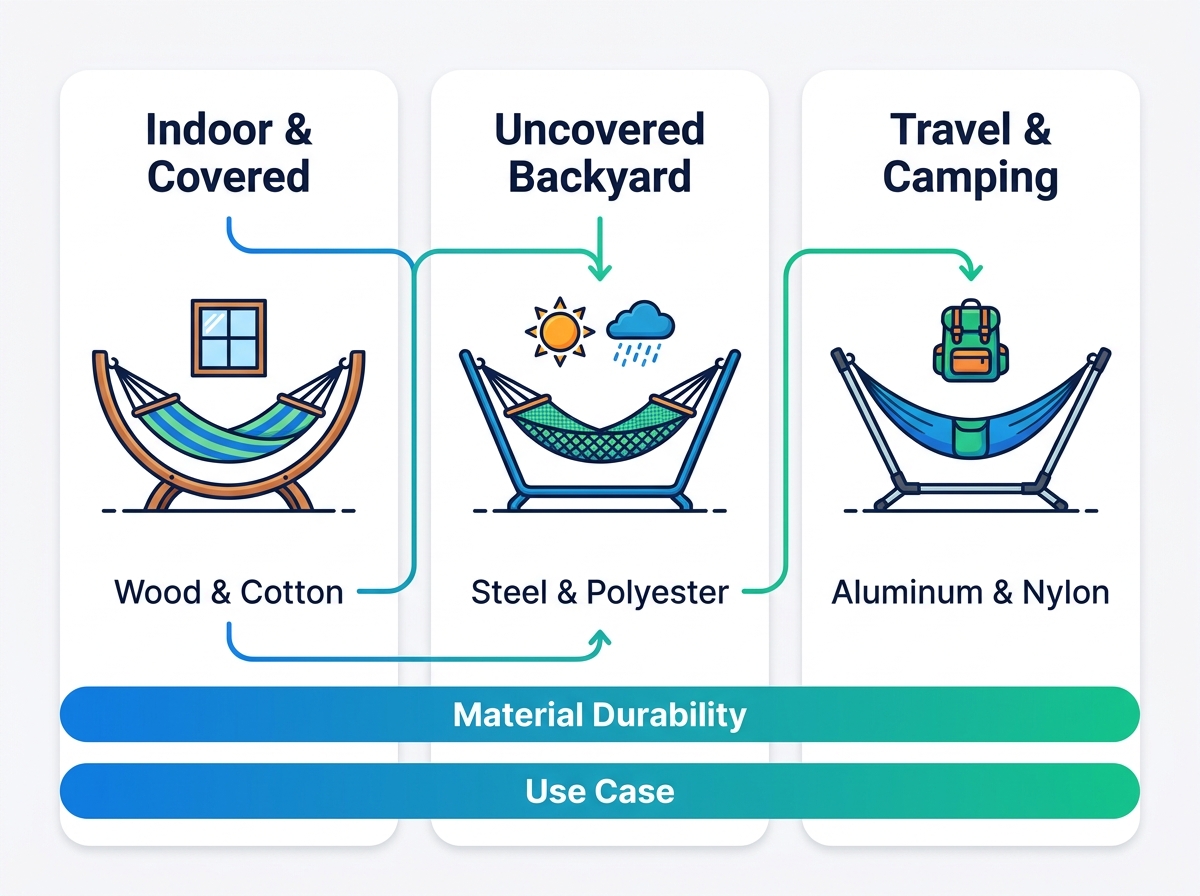
Hanging a hammock traditionally requires perfectly spaced, sturdy trees. Unfortunately, this represents a luxury not every outdoor or indoor space offers today. A Hammock with Stand eliminates these spatial constraints entirely. It provides a freestanding and reliable lounging solution you can set up anywhere.
However, buyers must navigate multiple options carefully before making a purchase. Mismatched materials or inadequate weight capacities can easily lead to tipping hazards. They can also cause rapid weathering or consume wasted floor space. This guide breaks down the core structural differences, material trade-offs, and crucial safety considerations involved. You will learn how to evaluate important features effectively. By the end, you can select the exact freestanding hammock setup suited for your specific environment and daily use case.
Key Takeaways
- Material dictates lifespan: Powder-coated steel offers high mobility and immediate durability, while solid wood (like larch or pine) provides high aesthetic value but requires strict seasonal maintenance.
- Capacity requires a buffer: Always select a stand and hammock with a weight rating at least 20-30% higher than your anticipated maximum load for optimal joint longevity.
- Fabric determines use-case: Brazilian cotton prioritizes comfort for indoor/covered use; textilene or treated polyester is mandatory for unprotected UV and rain exposure.
- Footprint vs. Swing Radius: A stand's physical footprint is static, but buyers must account for an additional 2-3 feet of clearance for safe entry, exit, and swinging.
The Value of a Freestanding Hammock Solution
Traditional hammocks present significant installation barriers. You usually need robust anchor points to hold human body weight safely. A freestanding model completely shifts this dynamic. It transforms a complex installation process into a simple assembly task.
- Bypassing structural limitations: You do not need to perform structural assessments on old trees. You can skip drilling into porch columns or locating interior wall studs. The stand handles all weight distribution internally. This removes any risk of damaging your property or landscape.
- Environmental flexibility: A standalone frame enables rapid relocation. You can move your lounging spot based on seasonal weather changes. Track the sun across your patio during the day. Push it into the shade when the afternoon gets too hot. You can even move it away quickly when hosting large outdoor events.
- Standardized safety: Factory-calibrated stands provide predictable weight distribution. Engineers test these frames rigorously to establish clear tipping thresholds. This offers far more security compared to DIY knot-and-strap hanging methods. You never have to wonder if a rope will slip or a branch will snap.
![Hammock with stand]()
Core Evaluation Dimensions for Hammock Stands
Selecting the right frame determines the safety and lifespan of your purchase. Different materials react uniquely to stress, weather, and frequent movement. You must balance visual appeal against practical maintenance requirements.
Structural Material and Longevity
Manufacturers typically use three primary materials for hammock frames. Each offers distinct advantages and specific vulnerabilities.
Powder-Coated Steel
Steel frames dominate the market for a reason. They resist initial rust extremely well thanks to their powder-coated finish. They remain relatively lightweight compared to solid wood. Most steel models feature tool-free snap-button assembly. You can put them together in minutes.
Risk: Steel remains vulnerable to interior rusting. If the outer coating gets scratched, moisture creeps inside. Leaving a steel stand in standing water will quickly corrode the base joints.
Wood (Larch, Pine, Bamboo)
Wooden frames provide unmatched architectural appeal. They often feature beautiful swooping arcs. Wood also offers a slight natural flex under weight, increasing comfort. Larch and bamboo are particularly strong choices for outdoor furniture.
Risk: Wooden frames have a very heavy footprint. They are difficult to move alone. More importantly, wood requires strict annual maintenance. You must oil or varnish the frame every season. Without this care, the wood will suffer from rot and severe splintering.
Aluminum
Aluminum serves as the premium option for portability. It represents the ideal choice for RV owners and frequent campers. Aluminum is completely immune to rust. You can leave it in the rain without worry.
Risk: Aluminum is a softer metal than steel. Therefore, these frames generally support lower overall weight capacities. They can also dent more easily during transit.
Table 1: Frame Material Comparison
| Material Type | Primary Advantage | Main Vulnerability | Maintenance Level |
| Powder-Coated Steel | High durability and easy assembly | Interior rust from scratches | Low |
| Solid Wood | Aesthetic appeal and natural flex | Heavy weight and potential rot | High |
| Aluminum | Rust immunity and high portability | Lower maximum weight capacity | Very Low |
Capacity, Footprint, and Scale
Size matters immensely when dealing with freestanding furniture. A hammock takes up much more space than a standard lounge chair. You must measure your available area accurately.
Single vs. Double Configurations
A "double" hammock requires a surprisingly large frame. These stands typically span 9 to 14 feet long. Many buyers underestimate this footprint. You should always verify the exact dimensions of the assembled frame against your patio or room. Remember to account for the swing radius. You will need an extra two to three feet of clearance on each side. This prevents you from hitting walls or railings while swinging.
Weight Ratings (Compliance & Safety)
Static weight differs from dynamic weight. When you drop into a hammock, the force multiplies. Standard models safely support 250 to 300 lbs. Heavy-duty frames can support 400 to 500+ lbs. Always look for reinforced gussets at the base joints on higher-capacity models. These welded triangular plates prevent the frame legs from buckling under sudden stress.
Evaluating Hammock Bed Materials (Features to Outcomes)
The frame provides the structure, but the bed fabric dictates the comfort. Your fabric choice determines how the hammock feels against your skin. It also dictates how long it will survive outside.
Cotton and Brazilian Weaves
Cotton offers a deeply traditional lounging experience. Manufacturers tightly weave these fabrics to create a soft, flexible surface.
- Outcomes: You gain maximum breathability. The fabric offers excellent body-contouring comfort. It creates zero pressure points, reducing back pain effectively.
- Best For: Choose cotton for indoor use or covered patios. It works well in temperate climates where you store the hammock daily. However, cotton is highly susceptible to mold. Sun-fading will also ruin the vibrant colors quickly if left uncovered.
Polyester, Textilene, and Sunbrella® Fabrics
Synthetic fibers dominate the outdoor furniture industry. Manufacturers engineer these materials specifically for harsh environmental exposure.
- Outcomes: These materials deliver incredible UV resistance. They boast rapid drying times after heavy rain. Synthetics are practically immune to mildew and rot.
- Best For: Use these fabrics for uncovered backyards and poolside lounging. They serve as the best choice for a permanent seasonal installation. You can leave them outside all summer without worry.
Quilted Fabrics
Quilted hammocks feature two layers of fabric with a soft filling in between. They almost always include wooden spreader bars at both ends.
- Outcomes: The quilt provides added padding and distinct warmth. The spreader bars keep the bed flat and open at all times.
- Best For: Pick this style for cooler climates. It works perfectly for users who prefer a flat "bed-like" surface. It appeals to people who dislike the traditional cocoon wrap of a gathered-end hammock.
Assembly Risks and Implementation Pitfalls
Even the highest quality equipment can fail if used incorrectly. Most hammock accidents stem from user error or overlooked hardware degradation. Understanding the physics of your hammock prevents unnecessary injuries.
The "Spreader Bar" Tipping Hazard
Hammocks featuring wooden spreader bars look inviting. They offer a flatter, mattress-like surface. However, they drastically raise your center of gravity. This makes them significantly easier to flip. When you sit on the edge of a spreader bar hammock, the entire bed can rotate. Traditional gathered-end hammocks wrap around you, lowering your center of gravity safely.
Hardware Degradation
The metal connection points bear the brunt of continuous friction. S-hooks, adjustment chains, and carabiners grind together whenever you swing. You must ensure the provided hardware is galvanized or solid stainless steel. Cheaper metals will suffer from localized rust quickly. A rusted S-hook can easily snap, causing sudden structural failure.
Storage and Winterization
Leaving your setup fully assembled in freezing conditions accelerates degradation. Wet winter weather destroys wood finishes and rusts steel joints. Water can freeze inside tubular steel frames, causing them to crack open. Always opt for models with included carrying cases. This guarantees an easy off-season breakdown. Store the frame in a dry garage or basement during snowy months.
Shortlisting Your Ideal Hammock with Stand
Matching your specific lifestyle to the right product saves money and frustration. Use these profiles to determine your ideal setup.
- For the Uncovered Backyard: Prioritize a heavy-duty powder-coated steel stand. Pair it with a weather-resistant textilene or treated polyester hammock. This combination demands zero daily maintenance.
- For the Design-Conscious Patio: Evaluate wooden arc stands paired with quilted or Sunbrella fabric beds. This creates a luxury resort aesthetic. Just ensure you actually have the time to perform annual wood maintenance.
- For Indoor/Apartment Use: Look for space-saving steel stands around 8 to 9 feet long. Pair this with a traditional Brazilian cotton hammock. A compact Hammock with Stand delivers maximum comfort without dominating your entire floor plan.
- For Travel and Camping: Shortlist lightweight aluminum frames. Alternatively, look for collapsible steel frames. Pair them with a nylon parachute hammock. Ensure the setup includes dedicated travel bags for easy transport.
Conclusion
Choosing the right freestanding hammock requires balancing three major factors. You must consider where you will put it, noting the required footprint. You must evaluate what weather it will face to determine material durability. Finally, you must assess who will use it to ensure adequate weight capacity. Getting this balance right guarantees years of safe, comfortable lounging.
Next Steps:
- Measure your intended space carefully, adding three feet of buffer space for safe swinging.
- Do not compromise on weight ratings or hardware quality; always choose galvanized or stainless steel chains.
- Define your exact use case clearly before committing to a specific frame and fabric combination.
FAQ
Q: Can any hammock fit on any stand?
A: No. Your stand length must correspond closely to the hammock's total length. This measurement includes all hanging strings and chains. A hammock typically needs a stand one to two feet longer than its total resting length to achieve proper tension.
Q: Are hammocks with stands safe for children?
A: Yes, provided they do not exceed the stated weight limits. However, gathered-end hammocks without wooden spreader bars are highly recommended for children. They maintain a lower center of gravity, naturally cocooning the child. This makes them much harder to flip accidentally.
Q: Can I leave my steel hammock stand outside all year?
A: It is not recommended. Even powder-coated steel possesses weak points. The joints or snap-button connections can allow moisture inside. This trapped moisture causes interior rusting during heavy rain or snow, eventually compromising structural integrity.
Q: How do I adjust the tension on a hammock stand?
A: Most modern stands come with adjustable chains or multiple hook positions along the frame arms. Shifting the hooks to a lower position raises the hammock bed. Tightening the suspension chain also lifts the bed, increasing overall tension and flattening the lounging surface.