Many outdoor enthusiasts fall into a familiar trap when shopping for gear. They buy a hammock labeled "double," expecting it to comfortably sleep two adults overnight. Unfortunately, this simple assumption often leads to terrible sleep. You wake up experiencing aching shoulders and a stiff back. The outdoor gear industry uses confusing terminology. A "double" model usually just means extra fabric width for one user. Evaluating the structural, functional, and comfort realities of a shared setup becomes absolutely critical. If you ignore the physics of shared weight, you risk serious discomfort. You might even experience dangerous gear failure. We designed this guide to cut through the marketing noise. You will discover a realistic, evidence-based framework for selecting the right system. By analyzing actual use cases, we will help you choose the best option. You can confidently avoid costly purchasing mistakes.
Key Takeaways
- Terminology matters: Most "double hammocks" are designed for a spacious single-person sleep or short-term two-person lounging; true two-person overnight hammocks require specific structural designs.
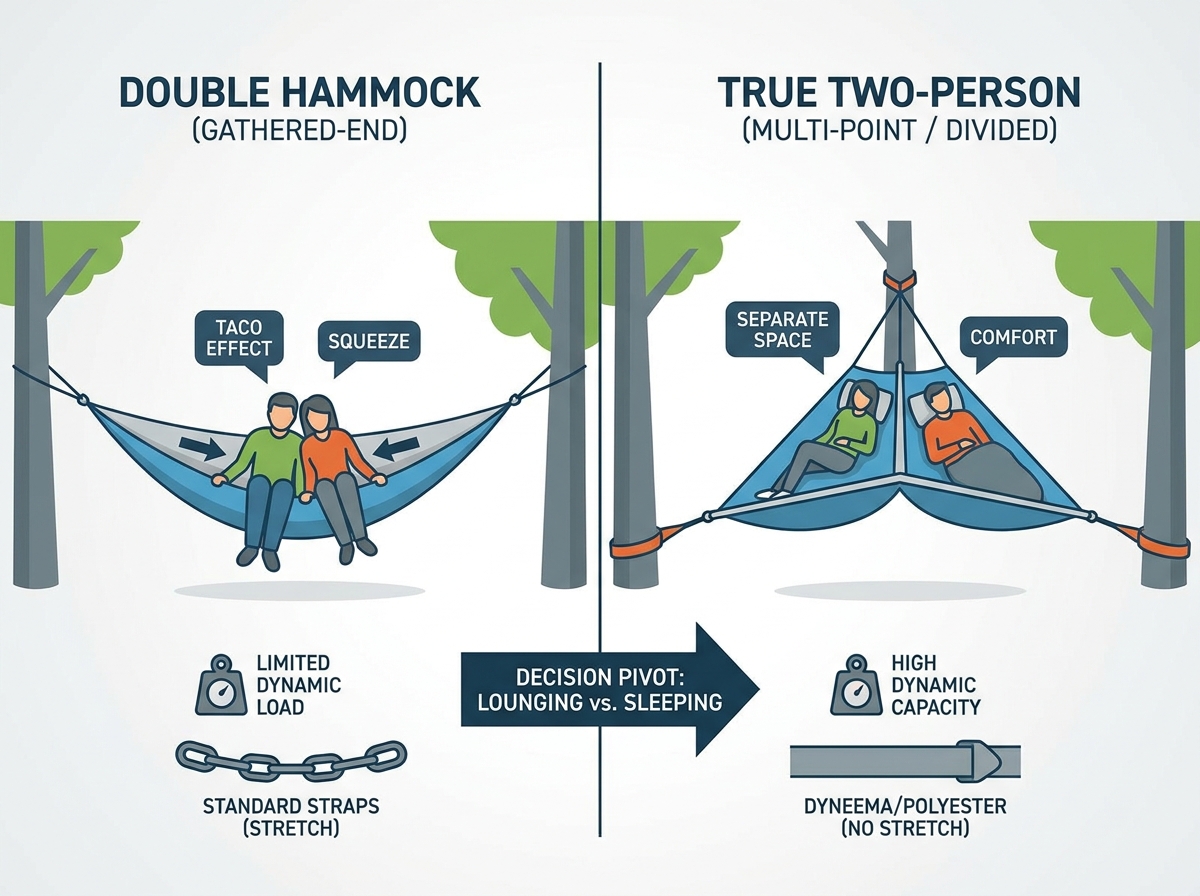
- Physics of shared weight: Two occupants require significantly higher denier fabrics, specialized suspension systems, and modified hang angles to prevent the "taco effect" (sliding into the middle).
- Design dictates use: Gathered-end hammocks are best for casual lounging, while multi-point or spreader-bar hammocks are required for viable two-person overnight camping.
- Safety and compliance: Evaluating weight limits must include dynamic weight (movement), not just static load capacity.
The "Double" vs. "True Two-Person" Dilemma
Many manufacturers aggressively advertise "double" hammocks. Buyers naturally assume this implies a two-person sleep system. Industry standards tell a completely different story. A typical double model measures roughly six to six-and-a-half feet wide. This generous width provides excellent comfort for one single person. It allows you to lie diagonally across the fabric. Diagonal sleeping creates a flat, ergonomic resting posture. It does not, however, provide two distinct occupant spaces.
Gravity dictates the strict rules of shared suspension. We call this phenomenon the "taco effect." When two people enter a standard gathered-end fabric sling, physics takes over immediately. The heavier occupant sinks deeply to the lowest point. The lighter occupant inevitably slides downward. You crash heavily into each other. This creates severe shoulder squeeze. It also generates unwanted, uncomfortable friction. Sleep becomes virtually impossible under these conditions.
Buyers must make a definitive upfront decision. Establish your primary goal immediately. Do you want to lounge together for a relaxing hour? Or do you plan to sleep together overnight? Your answer completely alters the gear you need.
![Two-person hammock suspended between trees in a forest setup]()
Core Evaluation Criteria for a Two-Person Hammock
We must deeply analyze the structural elements required for dual occupancy. Standard solo guidelines simply do not apply here.
- Weight Capacity & Dynamic Load Limits
Static weight ratings mislead many casual buyers. A tag might proudly advertise a 400 or 500-pound capacity. This number only reflects stationary load limits. We must account for dynamic load forces. Two people constantly shift, turn, and adjust during sleep. These sudden movements multiply the gravitational force heavily on your gear. You need significant safety margins. Inspect all hardware carefully. Climbing-rated carabiners provide excellent security. Continuous loops made from Amsteel handle dynamic stress perfectly. - Suspension System Requirements
Standard daisy-chain straps work flawlessly for solo campers. They often fail miserably under dual weight. The thin stitched loops stretch or tear when stressed. You must upgrade your suspension hardware. Wide webbing distributes force safely across the tree bark. We strongly recommend non-stretch polyester. UHMWPE or Dyneema webbing offers even better performance. This ensures strict environmental compliance. Tree cambium protection remains an ethical priority. Solid webbing also eliminates bouncy sagging overnight. - Fabric Durability (Denier & Weave)
Fabric thickness matters immensely for shared setups. Denier measures the thickness of individual threads. Solo hammocks often utilize 70D nylon. This feels incredibly soft and lightweight. Dual occupancy requires much tougher materials. Look specifically for 210D or 400D nylon variations. High-tension loads demand robust ripstop patterns. Ripstop grids prevent dangerous micro-tears from expanding. Thicker fabrics also stretch much less. Less stretch means less sliding toward the middle.
Best Practice: Always inspect your continuous loops before each trip. Frayed Amsteel dramatically reduces your dynamic safety margin.
Common Mistake: Hanging a heavy two-person setup using cheap nylon ropes. They permanently damage tree bark and stretch uncontrollably overnight.
Structural Designs: Which Approach Fits Your Needs?
We categorize shared hammocks into three distinct architectural styles. Each unique design solves specific outdoor problems.
Gathered-End Double Hammocks
These models feature gathered fabric bundled tightly at two opposing ends.
- Best for: Casual daytime lounging. They work beautifully for lazy backyard reading. You can use them easily for festival seating.
- Limitations: They cause incredibly high shoulder squeeze. We do not recommend them for multi-day overnight sleep. Two adults will struggle severely to rest comfortably.
Spreader Bar Hammocks
These designs utilize thick wooden or metal bars. The rigid bars keep the fabric stretched entirely flat.
- Best for: Car camping adventures. They look fantastic as a permanent backyard installation. You get a much flatter sleeping surface overall.
- Limitations: Spreader bars create inherent, dangerous instability. They raise the center of gravity dramatically. You get a very tippy bed. Both occupants must balance their movements carefully.
Multi-Point / Tensioned Systems (e.g., Tree Tents)
These advanced systems use heavy ratchets and massive straps. They create a tightly tensioned sleeping platform.
- Best for: Serious backcountry couples. They offer strict, reliable overnight comfort. You experience zero "roll-together" effect.
- Limitations: The setup requires three completely distinct anchor points. It weighs significantly more than traditional styles. You face a longer, much more complex deployment time.
Structural Design Comparison
| Design Style | Primary Use Case | Sleep Quality (Dual) | Setup Difficulty |
| Gathered-End | Daytime lounging, festivals | Poor (High shoulder squeeze) | Very Easy (2 points) |
| Spreader Bar | Car camping, backyard | Moderate (Very unstable) | Easy (2 points) |
| Multi-Point (Tree Tent) | Overnight backcountry sleep | Excellent (Flat, separated) | Difficult (3+ points) |
Visual Guide: Load Distribution Ratings
| Metric Analyzed | Gathered-End | Spreader Bar | Multi-Point |
| Center Gravity Pull | High (Taco Effect) | Low (Flat Profile) | Zero (Tensioned) |
| Anchor Shear Force | Moderate | High | Extreme |
| Fabric Stretch Risk | High | Moderate | Low |
Implementation Risks: Setup and Insulation Realities
A sturdy hammock solves only half the problem. You must master the physical setup mechanics. Insulation presents another massive, often-ignored hurdle.
Anchor Point Selection
Dual occupants generate massive shear force. Thin trees will bend or violently snap under this immense tension. You must actively select strong, deep-rooted anchors. Look for trees measuring at least eight to ten inches in diameter. Hardwoods handle these lateral forces much better than softwoods. Inspect the canopy directly above. Dead branches pose a fatal, silent risk.
The Hang Angle Adjustment
Solo campers aim for a standard 30-degree hang angle. This specific angle creates optimal sag for diagonal sleeping. Dual setups change this physical math completely. The extra occupant weight creates massive additional vertical sag. You must aggressively modify your suspension angle. A slightly tighter angle sometimes compensates for heavy fabric stretch. Test the tension thoroughly before settling in. Adjust the thick tree straps until the ridgeline feels adequately taut. You want to avoid hitting the ground overnight.
Managing Cold Spots (Bottom Insulation)
Heat loss destroys camping comfort rapidly. Convective cooling happens quickly underneath you. You compress your sleeping clothes heavily. You lose your vital thermal boundary layer.
Standard sleeping pads fail miserably when shared. They overlap awkwardly. They slide apart continuously during the night. The resulting gap creates a freezing cold spot. You need a specialized double-wide underquilt. Underquilts hang loosely beneath the fabric. They prevent convective heat loss entirely. The delicate insulation remains uncompressed. A shared underquilt traps radiant body heat effectively. It creates a warm, deeply insulated microclimate for both users.
Shortlisting Logic: Making Your Final Decision
We can synthesize this technical data into clear buying profiles. Match your primary use case strictly to these recommendations.
- For the Backyard/Casual Couple: Prioritize physical comfort and backyard aesthetics. Cotton or thick parachute nylon works perfectly here. Enjoy the gathered-end affordability. Look closely for UV resistance. Harsh sunlight degrades thin fabrics quickly. Ensure your setup can safely withstand prolonged outdoor exposure. Adding a premium Two-Person Hammock designed for patios will elevate your outdoor living space immensely.
- For the Car Camper: System weight does not matter here. Prioritize hybrid models featuring sturdy spreader bars. Demand heavy-duty, zero-stretch suspension straps. Look for designs featuring double-pad sleeves. These integrated sleeves lock shared sleeping pads tightly into place. This prevents the dreaded nighttime pad separation.
- For the Backcountry Hiker: Every single ounce counts on the rough trail. Prioritize ultralight multi-point systems. Alternatively, realistically pivot your entire strategy. Carry two separate ultralight single hammocks instead. This saves overall pack weight. It also absolutely guarantees sleep quality. You avoid the frustrating roll-together effect entirely.
Conclusion
Your final choice depends heavily on one vital threshold. You must clearly separate lounging expectations from true sleeping realities. The right setup perfectly matches your actual outdoor use case. Gathered ends offer cozy afternoons. Multi-point systems deliver genuine overnight rest.
Investing in a robust, high-denier suspension system remains strictly non-negotiable. Dual weight demands heavy-duty webbing. You must employ climbing-rated hardware. Standard single-user straps will ultimately fail you.
Audit your primary camping environment carefully before purchasing. Measure the typical trees in your favorite sites. Check your average overnight temperatures. A realistic, thorough assessment ensures a comfortable, extremely safe, and highly enjoyable outdoor experience.
FAQ
Q: Can two adults comfortably sleep overnight in a gathered-end double hammock?
A: Generally, no. While perfect for daytime lounging, gathered-end models force both occupants into the center. The heavier person sinks lowest, causing the lighter person to slide into them. This "taco effect" creates severe shoulder squeeze and restless sleep. True overnight comfort requires multi-point tensioned systems or separate single setups.
Q: What is the minimum weight rating I should look for in a two-person hammock?
A: You should look for a minimum static weight rating of 500 pounds. This high baseline safely accounts for dynamic load. When two adults shift or turn during sleep, they generate significant force multipliers. A 500-pound rating ensures the fabric, carabiners, and continuous loops maintain a critical safety margin.
Q: Do we need a special underquilt for a two-person hammock?
A: Yes. Convective heat loss occurs rapidly underneath the stretched fabric. Attempting to use two separate single underquilts usually fails. They overlap awkwardly and leave freezing gaps in the center. A specialized double-wide underquilt covers the entire bottom surface securely. It traps shared body heat and eliminates cold spots completely.
Q: Will a two-person hammock stretch out over time?
A: All fabrics stretch slightly, but the material dictates the severity. Standard 70D nylon stretches significantly under dual weight. This heavily exacerbates the roll-together effect. Heavier 210D or 400D nylon resists permanent deformation much better. Polyester fabrics stretch the least. Choosing a high-denier material minimizes long-term sagging and structural fatigue.