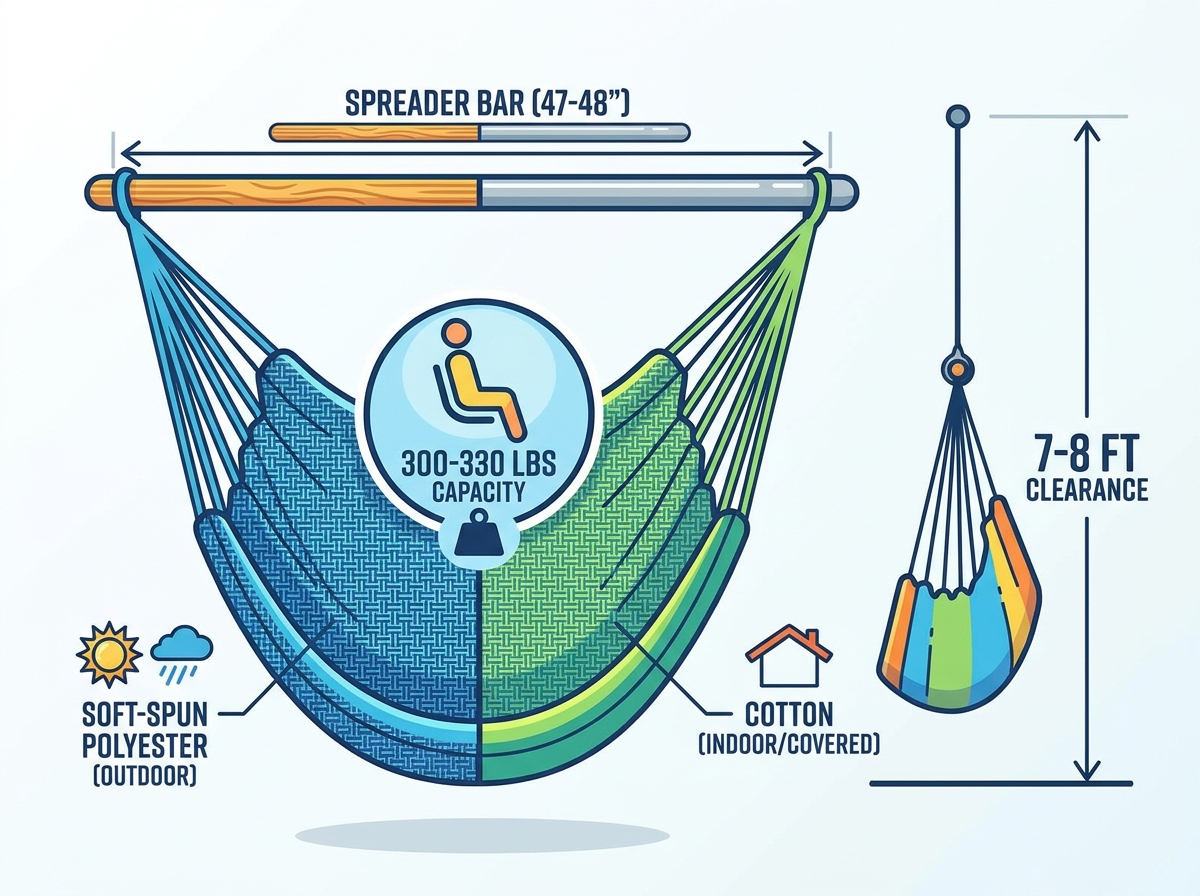
Choosing the perfect seating setup for your porch or patio is always an exciting process. Buyers quickly move past beautiful aesthetic preferences to face complex structural options. Choosing solely based on looks will not guarantee a comfortable or safe outdoor experience. A poorly specified chair often leads to premature weather degradation over time. You might face uncomfortable seating postures or even dangerous safety hazards due to insufficient weight support. Every high-quality model must carefully balance weave durability, spreader bar width, and certified weight capacities. We will break down the essential specifications you must evaluate before finalizing a purchase. You will learn how material weaves, spreader bar sizes, and weight limits dictate long-term quality. By the end of this guide, you will know exactly how to assess these crucial features for maximum safety.
Key Takeaways
- Material Selection dictates lifespan: Soft-spun polyester outperforms cotton in outdoor UV and moisture resistance.
- Spreader bar width matters: A standard 47 to 48-inch (approx. 4 ft) solid wood or metal bar prevents shoulder pinching.
- Safety relies on hardware and weave: Look for a minimum weight capacity of 300–330 lbs, supported by a tightly woven micro-weave cord system.
- Clearance is non-negotiable: Proper installation requires at least 7 to 8 feet of vertical hanging clearance.
1. Material and Weave Quality: Evaluating Durability vs. Comfort
When you evaluate a modern Caribbean hammock chair, the material selection fundamentally determines its lifespan. Manufacturers primarily rely on two distinct cord materials. Each material offers specific benefits for different environmental conditions.
The Cord Material: Polyester vs. Cotton
Cotton cords offer a traditionally soft texture. The natural fibers remain highly breathable during warm summer months. Cotton fibers conform closely to body contours. However, cotton poses significant maintenance challenges outdoors. Natural fibers easily absorb environmental moisture. This absorption makes the chair highly susceptible to mold and mildew. Direct exposure to intense sunlight also causes rapid color fading. You should restrict cotton models strictly to indoor spaces or deeply covered porches.
Soft-spun polyester serves as the industry standard for outdoor reliability. Advanced manufacturing techniques allow polyester to mimic the soft feel of natural cotton. The synthetic nature of polyester provides superior resistance against UV degradation. Polyester fibers repel moisture naturally. This water resistance prevents dangerous rot from compromising the structural cords. Polyester also resists stretching over time. Your seat maintains its original shape after years of heavy use.
Material Specification Comparison Chart
| Feature | Cotton Cords | Soft-Spun Polyester |
| Best Use Case | Indoors or covered patios | Exposed outdoor environments |
| Moisture Resistance | Low (Prone to mold/mildew) | High (Dries quickly, resists rot) |
| UV Tolerance | Fades quickly in direct sun | High color retention |
| Stretch Factor | May stretch and sag over time | Retains original shape effectively |
Weave Density: Micro-Weave vs. Open Net
The weaving technique impacts physical comfort just as much as the raw material. Traditional rope chairs often feature an open-net design. Open nets create large gaps between the structural cords. These gaps can cause uncomfortable pressure points across your back and thighs. Open nets also create practical frustrations. Shirt buttons, zippers, and jewelry frequently catch in wide rope gaps.
A closed, tightly knit micro-weave solves these common issues. Premium models utilize thousands of individual loops. Skilled artisans often hand-weave these micro-cords to ensure consistent tension. The dense micro-weave acts almost like a solid piece of fabric. It distributes body weight evenly across the entire seating surface. This uniform weight distribution eliminates painful pressure points completely. The tight spacing also prevents clothing or hardware from snagging. The resulting outcome provides an uninterrupted, floating sensation.
2. Sizing and Spreader Bars: Standard vs. Jumbo Caribbean Hammock Chairs
The overall dimensions of your chosen model will dictate how you interact with it daily. You must carefully assess both the spreader bar width and the fabric bed length.
Spreader Bar Specifications
The spreader bar acts as the structural spine of the seating apparatus. It holds the woven suspension cords apart. A proper bar creates the necessary interior volume for comfortable seating. Industry standards dictate a bar width of roughly 47 to 48 inches. This 4-foot span is completely intentional. It provides enough horizontal clearance to prevent the side cords from pinching against your shoulders. Narrower bars force the user into an uncomfortable, cramped posture.
You will encounter two primary spreader bar materials on the market. Solid hardwood bars remain the traditional choice. Manufacturers typically coat these wooden bars in marine-grade varnish. The heavy varnish protects the wood grain against moisture intrusion and splitting. Alternatively, many modern retail models feature detachable metal bars. Metal bars break down into two or three interlocking pieces. They offer easier storage during winter months. They also reduce shipping costs significantly. However, you must verify the metal components feature rust-resistant powder coating.
Seat Dimensions: Standard vs. Jumbo
Understanding the difference between standard and jumbo sizing prevents future disappointment. Standard sizing typically accommodates average-height adults perfectly. A standard model keeps the user in an upright, seated posture. Your knees bend naturally over the front edge. Your feet rest comfortably flat on the ground. Standard models excel in smaller spaces where physical footprint matters.
Jumbo or oversized specifications offer an entirely different relaxation experience. Jumbo variants feature highly extended fabric beds. The woven material often extends 40 or more inches beyond a standard seat. This extra fabric acts as a built-in footrest. It allows you to kick your legs up and fully recline. The evaluation lens for choosing between the two is straightforward. You must match the physical footprint to your specific body height and resting preferences.
- Choose Standard if: You prefer an active seating posture for reading or chatting.
- Choose Standard if: You have limited swinging clearance on your balcony.
- Choose Jumbo if: You are over six feet tall and need extra leg support.
- Choose Jumbo if: You want to lay back completely for afternoon naps.
![Caribbean Hammock Chair]()
3. Weight Capacity and Structural Integrity
A beautiful design means nothing if the seat cannot support you safely. Evaluating the structural integrity of your Caribbean hammock chair is the most critical step in the buying process.
Load-Bearing Standards
Every reliable model should display a clearly certified weight limit. The industry baseline requirement sits between 300 to 330 lbs safely. This capacity provides a substantial safety buffer for average users. It accounts for the dynamic forces generated when you sit down or swing gently. You must understand that published weight limits remain contingent on dual factors. The limit applies to both the internal construction of the seating unit and your chosen suspension point. A chair rated for 330 lbs will still fail instantly if hung from weak drywall.
O-Ring and Top Loop Construction
The top hanging loop bears the entire functional load of the user. You must inspect this specific component closely before making a purchase. The constant motion of swinging creates intense friction at the suspension point. Look for metal-reinforced O-rings located at the very top of the cord assembly. The metal ring creates a smooth barrier between the fabric cords and the steel hanging hardware. If the model lacks a metal ring, ensure the top loop features densely woven, multi-cord wrapping. This reinforced wrapping prevents friction wear from severing the main suspension lines.
Cord Thickness
Do not ignore the individual cord thickness. You should inspect the specific suspension points where the fabric meets the wooden spreader bar. These intersection points endure massive tension. Thicker gauge cords at these specific joints act as critical indicators of manufacturing quality. Thin or frayed cords at the bar connections signal poor craftsmanship. Such defects compromise long-term safety.
- Inspect the Top Ring: Ensure the suspension point utilizes metal reinforcement or thick cord wrapping.
- Examine the Bar Knots: Check the cord thickness where lines pass through the spreader bar holes.
- Verify the Weight Tag: Locate the manufacturer tag to confirm the 330 lb minimum requirement.
4. Installation Requirements and Rollout Risks
Many buyers unpack their new seating arrangement only to realize their designated space cannot accommodate it safely. You must verify your architectural parameters before completing your order.
Vertical and Horizontal Clearance
Proper suspension demands strict spatial requirements. The absolute minimum vertical height ranges from 7 to 8 feet. You measure this distance from the exact hanging point down to the floor. The bottom fabric of the seat should rest roughly 18 to 24 inches off the ground once weighted. This height allows an adult to sit down naturally without falling into the seat. Ignoring the ceiling height requirement introduces severe functional risks. A mounting point lower than 7 feet leads to a seat dragging on the ground. A mounting point higher than 9 feet requires cumbersome extension chains. You also need a minimum horizontal clearance of 3 feet in every direction from the center axis. This empty radius prevents the spreader bar from smashing into walls or porch columns during gentle swinging.
Hardware and Anchoring Systems
First-time buyers often discover a surprising fact during unboxing. Most premium models do not include actual hanging hardware in the retail box. Manufacturers exclude hardware because every architectural ceiling requires different anchoring solutions. Buyers must source their mounting components independently.
The evaluation criteria for external hardware remain strict. You must source heavy-duty lag screws, thick S-hooks, and heavy-gauge extension chains. If hanging from an outdoor branch, seek specific tree-strap kits. You should ensure every single hardware component holds a rating of at least 500 lbs. Over-specifying your hardware creates a vital safety buffer against dynamic loads.
We must issue a firm implementation warning regarding indoor installations. Never attempt to hang your setup directly from drywall or standard plaster ceilings. Drywall possesses zero structural pull-out strength. Your anchoring hardware must penetrate deep into a solid wood structural joist. If you have concrete ceilings, use specialized concrete masonry anchors. If modifying your ceiling is impossible, you must purchase a dedicated, load-rated C-stand. C-stands consume more floor space but eliminate ceiling anchoring risks entirely.
5. Shortlisting Logic: Which Caribbean Hammock Chair is Right for You?
Applying a logical shortlisting framework prevents analysis paralysis. You can quickly narrow down the vast market options by categorizing your specific lifestyle needs. Use these three distinct user profiles to finalize your decision.
For Uncovered Outdoor Spaces
If your intended location lacks a roof or thick tree canopy, prioritize environmental resistance above all else. Filter your search exclusively for 100% soft-spun polyester models. Verify the spreader bar utilizes thick marine-grade varnish over solid hardwood. Alternatively, seek rust-resistant powder-coated metal bars. Choose darker hues or heavily UV-treated colors. Darker colors naturally hide dirt, pollen, and slight weathering far better than bright white cords.
For Tall or Reclining Users
Comfort requires adequate physical support for your specific body length. Tall individuals often find standard sizes restrictive. You should filter your search exclusively for Jumbo variants. Look specifically for models advertising built-in footrests extending at least 40 inches. Furthermore, verify the spreader bar measures a minimum of 47 inches. A wide bar ensures your shoulders remain relaxed while you recline backward.
For Renters or Frequent Movers
Permanent installations do not suit everyone. If you rent an apartment or relocate frequently, prioritize portability. Consider models featuring detachable metal spreader bars. These multi-piece bars break down quickly into a compact storage bag. Detachable designs simplify closet storage. They also allow you to pack the entire setup into a car trunk for weekend camping trips or beach visits.
Conclusion
Selecting the right seating requires a disciplined approach to material and structural specifications. You can confidently navigate the market by adhering to a clear decision framework. First, prioritize soft-spun polyester to guarantee outdoor longevity and rot resistance. Second, verify a minimum 330 lb weight capacity to ensure absolute structural safety for everyday use. Finally, evaluate the dimensional specifications to match the size—whether standard or jumbo—to your personal comfort preferences.
Do not finalize your purchase based on color alone. Take immediate action by measuring your intended space. Grab a tape measure to confirm you possess the necessary 7 to 8 feet of vertical hanging clearance. Identify your structural joists or assess the need for an independent C-stand. Verifying your anchoring point beforehand ensures your new setup delivers years of safe, suspended relaxation.
FAQ
Q: How much weight can a standard Caribbean hammock chair hold?
A: A high-quality model safely holds between 300 to 330 lbs. However, this capacity represents the limit of the chair itself. Your actual safety relies entirely on the structural integrity of your chosen anchor point and the heavy-duty hardware you install.
Q: Can I leave my Caribbean hammock chair outside in the rain?
A: Yes, provided you purchase a model woven from soft-spun polyester. Polyester naturally repels moisture and resists rot. If you own a traditional cotton model or an untreated wooden spreader bar, you must bring it indoors to prevent rapid degradation and mildew.
Q: How much ceiling height do I need to hang a hammock chair indoors?
A: You need an absolute minimum vertical clearance of 7 to 8 feet from the ceiling anchor point to the floor. This height ensures the bottom of the seat hovers a comfortable 18 to 24 inches off the ground once weighted.
Q: Are hammock chairs machine washable?
A: Generally, no. Machine washing creates severe tangles and damages the suspension loops. You should spot-clean the cords by hand using warm water and a mild detergent. You can only machine wash models featuring completely removable, non-wooden spreader bars.