Purchasing a steel hammock stand seems straightforward until you assemble it in your backyard. You suddenly realize your hammock either scrapes the ground or will not stretch far enough to hook. A mismatched frame severely compromises safety, ruins fabric tension, and wastes your effort. Stretching a canvas too tightly stresses crucial weld points. Conversely, too much slack causes extreme physical discomfort. At the decision stage, buyers need precise measurements rather than guesswork. Relying on visual estimates often leads to bent frames or unsafe resting setups.
This guide provides a definitive matching framework to solve these exact problems. We designed it to ensure you successfully pair your specific hammock type and length with the correct frame. You will learn exactly how to calculate clearance, evaluate material quality, and confidently select a Steel Hammock Stand. The right frame safely supports your weight, fits your spatial footprint, and handles local outdoor conditions year after year.
Key Takeaways
- The general rule of thumb: Your steel hammock stand should be roughly 2 feet longer than the total length of your hammock (when resting).
- Hammock type dictates stand shape: Spreader-bar hammocks require longer, traditional frames (12–15 feet), while gathered-end (Brazilian/Mayan) hammocks fit better on shorter, U-shaped stands (9–10 feet).
- Weight capacity in steel stands is determined by steel gauge and joint construction; standard capacities range from 250 to 500 lbs.
- "Universal" stands rely on adjustable chain systems, but they still have strict maximum and minimum length thresholds.
The Cost of Incompatibility: Why Sizing a Steel Hammock Stand Matters
Consumers often underestimate the physical forces at play when they lie down. A swinging load generates dynamic weight. This weight exerts massive lateral pull on the frame. Selecting the wrong size leads to rapid hardware failure and physical discomfort.
The Safety Factor
Exceeding weight capacities puts you at immediate risk. Stretching fabrics too tightly across a wide frame severely stresses the steel weld points. A frame forced to handle incorrect tension can suffer sudden collapse. Standard tubular steel bends inward when overloaded. Welds crack silently under improper lateral stress. You must align the frame's structural limits with your intended load to ensure maximum safety.
The Comfort Reality: Sag vs. Tension
Different hammocks inherently require different curves. A Brazilian hammock hung on a stand designed for a spreader-bar hammock behaves poorly. It will lack the necessary "sag" required for an ergonomic diagonal lay. Conversely, a spreader-bar hammock needs high tension. Hanging it on a short frame causes the center to dip drastically. This forces your body into an unnatural, painful fold. Perfect comfort relies entirely on matching the bed style to the correct suspension geometry.
Footprint Limitations
A 15-foot steel frame requires significant clearance. Many buyers forget to measure their available outdoor space. You must account for the actual footprint before selecting a size for patios or narrow balconies. Large base tubes create significant trip hazards in high-traffic areas. Always measure your deck or lawn area twice. Leave at least three feet of walking clearance around the perimeter of the assembled frame.
![Steel hammock stand compatibility and measurement guide]()
The Core Sizing Framework: How to Measure for Compatibility
Proper sizing prevents return shipping hassles and structural accidents. Use this standardized measurement framework before you purchase any hardware. It removes guesswork and provides concrete target dimensions.
- Step 1: Determine Total Hammock Length. Measure your hammock accurately from O-ring to O-ring. Lay it completely flat on the ground. Do not stretch the fabric during this process. Record this exact baseline measurement.
- Step 2: Apply the "Plus Two" Formula. Add 24 inches (2 feet) to your total resting length. This simple calculation gives you your target stand length. The extra space accommodates necessary suspension chains.
- Step 3: Account for Fabric Stretch. Cotton and nylon fabrics stretch significantly over time. Cotton can expand up to 15 percent after a few uses. You must use suspension chains to bridge initial gaps. As the fabric ages and stretches, you simply shorten the chain links to restore proper tension.
Transparent Assumption: This specific formula assumes you use standard attachment hardware. Standard hardware includes S-hooks and standard metal chains. Specialty suspensions require custom clearance adjustments. Tree straps or carabiner arrays change the suspension geometry entirely.
Best Practices for Measurement
- Measure your hammock indoors on a clean floor to keep it perfectly flat.
- Pull the end rings gently to remove slack, but avoid pulling against the fabric's natural elasticity.
- Document both the bed length and the total ring-to-ring length. Frame manufacturers usually reference the total ring-to-ring length.
Matching Hammock Types to Steel Stand Profiles
You cannot pair every bed style with every frame. The physical design of your hammock dictates the specific frame architecture you must buy. Mixing incompatible designs ruins the user experience.
Spreader-Bar Hammocks (American Style)
- Characteristics: These feature wooden bars at both ends. The bed remains flat and taut. They feel firm but are highly prone to tipping over if you move suddenly.
- Stand Requirement: This style requires a traditional elongated frame. You typically need a length between 12 to 15 feet. The frame needs wide base legs to provide crucial lateral stability against tipping forces.
Gathered-End Hammocks (Brazilian, Mayan, Colombian)
- Characteristics: These lack wooden spreader bars. They offer a deep sag and a cocoon-like feel. They require a specific "banana" shape curve to function properly. You lie diagonally across them to flatten your back.
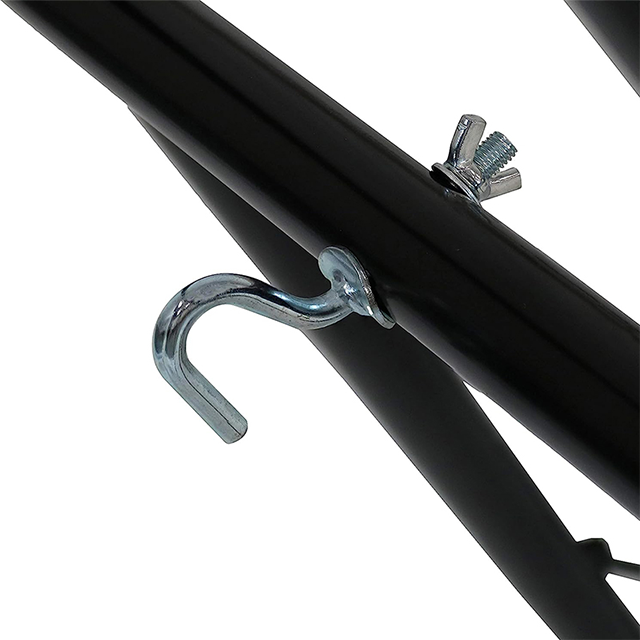
- Stand Requirement: They pair best with a 9-foot to 10-foot "U-shaped" frame. These are often marketed as "space-saving" frames. The attachment hooks sit higher up on the poles. This height accommodates the necessary downward drop of the fabric.
Camping and Parachute Hammocks
- Characteristics: These consist of thin nylon material. They are extremely long, often exceeding 10 feet. They remain incredibly lightweight and pack down small.
- Stand Requirement: They are highly compatible with adjustable, portable frames. Tension must be carefully managed. If hung too loosely, the thin nylon will stretch and cause you to scrape the ground. Adjustable hook notches help manage this rapid stretching.
Key Evaluation Dimensions: Evaluating Steel Stand Quality
Not all metal frames perform equally. Manufacturing standards vary wildly across different brands. You must look beyond the basic dimensions to assess the actual build quality. A reliable Steel Hammock Stand protects your investment through superior engineering.
Steel Gauge & Weight Capacity
Frame thickness directly dictates safety. Manufacturers use steel gauge to measure this thickness. A lower gauge number means thicker, stronger steel. Distinguish clearly between 300 lb limits and 500 lb limits. A 300 lb limit usually indicates thinner tubular steel meant for single users. A 450–500 lb limit indicates heavy-duty steel. These heavy-duty models feature reinforced steel gussets welded securely at the base joints.
Rust Resistance & Coating
We must take a skeptical view regarding weatherproofing. No steel remains entirely rust-proof if left in the rain year-round. You must evaluate powder-coated steel versus bare metal or cheap paint. Powder coating provides a thick, baked-on plastic layer. It resists chipping much better than liquid paint. However, weld points and internal tubes remain highly vulnerable. Water pools inside the base tubes. These hidden internal areas are the first to oxidize.
Portability vs. Permanence
You must decide if you want to move your frame frequently. Snap-button assembly systems are tool-free and highly portable. You can break them down in minutes. However, they suffer from a slight structural wobble due to the necessary loose tolerances. Contrast this with bolted joint assemblies. Bolted frames are rigid and boast a higher weight capacity. They feel incredibly secure but are quite difficult to move once assembled.
Assembly Type Comparison Chart
| Feature | Snap-Button Assembly | Bolted Joint Assembly |
| Tool Requirement | None (Tool-free) | Wrenches/Hex keys required |
| Assembly Time | 3 to 5 minutes | 15 to 30 minutes |
| Portability | Excellent (Easy to pack) | Poor (Meant for permanent setup) |
| Structural Rigidity | Moderate (Slight wobble) | High (Very stable under load) |
| Average Capacity | 250 - 350 lbs | 400 - 500+ lbs |
Implementation Risks and Real-World Considerations
Knowing the measurements solves only half the battle. Real-world implementation introduces new variables. Where you place the frame and how you assemble it determines its total lifespan. Ignoring these factors leads to rapid material degradation.
Assembly Realities
Consumers frequently face common rollout issues. Misaligned pre-drilled holes are a frequent complaint. Do not force bolts through crooked holes. Forcing hardware strips the threads and weakens the joint. If you encounter misaligned holes, loosen all other bolts slightly. Shift the frame until the holes line up, insert the bolt, and then tighten everything evenly. Missing snap-pins occasionally happen during shipping. Always inventory your parts before beginning the assembly process.
Terrain Requirements
Steel frames require flat, even ground to function safely. Using them on soft earth or uneven lawns causes major structural problems. Soft soil allows one leg to sink deeper than the others. This imbalance concentrates stress on single contact points. Over time, this uneven weight distribution leads to severely bent base tubing. If you must set it up on grass, place wide patio stones under the contact feet. These stones distribute the weight and prevent sinking.
Maintenance Best Practices
Proactive maintenance prevents premature failure. Apply rust-inhibitor sprays directly to all welded joints before your first use. Spray a silicone-based lubricant inside the tubing ends to repel internal moisture. Store the stand inside a garage or shed during harsh off-seasons. If you scratch the powder coating, repair it immediately. Use a rust-converting touch-up paint to seal the scratch. These simple actionable steps significantly extend the frame's functional lifespan.
Conclusion
Selecting the correct frame ensures a safe, relaxing outdoor experience. Keep your shortlisting logic strictly sequential. Do not buy the stand before you own the hammock. You must measure the bed first. Identify if it has a spreader bar or gathered ends. Calculate the required clearance using the plus-two-feet rule. Finally, select a weight capacity that exceeds your combined maximum anticipated load by at least 20 percent.
Your next step is practical application. Review your outdoor space dimensions thoroughly. Verify your hammock's resting length using a reliable tape measure. Check the manufacturer's specific chain-adjustment range before finalizing any purchase. Following these steps guarantees a secure, perfectly tensioned resting space for years of enjoyment.
FAQ
Q: Can I put a 10-foot hammock on a 15-foot steel stand?
A: Yes, by using extension chains and S-hooks, though you may experience slight swinging instability if the chain length exceeds 18 inches on each side.
Q: Do "universal" steel hammock stands actually fit everything?
A: No. "Universal" typically means it accommodates lengths from 9 to 14 feet via an adjustable base or multi-notch hook system. Hammocks outside this range will not fit safely.
Q: Will a powder-coated steel hammock stand rust?
A: Eventually, yes. Powder coating protects the surface, but scratches, dents, or prolonged exposure to standing water will compromise the finish. Routine inspection is required.