Are you tired of suddenly flipping out of unstable spreader-bar hammocks? Perhaps you want an upgrade from a thin nylon camping hammock. You are likely searching for superior, long-term comfort. Brazilian hammocks represent the absolute gold standard for relaxing and sleeping. Yet, achieving this comfort requires more than just picking a pretty color. Choosing the wrong fabric for your climate ruins the material rapidly. Underestimating spatial requirements for suspension often leads to immediate buyer's remorse. You need the right setup to truly enjoy the experience.
This guide breaks down exactly how to evaluate materials, size dimensions, and stand compatibility. We will help you navigate suspension angles and hardware choices to ensure a confident purchase. You will learn exactly what makes these woven beds unique and how to properly hang them anywhere. By understanding the core mechanics of tension and fabric, you can create a permanent oasis for daily relaxation.
Key Takeaways
- Material dictates lifespan: 100% cotton offers peak comfort but requires indoor/covered storage; polyester blends and acrylics are mandatory for uncovered outdoor use.
- Sizing matters for solo users: A "double" size is actually the optimal choice for a single adult to achieve the traditional flat, diagonal sleeping position.
- Suspension is the highest friction point: Traditional Brazilian double hammocks average 12 to 14 feet in total length, meaning standard 9-foot universal stands require specific modifications or chains to work properly.
- Weight capacity benchmarks: A verifiable 400–500 lb capacity is the industry standard for a true double hammock.
The Brazilian Design Advantage: Success Criteria for Comfort
Many buyers enter the market assuming all hammocks function the same way. This misconception leads to poor purchasing decisions. The traditional Brazilian design relies on specific architectural principles. These principles prioritize ergonomic support and stability over visual symmetry. Understanding these mechanics helps you appreciate why this style dominates the comfort category.
Spreader Bar vs. Gathered End
Explain why the absence of a wooden spreader bar is a feature, not a bug. Most cheap resort hammocks feature a rigid wooden bar at each end. You might think these bars keep the bed comfortably open. In reality, they create a highly unstable, rigid surface. The center of gravity remains precariously high. When you shift your weight near the edge, the entire bed flips over instantly. The gathered-end design eliminates this "tippy" feeling. It channels all tension to a single focal point at the ends. This design prevents sudden flips. It allows you to move freely without worrying about a sudden drop to the ground.
The Cocoon Effect
Detail how the gathered-end design wraps the body, providing security and wind protection. Because there are no spreader bars forcing the fabric open, the excess material naturally rises around you. You sink deeply into the center. The sides gently wrap over your shoulders and feet. This creates a secure, comforting cocoon. It provides excellent wind protection during chilly evenings. You feel safely swaddled rather than precariously balanced on top of a taut net. This security is especially beneficial for deep sleep. It signals safety to your nervous system.
The Diagonal Lay
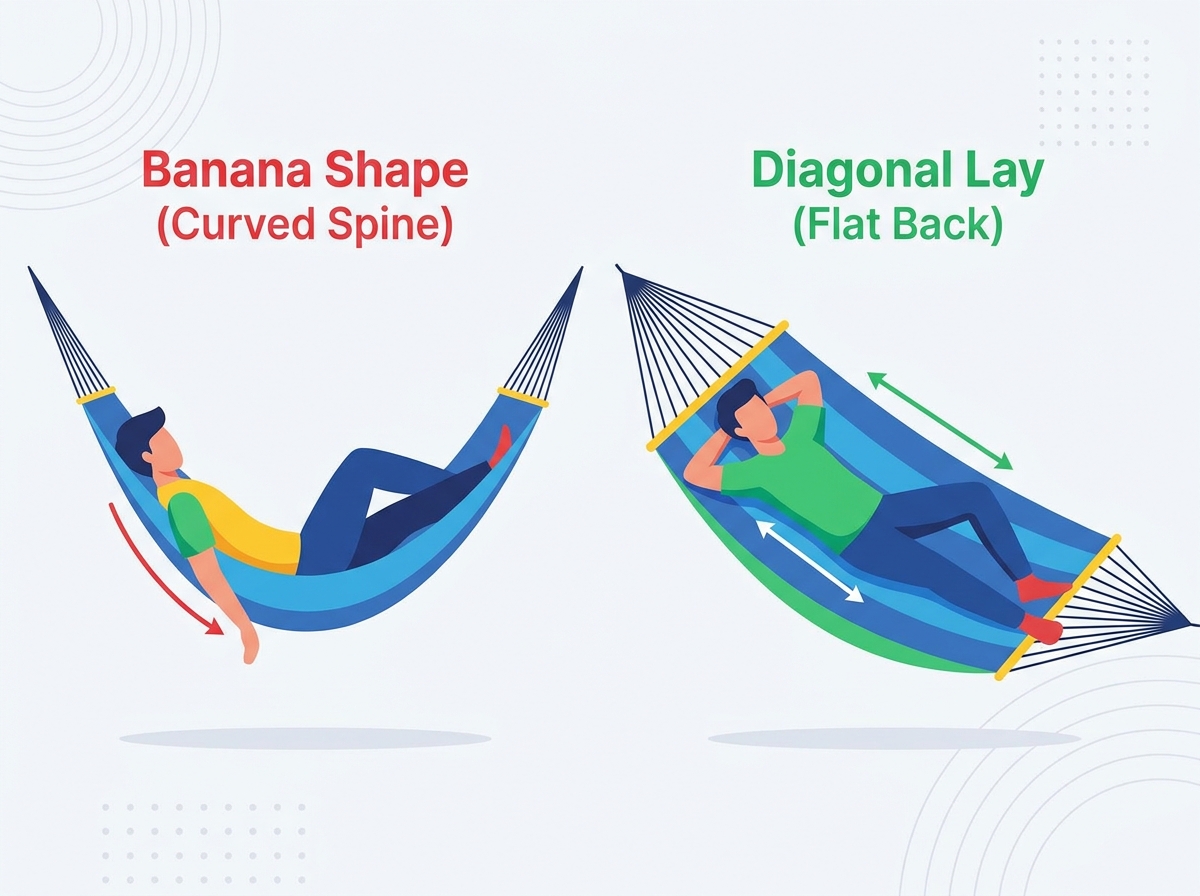
Outline the ergonomic success criterion—a high-quality Brazilian double hammock allows the user to lie diagonally, resulting in a flat back rather than a curved "banana" shape. Beginners often try to sleep straight down the middle. This forces your body into a U-shape, which strains the lower back. The correct method involves lying diagonally across the center axis. When you angle your body, the excess width spreads open. The tension creates a surprisingly flat surface. This posture aligns your spine properly. It delivers the deep, restorative sleep historically associated with traditional hammock cultures. You cannot achieve this flat lay without ample fabric width.
![Brazilian double hammock]()
Core Evaluation Dimensions: Fabric, Weave, and Climate Fit
Your climate and intended usage location should dictate your fabric choice. Selecting the wrong material guarantees frustration. Natural fibers offer unmatched luxury but demand rigorous care. Synthetic blends sacrifice some softness for weather endurance. Let us evaluate the three primary categories available on the market today.
100% Woven Cotton
Cotton remains the historical standard for a reason. It provides maximum breathability and the softest texture available. The natural fibers stretch slightly, molding perfectly to your unique body shape over time.
- Pros: Maximum breathability, softest texture, molds to the body perfectly. It feels luxurious against bare skin.
- Cons: Highly susceptible to mold, mildew, and sun-fading. Cotton acts like a sponge in high humidity.
- Best for: Indoor sleeping, covered porches, or users willing to store it after each use. You should never leave it exposed to rain or morning dew.
Poly-Cotton Blends (Often 65% Cotton / 35% Polyester)
Manufacturers created these blends to solve the fragility of pure cotton. They mix synthetic strength into the weave. This creates a highly versatile option for casual outdoor users.
- Pros: Retains most cotton comfort while adding tensile strength and UV resistance. It shrinks significantly less when washed. The colors remain vibrant much longer.
- Cons: Slightly less breathable in extreme heat. The synthetic fibers trap more body heat during sweltering summer afternoons.
Performance/Weather-Safe Fabrics
Premium outdoor setups often utilize solution-dyed acrylics or specialized marine-grade synthetics, such as Sunbrella fabrics. These are engineered for permanent outdoor installation.
- Pros: Can be left out in rain and direct sunlight without rotting or immediate fading. They dry incredibly fast.
- Cons: Stiffer out of the box, requiring a break-in period. They also command a significantly higher price point.
Thread Density & Fringe (Macramé)
Thread density directly impacts ergonomic support. Tighter weaves yield better back support. They prevent the fabric from sagging unevenly under your body weight. You should look for tightly woven, opaque fabrics rather than loose, net-like constructions. Traditional handmade fringes, known as varandas, hang from the sides. These are primarily aesthetic additions. However, they strongly indicate authentic craftsmanship. Cheap knockoffs rarely feature hand-tied macramé fringes.
| Fabric Type | Durability | Breathability | Ideal Location | Maintenance Level |
| 100% Woven Cotton | Low (Outdoors) | Very High | Indoors / Covered | High |
| Poly-Cotton Blend | Medium | Medium-High | Patios / Temporary Outdoor | Medium |
| Solution-Dyed Acrylic | Very High | Medium | Permanent Outdoor | Low |
Sizing Metrics: Bed Dimensions vs. Total Length
Many buyers assume sizing only relates to how many people fit inside. This is a crucial mistake. Sizing directly dictates individual comfort. Navigating the confusing terminology around dimensions is essential for a successful setup. You must understand the difference between the resting area and the suspension hardware.
Bed Length vs. Total Length
Clarify the distinction between these two critical measurements. The bed length is the actual woven fabric where your body rests. A bed length of 8 feet is standard for most adult models. However, the total length includes the suspension strings, known as clews, extending from both ends. The total length often exceeds 12 feet. When you plan your hanging space, you must use the total length measurement. Ignoring the clews will leave you with a setup that simply does not fit.
Width Requirements
Width is arguably the most important metric for comfort. A true Brazilian double should have a bed width of at least 59 to 65 inches. Anything narrower restricts your movement. It prevents you from achieving the necessary ergonomic angles. Narrow beds force you to sleep parallel to the center line.
Why Solo Sleepers Need a Double
Emphasize that the extra width is what enables the flat, diagonal lay. You might think a single size is fine if you sleep alone. However, single sizes often force immediate shoulder squeeze. The fabric wraps too tightly around your upper body. A double size provides the excess material needed to push the sides away. It allows you to stretch out completely flat. Buying a double is rarely about fitting two people. It is entirely about maximizing solo comfort.
Weight Limits
Advise buyers to verify a minimum capacity of 450 lbs. You should caution against cheap models that claim to be a double size but cap at 300 lbs. A low weight capacity indicates weak suspension strings or a loose weave. Over time, these cheap materials stretch unevenly. They will eventually tear under normal use. A verifiable 400 to 500 lb capacity serves as a strong indicator of overall structural integrity. Always check the manufacturer's load rating before purchasing.
- Check the stated total length, ensuring it includes the clews.
- Verify the fabric width is at least 59 inches.
- Confirm the weight capacity exceeds 400 lbs.
- Measure your intended hanging space to guarantee clearance.
Implementation Risks: Stands, Hardware, and Suspension
Purchasing the correct material and size is only half the battle. Suspension represents the highest friction point for most users. Improper hanging techniques ruin the experience entirely. You must respect the geometry of tension to achieve optimal comfort. Let us address the most common setup failures and how you avoid them.
The 9-Foot Stand Problem
Address the most common buyer pitfall. Many people purchase a popular 9-foot space-saving stand, such as the Vivere models. They then attempt to hang a 12-foot Brazilian double hammock on it. This results in bottoming out. Your hips will physically touch the metal base. Unless the hammock strings are doubled over, or the stand hooks are aggressively adjusted, it will not work. Wrapping strings around the frame causes rapid friction wear. If you own a traditional 12-foot model, you generally need a 14-foot stand or a dedicated wall setup.
Optimal Hanging Distance and Height
Provide the baseline metric for a safe, comfortable installation. You cannot guess these measurements. Anchor points should typically be 10 to 12 feet apart. If your trees or posts are further apart, you will need suspension straps or chains to bridge the gap. Furthermore, your anchor height should be around 4 to 5 feet off the ground. If you hang it higher, getting in becomes dangerous. If you hang it lower, you risk scraping the ground when the fabric inevitably stretches.
The 30-Degree Angle Rule
Explain that the suspension lines should sit at roughly a 30-degree angle from the anchor. This ensures the right amount of sag. The empty bed should look like a smiling face, not stretched tightly in a straight line. Pulling it completely taut is a massive mistake. A tight line drastically increases the shear force on your anchor points. It also eliminates the slack required to lie diagonally. A 30-degree angle perfectly balances load distribution and ergonomic sag.
Hardware Setup
Highlight safe mounting practices for indoor use. You must attach hardware securely to structural framing. Use joist-mounted heavy-duty eye bolts. Alternatively, purchase specialized wall anchors designed specifically for dynamic human weight.
- Never use standard drywall anchors or picture-hanging hooks.
- Always drill into solid wood studs or ceiling joists.
- Use a stud finder to guarantee you hit the center of the wood.
- Inspect your eye bolts annually for signs of bending or metal fatigue.
Decision Framework: Shortlisting Your Ideal Setup
You now understand materials, sizing, and suspension mechanics. The final step is matching these elements to your specific lifestyle. Different environments demand entirely different configurations. Use this framework to narrow down your options efficiently.
For the Permanent Outdoor Lounger
If you plan to leave your setup outside all summer, durability is your top priority. Prioritize solution-dyed acrylic or robust poly-blend fabrics. Pair this material with a dedicated 14-foot steel or treated wooden arc stand. This combination withstands sudden rainstorms and intense UV exposure. You avoid the daily chore of carrying heavy fabric in and out of the house. Just ensure you wipe down the metal stand occasionally to prevent rust at the joints.
For the Indoor Sleep Replacement
If you intend to sleep in it every night, comfort reigns supreme. Prioritize 100% hand-woven cotton. It breathes beautifully and conforms to your spine. Factor in wall-anchor installation costs early in the process. You must ensure the chosen room has at least 11 feet of clearance between the mounting walls. This permanent indoor setup requires careful measurement, but it delivers unparalleled sleep quality free from pressure points.
For the Portable/Occasional User
If you want to take your setup to parks or move it around the patio, prioritize convenience. Opt for a poly-cotton blend. It offers a great balance of comfort and resilience. Pair it with a quick-assemble 9-foot stand. However, set your expectations accordingly. Tension adjustments will absolutely be required for clearance. You may need to purchase a specifically designed "short" model to prevent bottoming out on a compact frame.
Conclusion
Investing in a high-quality gathered-end design is an investment in your daily ergonomic comfort. It offers a superior relaxation experience compared to rigid, unstable alternatives. By focusing on wide dimensions, you unlock the secret of the flat, diagonal lay. This transforms a simple backyard accessory into a genuine therapeutic tool.
Always match your chosen fabric to the environment. Pure cotton belongs indoors or on covered porches, while synthetics rule the backyard. Finally, rigorously measure your intended hanging space before purchasing anything. Confirm your anchor points can accommodate a 12-foot span. By following these steps, you avoid suspension issues and guarantee years of comfortable lounging.
FAQ
Q: Can two people comfortably sleep in a Brazilian double hammock all night?
A: While it easily supports the combined weight, gravity inevitably pulls both sleepers toward the center. This causes you to bump into each other. It is excellent for tandem lounging, reading, or naps. However, overnight sleeping is usually best done solo to maintain proper spinal alignment.
Q: How do I wash a Brazilian hammock?
A: You should hand wash it in a bathtub using a mild detergent. Alternatively, use a washing machine on the delicate cycle. Place the entire hammock inside a large pillowcase and tie it shut. This prevents the suspension strings from tangling permanently. Never use a machine dryer; always hang it to air dry.
Q: Why is my hammock stretching and hitting the ground?
A: Natural cotton fibers stretch up to 15% during the first few uses. This "break-in" period is completely normal. It simply requires you to tighten the suspension chains or adjust the straps after a few days. Once fully stretched, the fabric will stabilize and retain its shape.
Q: Do I need a special stand for a Brazilian hammock?
A: Yes, ideally you need a stand that is 12 to 15 feet long to accommodate the total length. Universal 9-foot space-saving stands require significant modifications, wrapped strings, or a specifically designed "short" hammock to prevent your body from resting on the metal base.