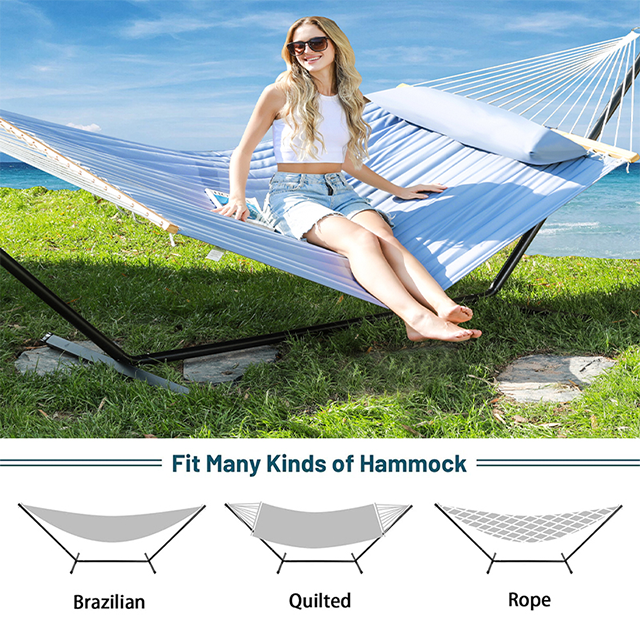
Deciding between a steel frame and a wooden base goes beyond basic aesthetics. It fundamentally dictates where you relax, the maintenance you perform, and the ultimate longevity of your setup. Many buyers quickly purchase a stand without evaluating the physical footprint. They often underestimate seasonal storage demands and regional weather impacts. We frame this comparison around lifecycle effort, assembly realities, and environmental wear. Neither material is flawless. The correct choice depends strictly on your personal constraints regarding space, climate, and portability.
In the sections below, we explore usage scenarios, durability metrics, and essential sizing logistics. You will learn how to evaluate material pros and cons accurately. Understanding these differences helps you avoid premature hardware failure. Our guide ensures you select the perfect foundation for your relaxation needs.
Key Takeaways
- Steel Hammock Stands offer rapid assembly, high portability, and lower upfront costs, making them ideal for dynamic outdoor spaces, renters, or frequent movers.
- Wooden stands provide exceptional architectural appeal and superior stability in high winds, serving best as permanent fixtures in curated backyard landscapes.
- Maintenance dictates lifespan: Steel requires touch-up paint at friction points to prevent rust; wood demands annual sanding and sealing to prevent rot and splintering.
- Sizing parameters vary: Wooden stands typically have fixed anchor points, while steel models often feature adjustable hooks to accommodate various hammock lengths.
Framing the Decision: Usage Scenarios and Environment
Before selecting a material, you must assess your exact outdoor environment. A stand operates as a substantial piece of furniture. It requires dedicated square footage and clear operational boundaries.
We recommend establishing your baseline requirements first. Evaluate the physical footprint you have available. Think about how often you intend to move the unit. You must ask yourself specific questions about your daily usage habits.
- How much open space exists on your patio or lawn?
- Will you move the frame frequently to follow the sun?
- Do you have indoor storage space for winter months?
Climate considerations play a massive role in material longevity. Regional humidity levels accelerate metal oxidation. Coastal salt air quickly degrades budget powder coatings. Winter freezing introduces unique threats to both materials. Freezing temperatures cause untreated metal joints to become brittle. Similarly, freeze-thaw cycles force unprotected wood grain to expand. This expansion creates dangerous micro-cracks along the structural beams.
Storage constraints often blindside new buyers. You must evaluate your capacity for winter breakdown. A standard metal frame easily breaks down into a compact carrying case. You can slide it into a hallway closet. A wooden arc stand tells a completely different story. It demands a dedicated shed or garage space. Wooden beams do not collapse efficiently. They consume significant floor space even when disassembled.
![Steel Hammock Stand]()
Evaluating the Steel Hammock Stand: Pragmatism and Portability
For many outdoor enthusiasts, a Steel Hammock Stand delivers unmatched convenience. It prioritizes function over form. This pragmatism appeals heavily to modern buyers.
Pros (Features-to-Outcomes)
- Mobility: Lightweight tubular construction allows for easy relocation. You can drag it from the sunny lawn to the shaded patio effortlessly.
- Tool-less Assembly: Push-button mechanisms mean setup takes minutes. Simple bolts lower adoption friction. You avoid complex instruction manuals entirely.
- Adjustability: These models frequently incorporate multi-hole tracks. They fit hammocks ranging from 9 to 14 feet. You can swap fabrics whenever you please.
Cons (Risks & Realities)
- Corrosion vulnerability: Heavy-duty powder coating eventually chips at the joints. Leaving the frame in damp grass introduces aggressive rust.
- Aesthetic limitations: The industrial look feels out of place sometimes. It rarely blends seamlessly into premium patio furniture collections.
- Weight limitations: Entry-level models wobble under maximum dynamic loads. They may bend slightly if you drop into the fabric too quickly.
We can identify a clear ideal buyer profile here. Campers, renters, and pragmatic shoppers benefit most. If you store your outdoor gear indoors during winter, this material suits you perfectly. It handles frequent relocation beautifully. The modular nature supports a highly dynamic outdoor lifestyle.
Evaluating the Wooden Hammock Stand: Stability and Aesthetics
Wooden frames represent the pinnacle of outdoor luxury. They anchor a backyard landscape beautifully. They transform an empty lawn into a curated relaxation destination.
Pros (Features-to-Outcomes)
- Architectural integration: Larch, cypress, and teak naturally complement outdoor landscapes. They age gracefully alongside garden foliage.
- High-wind stability: Heavy base weight prevents tipping during severe weather. Abrupt user movements rarely destabilize these massive structures.
- High load capacity: Solid laminated wood beams support higher weight thresholds safely. They easily accommodate two adults without flexing.
Cons (Risks & Realities)
- Labor-intensive upkeep: Wood requires periodic oiling and staining. Varnishing prevents UV degradation and moisture rot. You must commit to this chore annually.
- Immobility: Once assembled, moving a heavy wooden arc requires two people. You cannot easily drag it across your yard alone.
- Higher initial investment: Material density increases manufacturing and shipping costs. You pay a premium for the architectural footprint.
The ideal buyer profile leans toward permanence. Homeowners owning permanent decks fit this category best. High-end design preferences dictate this purchase. You must show a willingness to perform routine wood maintenance. If you envision a permanent outdoor oasis, wood delivers incredible visual impact. Just prepare yourself for the inevitable upkeep.
Head-to-Head Durability and Maintenance Realities
Every outdoor furnishing faces a strict lifespan equation. We must compare rust against rot. You must understand where structural degradation begins for each material.
Let us examine the reality of steel joint friction. Metal-on-metal contact strips away protective paint. Rust inevitably begins at these exposed friction points. Conversely, look at the reality of wood micro-cracking. Sun exposure dries out timber surfaces. Small fissures form along the grain. Rainwater penetrates these cracks, accelerating internal rot. Both materials face formidable environmental enemies.
Long-term structural integrity relies heavily on preventative care. UV rays weaken cheap plastic end-caps on metal frames. Broken caps allow rainwater to pool inside the hollow tubes. This causes catastrophic internal rusting. Wooden bases face an entirely different threat. Ground contact rots wooden bases rapidly. Wet soil acts as a sponge, feeding moisture directly into the timber.
Maintenance SOPs Comparison
| Maintenance Aspect | Metal Frame Requirements | Wooden Arc Requirements |
| Annual Inspection | Check welds and structural joints for rust spots. | Inspect base beams for micro-cracks and rot. |
| Surface Treatment | Apply clear-coat or rust-inhibitor to deep scratches. | Sand topcoat; apply marine spar varnish or timber oil. |
| Hardware Care | Utilize silicone spray on moving hooks and chains. | Tighten all galvanized bolts; check for wood shrinkage. |
| Ground Contact | Keep plastic end-caps intact to prevent internal water pooling. | Keep the base elevated off wet soil using stone pavers. |
You cannot ignore these standard operating procedures. Neglect guarantees a shortened product lifespan. Following these specific steps protects your investment across multiple seasons.
Rollout Logistics: Assembly, Footprint, and Sizing
You must match your hammock to your stand correctly. A beautiful frame holds no value if it cannot suspend your fabric properly. We utilize a straightforward mathematical formula for suspension. Your stand length should ideally measure two feet longer than your hammock's total length. This measurement includes the end loops.
If you own a 10-foot fabric bed, you need a 12-foot frame. This formula ensures optimal tension. It provides the ideal gentle curve required for ergonomic support. Too much tension makes the bed feel like a trampoline. Too little tension causes your back to drag along the central base bar.
Delivery and setup experiences contrast sharply between materials. Unboxing a compact metal unit feels manageable. The 30-pound box arrives easily on your porch. You unpack it, snap the tubes together, and finish in ten minutes. Receiving large, curved wooden beams feels like a construction project. Delivery drivers drop off massive, heavy crates. You need socket wrenches. You absolutely need two people to align the heavy laminated beams safely.
We must address the assumption regarding year-round outdoor placement. Many buyers assume they can leave their setup outside permanently. We provide transparent warnings against this practice. You should never leave either material fully exposed to winter elements. Snow and freezing rain destroy structural integrity rapidly. If you insist on outdoor winter storage, you must invest in a high-quality, breathable weather cover. A proper cover blocks moisture while preventing condensation buildup.
Shortlisting Logic: Making Your Final Decision
Reaching a final decision requires honest self-reflection. You must balance your aesthetic desires against your logistical realities. We developed a straightforward logic matrix to help you choose.
First, evaluate your financial flexibility and mobility needs. If you require maximum portability and prefer an economical solution, proceed with a powder-coated Steel Hammock Stand. It handles frequent relocation perfectly.
Second, assess your architectural goals. If aesthetic integration remains your absolute priority, proceed with a treated Larch or Cypress model. The visual warmth of timber justifies the extra effort required.
Third, respect your local climate. If you live in a highly corrosive coastal area, you face extreme challenges. You should pivot to aluminum options if available. If you choose a traditional metal model, you must commit to strict indoor storage. Otherwise, opt for treated wood featuring marine-grade stainless steel hardware.
Decision Matrix Chart
| Primary User Priority | Recommended Material | Key Trade-Off |
| Frequent Yard Relocation | Tubular Metal | Industrial aesthetic |
| Permanent Backyard Feature | Laminated Wood | Immobility & weight |
| Harsh Coastal Climate | Treated Wood / Aluminum | Intensive annual sealing |
| Apartment / Renter Storage | Tubular Metal | Potential joint rusting |
Your immediate next-step action involves a tape measure. You must measure the exact length of your current hammock. Pull it taught and measure from end-loop to end-loop. Never finalize a frame purchase until you confirm these precise physical dimensions.
Conclusion
Finding the perfect support frame remains a highly contextual process. A metal base wins decisively regarding modularity and daily convenience. Wood completely dominates categories concerning permanence, stability, and architectural beauty. Your unique outdoor space dictates the ultimate winner.
Please remember that ignoring routine maintenance guarantees failure. Both materials require seasonal attention. You must touch up chipped paint on metal joints. You must seal wooden beams against UV rays. Proper care extends the functional life of your purchase significantly.
We strongly recommend verifying all weight capacities before placing an order. Double-check your fabric measurements against the manufacturer's clearance guidelines. Taking these final precations ensures a flawless, relaxing outdoor experience.
FAQ
Q: Can I leave a steel hammock stand outside all year round?
A: We strongly advise against leaving it fully exposed year-round. Continuous exposure to rain and snow accelerates joint rusting. Moisture sneaks into the hollow tubes, causing internal corrosion. If you must keep it outside during winter, disassemble it or use a high-quality, breathable weather cover to block moisture.
Q: Do wooden hammock stands require a specific type of hammock?
A: Yes, frame design dictates compatibility. Spreader-bar hammocks require a taut suspension and work best with flat or slightly curved frames. Traditional gathered-end hammocks need more vertical clearance. Always check the internal distance between the wooden anchor points to ensure your specific fabric bed hangs at the correct ergonomic curve.
Q: How much weight can a standard steel hammock stand hold compared to wood?
A: Industry benchmarks show metal frames typically support between 300 and 450 pounds. Premium wooden arc frames generally feature higher capacities, often supporting 400 to over 500 pounds safely. Laminated timber provides immense structural rigidity. Always verify the manufacturer's specific dynamic load rating before use.
Q: How do I stop my metal hammock stand from rusting at the joints?
A: Preventative maintenance stops rust early. We recommend installing nylon washers between metal contact points to reduce friction. You should apply clear nail polish or automotive touch-up paint over any visible scratches. Always store the unit in a dry environment during heavy rain seasons to prevent standing water damage.