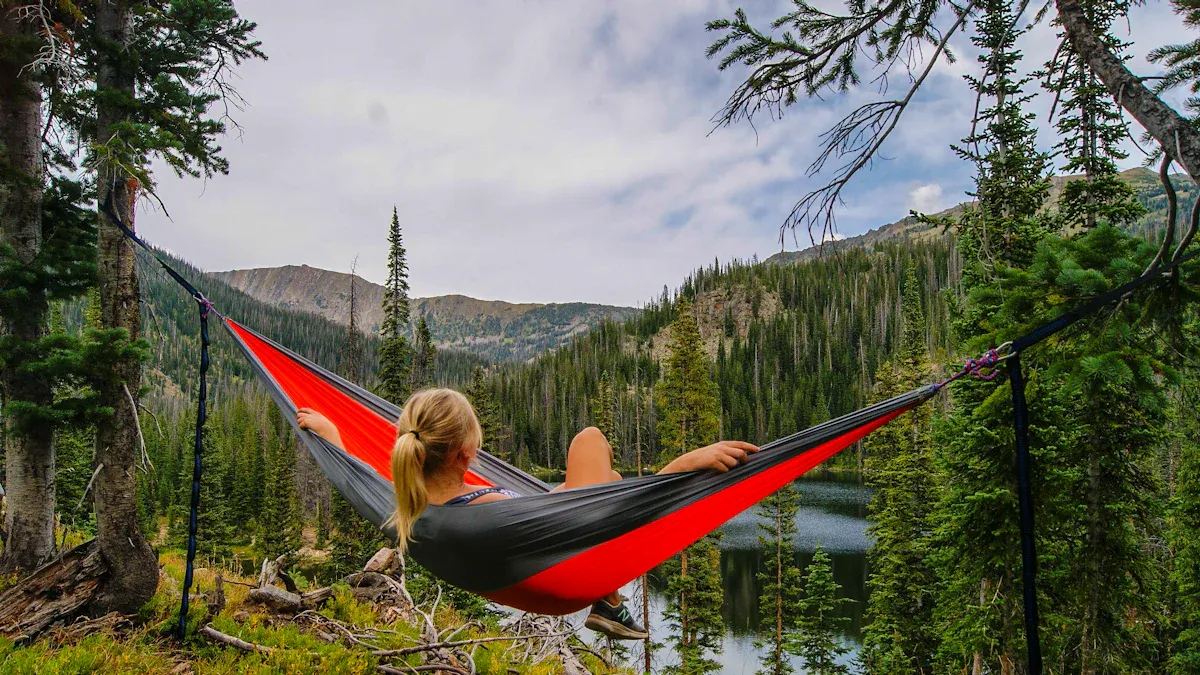
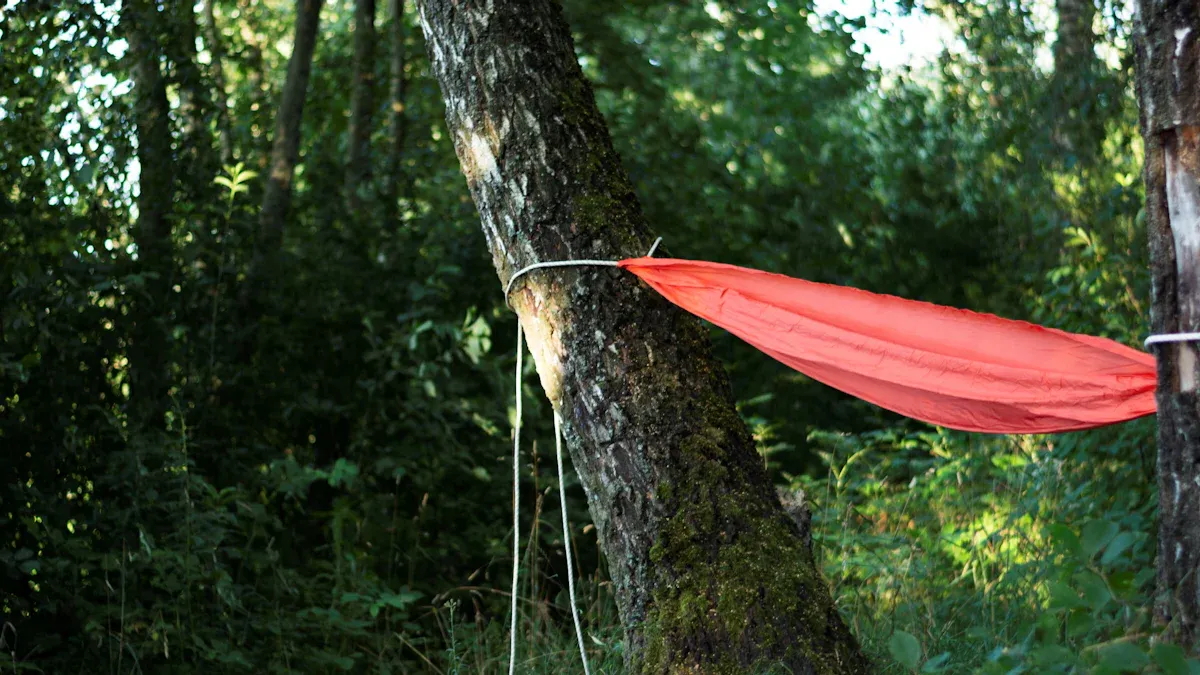
The best Outdoor Hammock for trees gives you a comfortable spot to relax outside. You want a hammock that fits your space and matches your plans, whether you’re camping or just enjoying your backyard. Think about how easy it is to set up, how strong the fabric feels, and how safe you feel when you use it. You should also check your trees. Oak, maple, and sycamore trees have sturdy branches and provide good support. Here’s a quick look at common tree choices:
Tree | Height Range | Branch Strength | Care Tip |
Oak | 50–70 ft | Sturdy | Water young trees |
Maple | 30–100 ft | Flexible | Prune regularly |
Sycamore | Up to 100 ft | Thick | Offers lots of shade |
Key Takeaways
Choose strong, healthy trees for your hammock. Look for mature trees with thick trunks and avoid those with damage.
Select the right hammock size based on your needs. Single hammocks are great for solo use, while double hammocks offer more space for sharing.
Pay attention to the hammock's fabric. Cotton is soft, polyester is durable, and nylon is lightweight and quick-drying.
Use wide straps to protect tree bark and ensure safety. Aim for straps that are at least 1 inch wide to avoid damaging the trees.
Consider essential accessories like bug nets and rain tarps. These add-ons enhance comfort and protect you from the elements.
How to Choose a Hammock
![How to Choose a Hammock]()
When you start thinking about how to choose a hammock, you want to make sure you get the right fit for your outdoor space and your comfort. Picking the perfect hammock means looking at size, capacity, and the style that matches your plans. Let’s break down what you need to know.
Size and Capacity
You might wonder, does size really matter when you’re picking a hammock? The answer is yes. The size and weight capacity of a hammock affect both comfort and safety. If you plan to relax solo, a standard hammock usually supports between 200 and 300 pounds. If you’re heavier or want to share your hammock, look for models designed for higher weight limits. Here’s what you should keep in mind:
Standard hammocks support 200 to 300 pounds.
Some hammocks are built for heavier users and can hold over 400 pounds.
Always choose a hammock with a weight limit at least 50 pounds above your own weight.
Larger hammocks, designed for multiple users, can support 500 to 800 pounds, making them great for families or groups.
Tip: If you want extra peace of mind, check the manufacturer’s recommendations and look for reinforced seams and quality materials.
Single vs. Double Hammocks
You might ask, should you go for a single or double hammock? The answer depends on how you plan to use it. Here’s a quick comparison to help you decide:
Feature | Single Hammock | Double Hammock |
Width | ~4–5 ft | ~5.5–6.5+ ft |
Weight Capacity | ~300–400 lbs | ~400–500+ lbs |
Ideal Use | Solo napping, backpacking, quick setups | Solo lounging with space or 2-person lounging/sharing |
Portability | Extremely lightweight; minimal pack size | Slightly heavier; larger pack volume |
Comfort | Snug fit; may feel cocoon-like | More room to move; reduces cocoon effect |
Setup Complexity | Straightforward; quick to hang | Similar but may need more adjusting |
Best For | Minimalist campers, travelers, small yards | Car campers, couples, families, big backyards |
Durability | Great if from a reputable brand; thinner material | Thicker fabric, reinforced seams, higher durability |
Cost | Generally cheaper than doubles | Slightly pricier (more material + capacity) |
Sharing | Not ideal for two adults to overnight | Works for short periods; cramped for sleeping |
Single hammocks are perfect for solo adventures. They’re light and easy to carry. Double hammocks give you more space and comfort, especially if you want to lounge with a friend or stretch out overnight. If you’re planning to camp with family or want extra room, a double hammock is a smart choice.
Length and Width Tips
When you’re figuring out how to choose a hammock, pay attention to the length and width. These measurements make a big difference in how comfortable you feel. A larger hammock lets you move around and stretch out. If you toss and turn or have broad shoulders, look for a hammock that’s at least 5.5 to 6.5 feet wide. Extra-large hammocks, up to 7 feet wide and 14 feet long, offer maximum relaxation and stability for groups.
Wider hammocks (5.5 to 6.5 feet) give you more space to move.
Single hammocks, usually 4 to 5 feet wide and 9 to 10 feet long, work well for solo use but might feel snug for bigger users.
Larger hammocks (12 to 14 feet long) are best for sharing or for those who want to stretch out fully.
Note: If you want the most comfort, choose a hammock that matches your height and sleeping style. Bigger isn’t always better, but a little extra space can make your outdoor nap much more enjoyable.
Choosing the right hammock means thinking about your needs, your space, and how you want to relax. Hammock Leisure Products (Zhejiang) Co., Ltd. offers a wide range of options, so you can find the perfect hammock for your next adventure.
Outdoor Hammock for Trees: Key Features
When you look for the best outdoor hammock for trees, you want to know what makes each hammock stand out. At Hammock Leisure Products (Zhejiang) Co., Ltd., we focus on quality control and material selection to make sure you get a hammock that lasts. You can explore our full range here: Outdoor Hammock Collection.
Fabric Types: Cotton, Nylon, Polyester
Choosing the right fabric for your outdoor hammock for trees is important. Each material has its own strengths:
Cotton: You get soft comfort and great breathability. Cotton hammocks, like our Cotton Hammock and Rope Hammock, feel cozy but need protection from rain and sun.
Polyester: This fabric is tough and resists mold, mildew, and UV rays. Our Quilted Hammock and Quick Dry Textilene Hammocks use polyester for extra durability outdoors.
Nylon: Nylon hammocks are lightweight, strong, and quick-drying. If you want a hammock for camping or hiking, our Nylon Hammock is a smart choice.
Tip: Parachute nylon stands out for weather resistance. It dries fast and resists mold, making it perfect for humid or rainy areas.
Durability and Weight Limit
You want your outdoor hammock for trees to be safe and sturdy. Here’s a quick look at what matters most:
Feature | Description |
High-Quality Material | Ripstop nylon or polyester supports higher weight limits. |
Reinforced Construction | Double-stitched seams and strong anchor points boost durability. |
Robust Suspension System | High-strength straps and carabiners keep your hammock secure. |
Recommended Weight Limits | Single hammocks: up to 400 lbs; double hammocks: 500+ lbs. |
If you need a custom size or color, I offer free customization to match your style and needs.
Comfort and Breathability
You want your outdoor hammock for trees to feel good in any weather. Breathable fabrics and smart designs help you stay cool. Cotton and technical nylon offer airflow and softness. Wider hammocks let you lie flat and relax. Our Bear Butt-style nylon hammock feels soft, dries quickly, and stays comfortable even on hot days.
Note: If you want a hammock that fits your outdoor lifestyle, choose the right fabric and size. I can help you customize your hammock for maximum comfort.
Suspension & Accessories
When you set up your hammock between trees, you want a system that is safe, easy, and gentle on nature. The right suspension and accessories make all the difference for your outdoor hammock experience.
Tree Straps and Suspension Systems
What should you look for in tree straps and suspension systems? You want something strong, simple, and tree-friendly. Here are some top choices:
Nylon straps: These are affordable and stretch a bit, but they can feel bulky.
Polyester straps: These last a long time and hold up well outdoors.
UHMWPE or Dyneema straps: These cost more, but they are super strong and resist UV rays.
You can pick single-layer straps for a lightweight hammock setup or double-layer straps if you want more loops and easy adjustments. Some hammock users love tree straps with a whoopie sling because they are light and quick to connect.
Tip: Wide straps protect tree bark and help keep your hammock secure. Always check that your straps are at least 1 inch wide.
Different suspension systems, like the Stationary Rope System, make setup fast and safe. This system spreads the weight across the tree, so you protect both your hammock and the tree.
Carabiners and Connection Points
How do you make sure your hammock stays put? You need the right carabiners and strong connection points. Here’s what to consider:
Types: Locking, non-locking, lightweight, or heavy-duty carabiners.
Weight rating: Choose carabiners that can hold at least three times your body weight.
Material: Aluminum and steel are both strong and light.
Gate type: Locking gates add extra safety, especially if you use your hammock often.
Note: Never overload your carabiner or use a weak anchor point. Take your time with setup to avoid mistakes.
The material and design of your carabiner matter. Aluminum and steel give you strength and durability. Locking designs, like screw-lock or auto-lock, keep your hammock safe by stopping accidental openings.
Essential Add-ons: Bug Nets, Rain Tarps, Underquilts
What accessories do you need for your hammock? The right add-ons help you stay comfortable in any weather.
Bug net: Keeps mosquitoes and bugs away, especially in summer.
Rain tarp: Shields you from rain and wind, so you stay dry.
Underquilt: Adds warmth under your hammock, which is better than a sleeping pad for cold nights.
Each of these accessories helps you enjoy your hammock, no matter the season or weather. You can relax, sleep, or read in comfort, knowing you have the right gear for your outdoor hammock adventure.
Hammock Sleep Systems
When you plan to sleep outdoors, you want a hammock sleep system that matches your style. You can pick between integrated and modular setups. Each type has its own benefits, so let’s see how they compare.
Integrated vs. Modular Setups
You might wonder what makes an integrated hammock system different from a modular one. An integrated system comes with built-in features like bug nets and rainflies. You get everything in one package, which makes setup quick and easy. You just hang your hammock, zip up the net, and relax.
A modular hammock system lets you choose each part. You can add or remove accessories like bug nets, rain tarps, or underquilts. This gives you more control over your setup. If you want to camp in different weather or locations, a modular system lets you adjust your hammock for each trip.
Here’s a quick table to help you compare:
Feature | Integrated Systems | Modular Systems |
Setup Convenience | Streamlined with built-in features like bug nets and rainflies | Customizable setups tailored to specific needs |
User Satisfaction | High due to ease of use and convenience | High among users who prefer tailored solutions |
Versatility | Limited to built-in features | High, with options for various add-ons and accessories |
Pros and Cons for Camping Styles
When you use a hammock for camping, you get some great benefits:
You can set up your hammock almost anywhere with trees, even on rocky or wet ground.
Sleeping in a hammock feels more comfortable than sleeping on the ground. Many people say they sleep better, especially if they lie diagonally.
You save time because a hammock sets up fast.
You protect nature by not crushing plants or grass.
You get more space for your gear and cooking.
But there are a few things to keep in mind:
You need strong trees to hang your hammock. Some places may not have the right trees.
Most hammock sleep systems work best for one person.
Some setups can be a bit heavier than ground tents.
Sharing a hammock overnight is not easy for two people.
If you want comfort, quick setup, and the freedom to camp in many places, a hammock sleep system is a smart choice. You can pick the style that fits your needs and enjoy every outdoor adventure.
Setup Tips for Trees
![Setup Tips for Trees]()
Setting up your hammock between trees can be simple and safe if you follow a few key tips. Let’s walk through how to pick the right trees, get the best hanging height and angle, and protect both yourself and the trees.
Choosing the Right Trees
You want to start your hammock setup by picking strong, healthy trees. Not every tree is a good choice. Here’s what you should look for:
Choose mature trees with a trunk at least 6 inches thick.
Check that the trees are healthy. Avoid any with rot, disease, or bug damage.
Skip young trees and saplings. They can’t support your weight.
Stay away from trees with brittle bark or visible stress.
Healthy trees keep you safe and help your hammock last longer. Always take a minute to inspect before you hang.
Hanging Height and Angle
Getting the right height and angle makes your hammock setup comfortable and safe. For most hammocks, you want the trees about 12 to 15 feet apart. Hang your straps 4 to 6 feet up the tree. When you sit in the hammock, the lowest part should be about 18 inches off the ground. This makes it easy to get in and out.
Aim for a 30-degree angle between the straps and the ground.
If you hang the hammock too tight, you put extra stress on the straps and trees.
A loose angle keeps the forces safe and gives you a better rest.
Tip: A 30-degree angle helps your hammock feel just right and keeps the setup safe.
Safety and Tree Protection
You want to enjoy your hammock without hurting the trees or yourself. Here’s how you can do that:
Use wide straps, at least 1 inch, but 2 inches is even better.
Pick straps made from soft materials like polyester or polypropylene.
Keep straps flat and move them each day to avoid damaging the bark.
Add padding between the strap and tree for extra care.
Always follow Leave No Trace rules. Pack out all your gear and trash. Never carve into trees or break branches.
Hammocks are great because they don’t disturb the ground or plants. Using tree-friendly straps and good habits means you can relax outdoors and leave nature just as you found it.
When you choose an outdoor hammock for trees, focus on three things: healthy, sturdy trees, the right distance between them, and checking for hazards. Match your hammock to your comfort and outdoor style. If you’re new, pick two strong trees about 12–15 feet apart, hang your straps at head height, and aim for a 30-degree angle. Quality and customization matter. Durable materials and personal touches make your hammock last longer and feel better every time you relax.
FAQ
What is the best way to hang a hammock between trees?
Pick two healthy trees about 12–15 feet apart. Wrap wide straps around each tree at head height. Clip your hammock to the straps. Aim for a 30-degree angle from the tree to the hammock.
How do I protect trees when using a hammock?
Use straps that are at least 1 inch wide. Place the straps flat against the bark. Move the straps each time you set up. This helps keep the trees healthy and strong.
Can I leave my hammock outside all the time?
You can leave your hammock outside for short periods. For longer life, store it indoors when not in use. Rain, sun, and wind can wear out even the best hammocks over time.
What accessories make hammock camping more comfortable?
Try adding a bug net, rain tarp, or underquilt. These keep you dry, warm, and bug-free. You can relax and sleep better with these simple add-ons.
How do I choose the right hammock size for me?
Check your height and weight. If you want more space, pick a double hammock. For solo use, a single works well. Hammock Leisure Products (Zhejiang) Co., Ltd. offers many sizes to fit your needs.