There is a distinct appeal to the spreader-bar-free design of a traditional resting sling. The asymmetrical sleeping capability creates a highly sought-after cocoon effect. This relaxing embrace easily outshines rigid resort hammocks or uncomfortable open-weave rope designs. However, evaluating options for a multi-person setup often feels overwhelming for outdoor enthusiasts. You must carefully distinguish between authentic, high-density weaves and cheaper, low-capacity synthetics. Inferior fabrics frequently fail or lose shape in harsh outdoor climates. We will provide an objective framework for comparing your options effectively. We draw on years of gear testing to bring you reliable, actionable insights. You will learn to evaluate fabric durability, structural integrity, and strict spatial requirements. Discover exactly what separates a fleeting purchase from a lasting backyard staple. Ultimately, you can confidently choose the perfect setup for your outdoor space.
Key Takeaways
- Sizing Reality: A "Brazilian double hammock" often translates to optimal comfort for one adult lying diagonally, or a cozy, stationary fit for two adults.
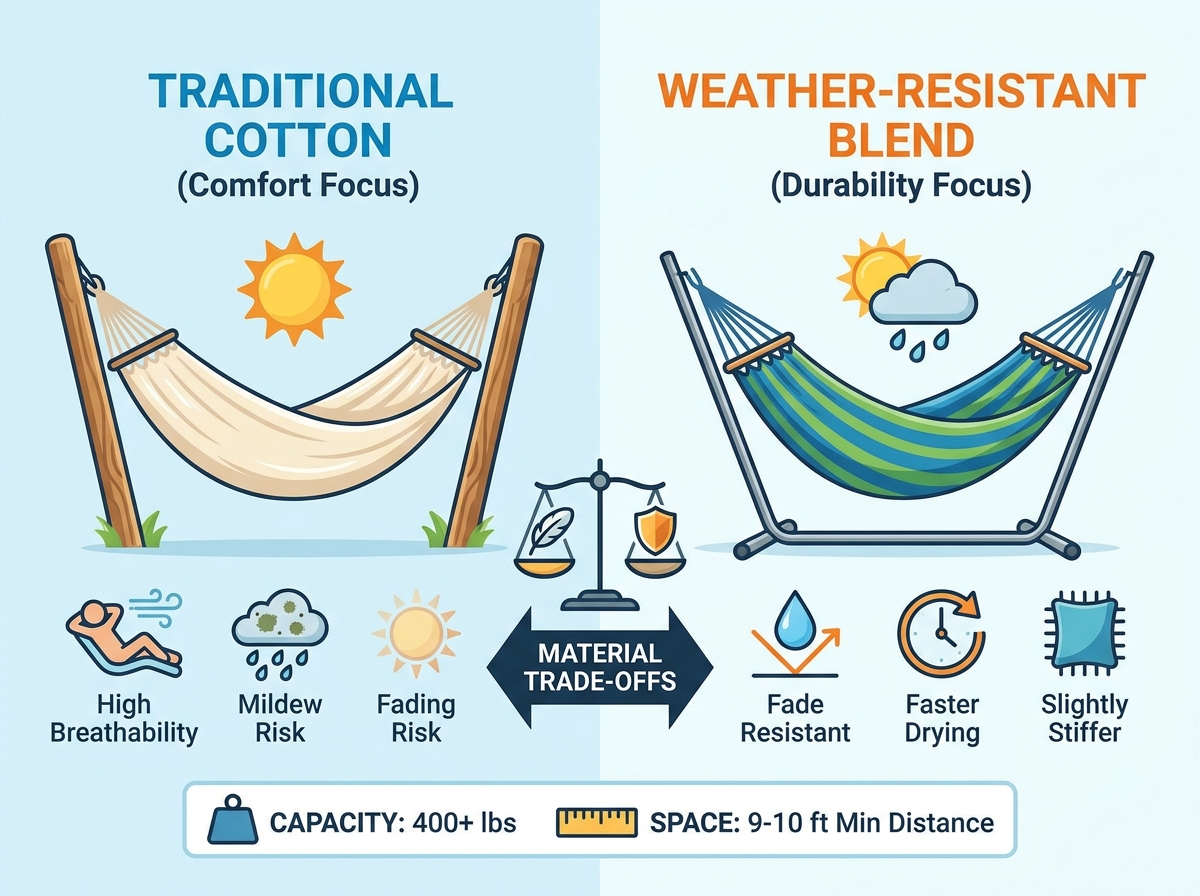
- Material Trade-offs: 100% cotton offers superior breathability and traditional comfort but requires strict weather protection; synthetic/poly-blends sacrifice slight softness for mold/mildew resistance.
- Spatial Footprint: Proper installation requires a minimum of 9 to 10 feet of distance between anchor points, with a recommended hanging height of 4 to 5 feet.
- Weight Capacity: Reliable models should securely support between 400 lbs and 450 lbs, backed by reinforced end loops (clews).
Success Criteria for Evaluating a Brazilian Double Hammock
You cannot evaluate this specific style using the same metrics as conventional patio furniture. The design deliberately omits wooden spreader bars. This omission changes the structural dynamics entirely. Understanding these dynamics helps you identify high-quality craftsmanship. You will avoid poorly constructed imitations.
The Diagonal Rest Framework
Traditional designs are engineered for a very specific resting posture. You should not lie perfectly parallel to the edges. Instead, you lie diagonally across the fabric bed. This angled position opens up the fabric. It creates a supportive, flat sleeping surface. The evaluation of a good Brazilian double hammock relies on this diagonal rest framework. A premium product supports this posture easily. It prevents excessive center sag. Inferior models force your body into a severe curve. They compress your shoulders uncomfortably. Proper tension distribution allows your spine to remain straight. This structural support makes overnight sleeping entirely possible.
Thread Density and Weave
Fabric construction dictates overall comfort. You should always examine the thread density. Tightly woven fabrics prevent painful pressure points. Open-weave rope variations often dig into bare skin. High-density cotton creates a uniform, solid surface. It distributes your body weight seamlessly. Look for color-fast threads. Fast dyes prevent premature fading under direct sunlight. High-thread-count canvas resists stretching out of shape. You will notice the fabric feels substantial. It should never feel flimsy or excessively thin. Thicker weaves block cool evening breezes. They provide excellent insulation during brisk autumn nights.
End-String Integrity
The suspension system dictates absolute safety. We refer to the collection of end-strings as clews. Thick, multi-cord suspensions are non-negotiable. They anchor the fabric bed to the hanging loop. You must inspect these cords closely. Thin cords indicate a high risk of catastrophic failure. They snap easily under a dual-load. Premium manufacturers utilize dozens of thick, reinforced cords. They interweave these cords meticulously. This complex web distributes force evenly across the entire fabric width. It reduces stress on any single point. You should demand robust end-string integrity.
Evaluation Checklist
- Verify the fabric allows for a flat, diagonal resting position.
- Inspect the material for a high-thread-count weave.
- Confirm the dyes are rated as color-fast for outdoor use.
- Count the end-strings to ensure dense, multi-cord distribution.
- Check the primary hanging loops for structural reinforcement.
![Outdoor double hammock setup]()
Material Deep-Dive: 100% Cotton vs. Weather-Resistant Blends
Material selection defines your overall outdoor experience. Fabric dictates comfort, longevity, and maintenance requirements. You must align your material choice against your specific climate reality. There is no single perfect fabric. Each option presents distinct advantages and compromises.
Traditional 100% Cotton
Cotton remains the historical gold standard. Artisans have used it for generations. It offers unmatched tactile comfort. The natural fibers breathe beautifully in hot weather.
- Pros: You experience maximum skin comfort. The material offers authentic, gentle stretch. It generates zero static electricity.
- Risks: Cotton exhibits high susceptibility to mildew. Mold grows quickly in damp environments. Sun-fading occurs rapidly if left outdoors continuously. You must take it down after each use.
We recommend pure cotton for covered patios. It performs exceptionally well in dry climates. Never leave it exposed to heavy rain.
Cotton-Polyester Blends (e.g., 65/35 mix)
Blended fabrics represent a practical modern compromise. Manufacturers weave synthetic polyester fibers into the cotton base. This technique enhances overall durability. It creates a robust hybrid textile.
- Pros: You gain increased tensile strength. The fabric provides better UV resistance. It boasts significantly faster drying times after rain showers.
- Risks: The textile feels slightly stiffer out of the box. It may retain unwanted heat in highly humid climates. The material lacks the ultimate softness of pure cotton.
Poly-blends suit casual weekend users. You can occasionally leave them outside overnight. They forgive minor weather exposure.
Performance Synthetics (Sunbrella/Solution-Dyed Acrylic)
Advanced synthetics dominate the premium outdoor market. Solution-dyed acrylics are engineered for extreme environments. The color penetrates entirely through the fiber.
- Pros: You receive true all-weather durability. The fabric is virtually fade-proof. It resists mold and mildew naturally.
- Risks: You will pay a premium price point. The texture departs from the traditional, authentic feel. It can feel somewhat slick or canvas-like.
Choose performance synthetics for permanent outdoor installations. They survive entire summers exposed to harsh elements.
| Material Type | Skin Comfort Level | Weather Resistance | Maintenance Effort |
| 100% Cotton | Exceptional | Low | High |
| Cotton-Poly Blend | Moderate | Moderate | Medium |
| Performance Synthetic | Good | Exceptional | Low |
Assessing Weight Capacity and "True" Double Sizing
Marketing terminology often misleads consumers. Brands frequently label their products casually. A "double" label does not guarantee two people will fit comfortably. You must evaluate the actual physical dimensions. You must verify structural load limits independently.
Demystifying Dimensions
Standard dimensions define a reliable two-person setup. You need substantial surface area. An authentic model typically mirrors specific bed dimensions. Look for a fabric bed measuring around 59 to 63 inches wide. The length should span between 85 and 95 inches. These dimensions provide necessary volume. Smaller measurements simply cannot accommodate two adults comfortably. Narrower beds restrict movement severely. You will feel trapped. Always check the exact fabric dimensions before purchasing.
The Weight Limit Standard
Structural integrity relies heavily on hardware and weave strength. You should establish 400 lbs as the strict baseline. This capacity supports a true two-person load safely. Dynamic weight differs from static weight. People drop into the fabric bed suddenly. They shift positions abruptly. These actions multiply the structural stress. We advise you to dismiss claims of 500+ lbs casually. Ignore these assertions if the product lacks reinforced steel hardware. Dismiss them if the design relies on thin end-cords. High capacities demand heavy-duty engineering.
The "Cocoon" Effect vs. Claustrophobia
The absence of a spreader bar creates a unique physical reaction. The fabric naturally wraps around the users. We call this the cocoon effect. It feels incredibly secure for a single occupant. However, this same effect impacts two people differently. Gravity pulls both users toward the lowest center point. You must assess the fabric width carefully. Adequate width ensures the material envelopes two people gently. It prevents the fabric from forcing them aggressively to the center. Insufficient width causes claustrophobia. It pushes shoulders together uncomfortably. Wide fabric allows you to lie diagonally together. It mitigates the intense center-gravity pull.
Best Practices for Two-Person Use
- Coordinate your movements carefully when entering the fabric bed.
- Position yourselves slightly off-center to balance the load.
- Keep the suspension tension relatively tight to minimize deep sagging.
- Expect an intimate, stationary resting experience rather than sprawling room.
Suspension and Spatial Reality: Installing in Your Outdoor Space
A premium fabric bed requires proper installation. Excellent materials fail on poorly executed anchor points. You must understand your spatial constraints realistically. Suspension physics dictate ultimate comfort.
Hammock Stand vs. Tree Suspension
You generally choose between standalone frames and natural tree anchors. Each method demands specific spatial footprints.
Stand Requirements: You will likely need a heavy-duty steel stand. Standard frames range from 9 feet to 15 feet in length. You must note the total footprint required. Patios and small decks often lack this much linear clearance. Ensure the frame utilizes a U-shape design. Space-saving stands often lack spreader-bar chains. They are specifically designed to accommodate deep, non-spreader bar sag. Look for powder-coated steel tubes. They resist rust effectively.
Tree Anchor Hardware: Natural hanging requires robust, tree-safe straps. We specify a minimum strap width of 1.5 inches. Wide straps protect delicate tree bark. Bare ropes damage trees permanently. Ropes also slip easily down the trunk. Thick polyester webbing grips bark securely. It supports heavy loads without stretching dangerously.
Clearance and Sag Assumptions
Fabric behaves predictably under tension. You must anticipate an initial break-in stretch. Cotton fibers relax significantly during the first few weeks. They elongate under body weight. We warn you to expect this natural stretching phase. You should advise setting anchors slightly higher initially. Aim for around 5 to 6 feet high on the trunk or post. This height accounts for the fabric relaxing. The lowest point should hover roughly 18 inches above the ground when occupied. You can lower the anchor points later. The material eventually stabilizes.
Safety & Compliance
Suspension hardware endures immense dynamic forces. You must prioritize safety compliance. Generic aluminum carabiners pose severe safety risks. They warp or snap unpredictably. You must use climbing-rated carabiners exclusively. Heavy-duty steel S-hooks also perform reliably. Check weight ratings on all individual hardware components. The weakest link determines your maximum safe capacity. Inspect all metal parts annually. Look for micro-fractures or deep rust.
Common Installation Mistakes
- Hanging the anchor points too close together, creating a severe U-shape.
- Using thin nylon ropes that stretch uncontrollably under weight.
- Ignoring hardware weight limits and relying on decorative hooks.
- Failing to account for the necessary 9 to 10-foot minimum distance.
How to Finalize Your Purchasing Decision
You possess the technical knowledge. You understand materials, sizing, and suspension. Now you must align these facts with your lifestyle. Rationalizing your purchase prevents buyer's remorse.
Usage Frequency Matrix
Your habits dictate your optimal purchase. Be honest about your maintenance willingness.
| Expected Usage Scenario | Primary Material Recommendation | Maintenance Strategy |
| Leaving out continuously all summer | Poly-blends or Sunbrella fabrics | Periodic rinsing, occasional scrub |
| Storing indoors after weekend use | 100% Cotton | Strict dry storage, gentle washing |
| Camping or highly portable setups | Nylon or Lightweight synthetics | Stuff-sack storage, keep away from fire |
If you plan on leaving the setup out all summer, prioritize poly-blends. Sunbrella fabrics also handle continuous exposure flawlessly. If you prefer storing it indoors after weekend use, prioritize 100% cotton. You will maximize comfort while mitigating mold risks.
Budget vs. Lifespan
You should frame this purchase as a long-term investment. Budget dictates material quality directly. Sub-$50 options generally last one or two seasons outdoors. They utilize inferior, low-density threads. The dyes fade quickly. The end-strings fray rapidly. Alternatively, $100 to $150 options offer superior value. Reputable brands back these products with verifiable warranties. They utilize thick weaves and reinforced clews. You can easily achieve a 5+ year lifespan with proper care. Spending slightly more upfront prevents frequent, frustrating replacements.
Next Steps
Action is your final requirement. You must measure your intended outdoor space today. Grab a tape measure. Measure the exact tree-to-tree distance. Measure your patio footprint precisely. Ensure you have the minimum 9 to 10 feet of linear clearance. Do this before adding a specific model to your cart. Do this before purchasing a bundled stand. Guessing dimensions usually leads to frustrating returns. Verify your spatial reality first.
Conclusion
Selecting the ideal outdoor resting setup requires objective evaluation. You must prioritize authentic, high-density weaves over purely aesthetic patterns. Strong end-cords ensure your safety far more than a beautiful color scheme. You now understand how material trade-offs impact longevity. Pure cotton provides unmatched comfort but demands strict weather protection. Synthetics offer resilience at the cost of traditional softness.
The best setup perfectly balances your climate reality with your spatial constraints. It respects the required 9-to-15-foot footprint for stands or tree anchors. It accounts for the natural break-in stretch of the fabric. It ensures adequate width to comfortably support two adults without excessive claustrophobia.
Take action today by measuring your outdoor area. Define your exact anchor points. Assess your willingness to manage fabric care. Armed with these specific measurements and preferences, you can purchase with absolute confidence. You will create a lasting, comfortable retreat in your own backyard.
FAQ
Q: Can two adults sleep comfortably in a Brazilian double hammock?
A: Yes, but it serves better for lounging. The lack of a spreader bar creates a strong center-gravity pull. Both adults will naturally slide toward the middle. It depends highly on your individual preference for overnight sleeping. Diagonal positioning helps flatten the surface, but expect close, intimate contact.
Q: Do Brazilian hammocks need a specific type of stand?
A: Yes. They require a U-shaped or space-saving stand. These stands typically exclude long chains. They are specifically designed to accommodate the deep, non-spreader bar sag. Ensure the stand spans at least 9 feet to provide proper tension.
Q: How do I wash an outdoor cotton hammock?
A: Tie the end-strings together to prevent tangling. Place it inside a large pillowcase. Use a gentle, cold-water cycle in your washing machine, or hand wash it in a bathtub. Use mild detergent. Never tumble dry. Always hang it outside to air dry completely.
Q: Why does my hammock sag so close to the ground?
A: Cotton and poly-blend fabrics experience a natural stretch phase during early use. The fibers elongate under body weight. You can adjust the tension using S-hooks or chains. You can also move your tree straps to higher anchor points to compensate.